
If you are asking, how do I know if my water softener is working, the most reliable answer is not how the water feels. A working ion-exchange softener should measurably reduce hardness minerals—mainly calcium and magnesium—in the water supplied to your home.
Soap lather, reduced spotting, and softer laundry can be useful clues, but they are not proof. Water conditions, detergent formulas, plumbing deposits, and other treatment equipment can all affect what you notice. A simple hardness test before and after the softener gives a much clearer answer.
This guide explains the signs of a functioning water softener, how to test its performance, and what may be wrong when hard-water symptoms return.
What a Working Water Softener Should Do
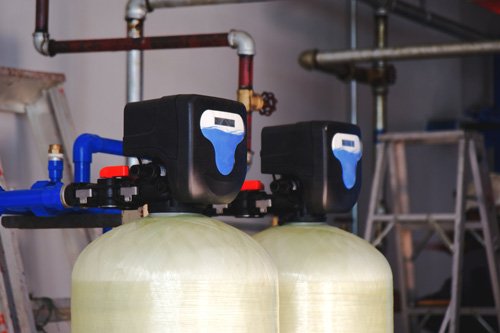
A conventional water softener uses ion exchange to remove hardness minerals from water. Inside the mineral tank, resin beads exchange sodium or potassium ions for dissolved calcium and magnesium. During regeneration, the unit uses a saltwater brine to recharge the resin so it can continue softening water.
When the system is operating correctly and sized appropriately, water leaving the softener should have substantially lower hardness than untreated well water. Depending on the equipment settings and water chemistry, it may test near zero grains per gallon (gpg), although a small amount of residual hardness can be normal.
A softener does not remove every water problem. It is not a disinfectant, sediment filter, arsenic treatment system, or universal well-water filter. It also may not perform well if high iron, manganese, sediment, or other contaminants are reaching the resin without appropriate pretreatment.
The Most Reliable Way to Check Performance: Test Water Hardness
The best way to know if water softener is working is to compare the hardness of untreated water with softened water. A liquid drop-count hardness test is generally more useful than test strips because it gives a more specific result, though strips can provide a quick screening result.
Test the Right Water Samples
To get a meaningful comparison, take samples from locations that represent water before and after the softener:
- Untreated sample: A faucet or sampling point before the softener, if your plumbing has one. An outside spigot is sometimes untreated, but do not assume it is; some homes route outdoor faucets through the softener.
- Treated sample: A cold-water faucet supplied by the softener, such as a bathroom sink or kitchen faucet. Avoid faucets connected to a reverse osmosis system, drinking-water filter, or other point-of-use treatment device.
Run the cold water long enough to clear water sitting in the plumbing before collecting each sample. Follow the instructions included with the test kit, since the sample size and drop-count procedure can vary.
How to Interpret the Results
| Test result pattern | What it may mean | Useful next step |
|---|---|---|
| Untreated water is hard; softened water is much lower in hardness | The softener is likely working. | Continue routine salt and maintenance checks. |
| Both untreated and softened water test hard | The softener may be bypassed, out of salt, improperly regenerating, undersized, or affected by resin or control problems. | Check the bypass, salt, brine system, and regeneration history. |
| Softened water is only hard at certain fixtures | Those fixtures may be plumbed around the softener, or old scale may be affecting the observation. | Compare cold-water samples from several locations. |
| Softened water is good after regeneration but becomes hard quickly | The unit may not have enough usable capacity for the household’s water use, hardness level, and any iron load. | Review programming and have the system sized and evaluated. |
Hardness is often reported in grains per gallon or milligrams per liter (mg/L). Test kits may use one or the other. Do not compare values until you confirm the units. If you use a laboratory report to program the softener, include iron and manganese results where relevant because these can affect resin capacity and treatment needs.
Signs Your Water Softener Is Probably Working
Hardness testing is the confirmation, but everyday changes can indicate that the system is doing its job. Look for a pattern across the home rather than relying on one symptom alone.
Soap and Shampoo Lather More Easily
Hard water reacts with soap and can leave soap curd on skin, shower walls, sinks, and tubs. Softer water usually allows soap and shampoo to lather with less product. You may also notice that body wash rinses differently than it did before.
This clue is helpful but subjective. Switching soap brands, using concentrated detergent, or changing water temperature can alter lather even when water hardness stays the same.
Less Scale and Fewer Mineral Spots
When hardness minerals are reduced, new white or chalky deposits should form more slowly on faucets, showerheads, glassware, humidifiers, and coffee equipment. Dishes may come out of the dishwasher with fewer mineral spots.
Keep in mind that a softener cannot instantly remove scale already inside pipes or on fixtures. Existing deposits may remain visible for some time, and loose scale can occasionally appear after water conditions change.
Laundry May Feel Softer and Look Brighter
Hardness minerals can interfere with detergent performance and leave fabrics feeling stiff or looking dull. With properly softened water, many households find that towels feel less rough and detergent rinses more completely.
However, laundry results are influenced by detergent amount, washer settings, fabric type, and washing machine condition. Treat this as a supporting sign, not a diagnosis.
Less Soap Film on Skin and Fixtures
Hard water can leave a stubborn film on shower doors, sinks, and skin. Water that has been softened typically reduces new buildup. Some people describe their skin as feeling “slippery” after rinsing in soft water. That sensation usually reflects the absence of soap scum, not soap left behind on the skin.
Check the Softener’s Basic Operating Condition
If hardness testing suggests a problem, begin with simple, low-risk checks. Do not open electrical control components, alter wiring, or disassemble a pressurized treatment tank. If the unit is leaking, damaged, or behaving unpredictably, arrange service from a qualified water-treatment professional.
Credit: libertyhomeguard.com
Make Sure the Bypass Valve Is Not Open
Most softeners have a bypass valve that allows water to flow around the treatment tank during servicing. If the unit is fully bypassed, all household water will remain hard even though the softener appears normal.
Valve designs vary. Some use handles, push-pull controls, or a separate valve assembly. Check the labels and the manufacturer’s manual rather than guessing which position is “service” or “bypass.” A partially bypassed valve can also reduce softening performance.
Look at the Salt Level and Salt Condition
Salt is necessary for regenerating a standard ion-exchange softener. Lift the brine-tank lid and look for these conditions:
- A reasonable supply of salt pellets or crystals, based on the manufacturer’s guidance.
- No empty tank with the system continuing to use water normally.
- No solid crust of salt bridging over an empty space beneath it.
- No unusually thick layer of compacted salt sludge at the bottom of the tank.
A salt bridge is a hardened layer that can make the tank look full even though salt is not dissolving into the water below. A salt mush or sludge layer can interfere with brine formation. Do not strike or forcefully chip at the tank or internal components. Follow the manufacturer’s cleaning instructions or request service if the salt is severely compacted.
Check Whether the Unit Has Regenerated
Many modern softeners regenerate based on measured water use, while older systems may use a timer. The display, controller, or service record may show the last regeneration, upcoming regeneration, or remaining capacity.
If the unit has not regenerated for an unexpectedly long period despite normal water use, the controller, metering system, settings, or power supply may need attention. If it regenerates far too often, the settings may be inefficient, there may be a leak causing continuous water demand, or the system may be programmed for the wrong water hardness.
A regeneration cycle can take water through several stages, such as backwash, brine draw, slow rinse, and refill. The exact sequence and duration are model-specific. Use the manufacturer’s manual when checking a manual regeneration cycle, and do not change cycle settings unless you understand the effect on your equipment and water use.
Confirm the Softener Has Power and the Clock Is Correct
Electronic controls need power to track water use, operate valves, and regenerate as programmed. A brief power outage may affect some older controllers or reset the clock. Check for a blank display, warning message, incorrect time, loose power connection, or tripped GFCI outlet.
If a breaker repeatedly trips or the equipment shows signs of electrical damage, do not repeatedly reset it. Contact a qualified electrician or water-treatment technician.
Common Reasons a Water Softener Stops Softening
When people ask, “how do you know if your water softener is working?” they often notice hard-water symptoms returning. Several issues can cause that result, and not all require replacing the entire unit.
The System Is Out of Salt or Cannot Make Brine
An empty brine tank is one of the simplest causes of hard water. But a tank with visible salt can still fail to produce proper brine if there is a salt bridge, salt mush, clogged brine line, stuck float, injector problem, or incorrect refill operation.
Brine-system diagnosis can involve small fittings, control valves, and model-specific parts. Homeowners can inspect for obvious salt problems and visible leaks, but a technician should handle uncertain repairs.
The Settings Do Not Match Current Water Conditions
Softener programming should reflect the measured hardness of the incoming water, household water use, resin capacity, and applicable iron or manganese load. Well water chemistry can change over time, especially after well work, seasonal groundwater shifts, or changes to a filtration system.
If the softener was programmed using an old test result, it may regenerate too late and allow hardness to break through. Conversely, overly aggressive settings can waste salt and water. A current laboratory test is especially useful when water has changed in taste, staining, color, or odor.
The Softener Is Too Small for the Demand
Capacity is not simply a matter of tank size or a label claiming a certain number of grains. Usable capacity depends on resin volume, salt dose, control settings, incoming hardness, and the amount of water the household uses.
A unit can appear to work right after regeneration but run out of capacity before its next scheduled cycle. This is more likely in larger households, homes with high hardness, homes using more water, or systems that must also account for iron. A proper sizing review should use actual test results and estimated daily water demand rather than household size alone.
Resin Has Been Fouled, Damaged, or Depleted
Softening resin does not last forever. Iron, manganese, sediment, oil, chlorine exposure in some water sources, and other water-quality issues can reduce resin performance. Resin can also become physically damaged or lose effectiveness with age.
Iron-related fouling may occur when well water contains dissolved iron and the softener is expected to handle more iron than it was designed for. In some homes, dedicated iron treatment ahead of the softener is a better long-term solution. The correct approach depends on laboratory testing and the type and concentration of iron present.
A Control Valve or Water Meter Is Malfunctioning
The control valve directs water through regeneration stages, while a metered unit uses a water meter or turbine to track demand. A stuck valve, worn seal, failed motor, blocked injector, or inaccurate meter can prevent regeneration or cause it to occur at the wrong time.
Possible signs include water running to a drain when it should not, repeated cycles, a system stuck in one cycle, unusual noises, or a display that does not register water use. These signs point to a need for diagnosis; they do not identify one failed part with certainty.
Do Not Confuse Softener Problems With Other Water Problems
A water softener may be functioning correctly while another issue affects water appearance, odor, pressure, or taste. Separating these problems prevents unnecessary repairs.
- Rotten-egg odor: Often associated with hydrogen sulfide or certain bacteria, not hardness alone. It needs water testing and treatment matched to the cause.
- Orange, red, or black staining: May indicate iron or manganese. A softener may help with limited amounts in some situations, but it is not always the right primary treatment.
- Cloudy water or grit: May be sediment, air, or plumbing debris. A softener is not a sediment filter.
- Low water pressure: Can result from clogged filters, plumbing restrictions, a pressure-system issue, or a valve problem. Hardness itself does not automatically explain low pressure.
- Unsafe water concerns: Softening does not prove that water is safe to drink. Private well owners should use appropriate certified laboratory testing for contaminants relevant to their area and well conditions.
If flooding, well repair, a change in water quality, or a potential contamination event has occurred, use a known safe water source as appropriate and contact your local health department for guidance. Boiling does not remove harmful chemical contaminants, and a water softener is not a substitute for testing or targeted treatment.
Credit: atlanticbluewaterservices.com
A Practical Troubleshooting Order
When hard-water symptoms return, work from the easiest observations to the more technical possibilities:
- Confirm the symptom: Is the issue happening throughout the house, or only at one fixture? Check cold water first because hot-water plumbing can hold old scale and may introduce separate water-heater issues.
- Test softened water hardness: Use a drop-count kit or laboratory analysis. If possible, compare it with untreated water.
- Check bypass position: Confirm the softener is in service mode according to its manual.
- Inspect the brine tank: Look for an empty tank, salt bridge, salt mush, or visible leaks.
- Review regeneration information: Check the display, clock, water-use setting, and recent regeneration history.
- Review water chemistry: Obtain current testing if hardness, iron, manganese, pH, staining, odor, or other source-water conditions may have changed.
- Call for service when needed: A technician can test valve operation, brine draw, resin condition, flow metering, and system sizing without guesswork.
When Professional Service Makes Sense
Professional evaluation is worthwhile when the softener remains ineffective after salt and bypass checks, when the unit is leaking, or when it is stuck in regeneration. It is also useful when untreated water tests have changed or when the home has persistent iron staining, sulfur odor, manganese, sediment, or unusual pressure loss.
Before scheduling service, write down the softener brand and model, installation age if known, current symptoms, salt use, recent power outages, test results, and whether the problem affects all cold-water fixtures. This information helps a technician determine whether the problem is programming, maintenance, water chemistry, plumbing, or a mechanical fault.

Credit: plumbtechmt.com
Frequently Asked Questions
Can water feel soft even if the softener is not removing hardness?
Yes. Skin feel and soap lather are useful clues, but they can be affected by soap type, detergent concentration, water temperature, and other treatment equipment. A hardness test is the better way to verify actual softening performance.
Why is my water hard again right after I added salt?
Adding salt does not immediately soften water already in the plumbing or regenerate the resin. The unit must complete a proper regeneration cycle and return to service. If hardness continues after regeneration, investigate the bypass, brine production, settings, or mechanical condition.
Should softened water have a salty taste?
It generally should not taste noticeably salty. A salty taste can suggest an issue with the regeneration rinse, control valve, plumbing arrangement, or another water-quality condition. Avoid changing valve settings at random; have the system evaluated if the taste is persistent.
How often should I test my softened water?
Testing after installation, after service, and whenever hard-water symptoms return is practical. Periodic checks can also help confirm that settings still match changing well-water conditions. Test untreated water as well when you need to update hardness or iron information for programming.
Will a TDS meter tell me whether my softener works?
No. A TDS meter measures overall dissolved solids, not hardness specifically. Ion exchange changes the dissolved mineral mix rather than removing all dissolved material, so TDS may stay similar or even change slightly. Use a hardness-specific test to evaluate a water softener.