
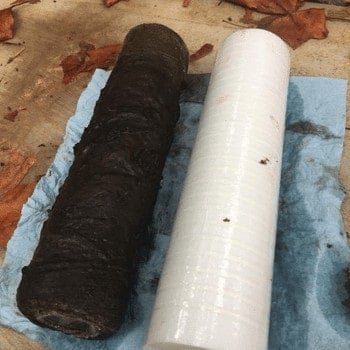
Black sediment in water can come from minerals in a private well, deteriorating plumbing parts, treatment media, or sediment entering the water supply. The appearance alone cannot identify the material or tell you whether the water is safe to drink, so the first goal is to narrow down where the particles originate.
Start by noting whether the black material appears in every fixture, only on hot or cold water, only after the water has been sitting, or only after a filter or softener. Those details help separate a whole-well issue from a water-heater, plumbing, or treatment-system problem.
If the water has a sudden change in color, odor, taste, or sediment after flooding, well work, pump service, or a loss of pressure, use a known safe source for drinking and food preparation until appropriate testing and inspection clarify the cause. Black sediment is often an aesthetic issue, but it should not be used to rule out bacteria, chemicals, or other contaminants.
What Black Sediment May Be
“Black sediment” describes the color and form of the material, not its chemical makeup. It may be fine particles that cloud a glass of water, gritty grains that settle to the bottom, flakes that collect in faucet aerators, or soft black specks that smear between your fingers.
Common possibilities in private well and household water systems include:
- Manganese minerals: Dissolved manganese can oxidize into dark brown or black particles. It may also leave black stains on fixtures, laundry, and appliances.
- Iron and manganese sediment: Iron is often orange, red, or brown, but mixed iron and manganese deposits can look very dark.
- Fine sand, silt, or mineral particles: Some wells produce dark-colored sediment from the surrounding geology. Coarser particles may feel gritty.
- Carbon fines: New or disturbed activated-carbon filters can release tiny black particles, especially shortly after installation or cartridge replacement.
- Deteriorating rubber or plastic components: Black rubber particles may come from aging washers, flexible supply lines, faucet parts, pump components, or other system seals.
- Water-heater deposits: Sediment and deteriorating internal components can cause particles that appear mainly in hot water.
- Biofilm or corrosion-related deposits: Dark material can sometimes be associated with buildup inside plumbing or equipment. Visual inspection alone cannot confirm the source.
Black particles are not automatically dangerous, but neither are they automatically harmless. Manganese, for example, is commonly a nuisance mineral, yet its concentration and the presence of other contaminants should be established by a properly selected water test rather than guessed from color.
Use the Location of the Problem to Narrow Down the Cause
The pattern of black sediment is often more useful than its color. Before replacing equipment, check several fixtures and observe whether the problem affects untreated water, treated water, hot water, cold water, or just one location.
| What you notice | Possible source | Helpful next step |
|---|---|---|
| Black particles at every cold-water fixture | Well sediment, manganese, a whole-house filter, or equipment upstream of household plumbing | Check filter housings and recent system changes; arrange water testing if the source is uncertain. |
| Particles only in hot water | Water heater sediment, internal components, hot-water plumbing, or a hot-side fixture part | Compare hot and cold water at several fixtures; have the water heater evaluated if the pattern is consistent. |
| Black flecks at one faucet or shower | Faucet aerator, washer, hose, cartridge, or nearby plumbing component | Clean the aerator and inspect accessible fixture parts according to the fixture manufacturer’s instructions. |
| Fine black dust shortly after carbon filter service | Activated-carbon fines | Review the filter manufacturer’s startup and flushing instructions; replace a damaged cartridge if needed. |
| Black staining plus dark particles | Manganese, sometimes alongside iron | Use a laboratory test for manganese, iron, pH, hardness, and other locally relevant analytes. |
| Gritty material that settles quickly | Sand, silt, scale, or mineral sediment from the well or plumbing | Check sediment filters and discuss well condition, pump placement, and recent changes with a qualified well professional. |
Check Whether It Is a Well Issue or a Household Plumbing Issue
A private well system includes more than the well itself. The pump, pressure tank, pressure controls, filters, softeners, water heater, and household plumbing can all influence what reaches a faucet. A systematic comparison can prevent an unnecessary pump or treatment-system replacement.
Compare cold water with hot water
Run cold water into a clear, clean glass at more than one fixture. Then do the same with hot water. If black sediment appears only in hot water, the well is less likely to be the direct source because cold water bypasses the water heater.
Hot-water-only particles can point to water-heater sediment, plumbing on the hot side, or deteriorating components within that system. A plumber or water-heater technician can assess the appliance safely. Do not remove electrical covers, work on gas controls, or open a pressurized water heater unless you are qualified to do so.
Compare several fixtures
If one sink produces black specks but other fixtures do not, begin at that fixture. An aerator can catch debris and later release it in visible clumps. Worn washers, faucet cartridges, spray hoses, and flexible supply lines may also shed material.
If all fixtures produce sediment, including tubs and outdoor spigots supplied before indoor treatment equipment, the cause may be upstream. This can include the well, pressure system, main plumbing line, or a whole-house treatment device.
Check treated and untreated water when possible
Some homes have a sample tap before a softener, iron filter, or other treatment system. If one is installed, it may help a professional determine whether the material starts in the source water or is being generated within treatment equipment.
Do not disconnect plumbing, bypass treatment equipment, or alter valves unless you understand the system and the manufacturer allows it. Improper bypassing can cause leaks, untreated water exposure, or damage to equipment.
Manganese Is a Common Reason for Black Water Stains and Sediment
Manganese is a naturally occurring mineral found in many groundwater sources. It may remain dissolved when water comes from the well, then turn dark after exposure to air, disinfectants, or oxidation inside plumbing and treatment equipment. Depending on water chemistry, it may show up as black particles, dark staining, or a gray-black film.
Manganese can be difficult to distinguish from iron by appearance alone. Iron commonly produces reddish-brown staining, while manganese often produces darker stains, but mixed mineral problems are common. Water pH, dissolved oxygen, hardness, iron concentration, sulfur odor, and the form of manganese present all affect treatment selection.

Credit: knowyourh2o.com
Why a simple sediment filter may not solve manganese
A sediment cartridge can capture manganese only after it has formed particles large enough for the filter to retain. If manganese is dissolved in the water, it can pass through a sediment filter and later oxidize in plumbing, appliances, or fixtures.
Effective manganese treatment may require oxidation and filtration, specialized media, or another system matched to the laboratory results and household flow rate. The right approach depends on the water chemistry and the amount of manganese present. Installing a generic filter based only on black staining can lead to rapid clogging, poor performance, or no improvement.
Could a Filter Be Causing the Black Particles?
Yes. Activated-carbon filters contain black granular or powdered carbon. Small carbon fines may appear after a new cartridge is installed, after a whole-house carbon tank is serviced, or when media inside a filter is disturbed. The particles are usually very fine and may look like black dust in the water.
Follow the exact startup and flushing procedure provided for the filter model. A brief period of carbon fines can occur with some systems, but ongoing black particles should not be ignored. It may indicate an incorrectly installed cartridge, damaged internal screen, exhausted media, cracked component, or another issue unrelated to the filter.
Not all black media are activated carbon. Some iron, manganese, and sulfur treatment systems use dark filtration media. If particles appear after backwashing equipment has been serviced or malfunctions, contact the installer or manufacturer with the model number, installation date, and a description of the material.
Sediment filter clues
A sediment filter may not create black material, but it can reveal how much sediment is entering the home. A cartridge that turns dark quickly may be collecting manganese, iron, fine silt, or other particles. It does not, by itself, prove what the particles are.
Record how long the cartridge lasts, whether pressure drops before replacement, and whether sediment increases after heavy water use or changes in well pumping. Those observations are useful for a water-treatment professional or well contractor.
When Black Sediment May Come From the Well
A well can produce sand, silt, mineral particles, or oxidized metals for several reasons. Seasonal groundwater changes, changes in pumping level, well screen problems, casing issues, pump movement, or a change in the source water can all affect sediment. A sudden increase deserves attention, particularly if it follows well repairs, a new pump installation, a drop in water pressure, or flooding.
Fine sediment can also interfere with treatment equipment, restrict plumbing, and shorten the life of valves and fixtures. However, visible particles do not prove that the well is failing. A professional may need to review the well construction, pumping conditions, pump setting, filter history, and water test results before identifying the cause.
Watch for related symptoms
Black sediment is more useful diagnostically when considered alongside other changes, such as:
- Reduced water pressure or a filter that clogs unusually fast
- New gritty material in toilets, tubs, or appliance screens
- Black, brown, orange, or gray staining on fixtures and laundry
- A rotten-egg or musty odor
- Cloudy water that clears after standing, or sediment that settles in a glass
- Changes after heavy rain, flooding, drought conditions, or nearby construction
- Frequent pump cycling or a noticeable change in well-system operation
These signs can help guide an inspection, but they do not confirm a particular contaminant. For example, odor may be related to sulfur compounds, plumbing, or water-heater conditions and should not be used as a standalone diagnosis.
How to Test Water With Black Sediment
A home screening kit, TDS meter, or visual inspection cannot identify all causes of black sediment or determine whether water is safe to drink. A certified laboratory test is generally the most useful next step when sediment occurs throughout the home, staining is present, or the problem is new or persistent.
The test panel should match the symptom and your local groundwater risks. For dark staining or suspected mineral sediment, useful analytes may include manganese, iron, pH, hardness, alkalinity, and turbidity. Depending on local conditions and the reason for testing, a health-focused panel may also include total coliform bacteria, E. coli, nitrate/nitrite, arsenic, lead, or other contaminants recommended by the local health department.

Credit: acewatershop.com.au
Collect samples correctly
Laboratory instructions matter. Different tests require different bottles, preservation methods, sampling points, and delivery times. A bacteria sample, for example, has different handling requirements from a metals sample. Use the containers supplied by the laboratory and follow its instructions exactly.
Tell the laboratory whether the sample is from untreated well water, post-treatment water, or a particular faucet. If the goal is to assess drinking water at the tap, ask which sampling location is appropriate. If the goal is to size treatment, untreated source-water results are often necessary as well.
For general private-well guidance, the U.S. Environmental Protection Agency provides information on protecting household well water at EPA’s private well resource page. Local health departments and cooperative extension offices may also provide region-specific test recommendations.
Choosing Treatment Based on the Confirmed Cause
The best treatment for black sediment depends on whether the issue is particulate sediment, dissolved manganese, carbon fines, plumbing debris, or another material. A treatment system should solve the verified problem without creating unnecessary pressure loss, maintenance, or water waste.
For sand, silt, and other particles
A properly sized sediment filter may protect fixtures and downstream treatment equipment. Filter choice depends on particle size, expected sediment load, required household flow, and acceptable pressure drop. A fine cartridge may capture more material but clog quickly if the well produces substantial sediment.
Persistent sand production may require a well-system evaluation rather than increasingly fine filters. Filters can manage the symptom, but they may not address a problem with the well, pump setting, screen, or other equipment.
For iron and manganese
Iron and manganese treatment is usually based on laboratory results and water chemistry. Options can include oxidation followed by filtration or specialized treatment media. The equipment must support the home’s peak flow demand and be compatible with pH, iron levels, manganese levels, and any sulfur or organic matter present.
A water softener can remove limited amounts of dissolved iron and manganese under suitable conditions, but it is not always the best primary treatment for high mineral loads. Iron and manganese can foul softener resin and increase maintenance needs. A qualified treatment professional should size and configure equipment based on the actual water analysis.
For carbon particles or treatment-media loss
Use the equipment manufacturer’s instructions for flushing, troubleshooting, and service. If a filter tank is releasing media continuously, stop relying on it as a drinking-water treatment barrier until it has been evaluated. Replacing cartridges repeatedly without identifying why media is escaping may not solve the underlying issue.
For plumbing or water-heater debris
Replace worn fixture parts or supply lines with compatible, potable-water-rated components. If the source is the water heater or hot-water plumbing, a licensed plumber can identify whether maintenance, component replacement, or appliance repair is appropriate.
What Not to Do When You See Black Particles
- Do not assume the water is safe because it has no odor. Many contaminants have no noticeable taste, smell, or color.
- Do not assume black particles mean manganese. Several materials can look similar in a glass of water.
- Do not keep changing filters without investigating the source. Rapid clogging or recurring sediment may signal an upstream problem.
- Do not use boiling as a solution for suspected chemical or mineral contamination. Boiling does not remove dissolved metals or many chemicals.
- Do not alter pump wiring, pressure-switch settings, or pressurized tank components to solve sediment. Those tasks carry electrical and pressure hazards and may not address the cause.
- Do not rely on a water softener, UV unit, or carbon filter as a universal solution. Each technology has a specific purpose and limits.
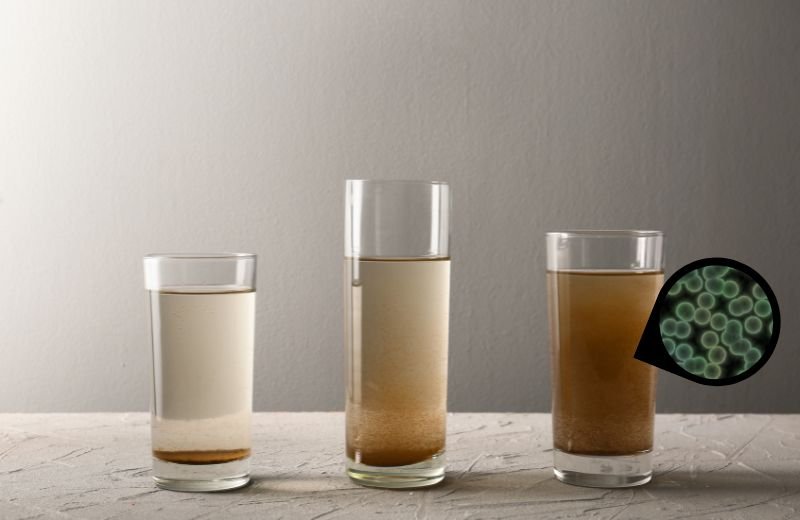
Credit: waterfilterguru.com
When to Call a Professional Promptly
Contact a qualified well contractor, plumber, or water-treatment professional when black sediment begins suddenly throughout the home, follows flooding or well work, accompanies reduced water pressure, or appears with changes in pump operation. Bring details that can speed up diagnosis: photographs of the particles and stains, recent filter replacement dates, whether the issue is hot or cold only, and any laboratory results.
If water may be affected by sewage, fuel, chemicals, flooding, or another potentially harmful source, contact the local health department and use an alternate known safe water source. Do not assume that disinfecting the well or installing a basic filter will address unknown chemical contamination.
Frequently Asked Questions
Why are there black specks in my toilet tank but not always in drinking glasses?
Toilet tanks hold water for long periods, allowing sediment to settle and become easier to see. The particles may still be present at other fixtures in smaller amounts or may be caught in aerators and filters. Check a cold-water sample from several fixtures and inspect the toilet’s internal rubber components as well.
Can a water softener create black residue?
A softener does not normally produce black sediment as part of normal operation. However, fouled resin, iron or manganese buildup, deteriorating components, or sediment entering upstream can contribute to dark material. Review maintenance history and test the untreated water before assuming the softener is the source.
Are black particles from an activated-carbon filter harmful?
Carbon fines can occur after filter installation or service, but their presence does not confirm water safety or identify every contaminant. Follow the manufacturer’s flushing instructions. If particles continue after proper startup, inspect the system or contact the manufacturer or installer.
How often should a private well be tested after a sediment problem starts?
Test promptly when a new or persistent change occurs, then follow recommendations from your local health department and the laboratory based on the findings. Additional testing is sensible after flooding, well repairs, or major changes in water quality or system performance.
Will a finer sediment filter remove all black material?
Not necessarily. A finer filter can capture more suspended particles, but dissolved manganese and other dissolved substances can pass through and later form deposits. It may also create excessive pressure loss or clog quickly. Match filtration to the confirmed material and the home’s required flow rate.