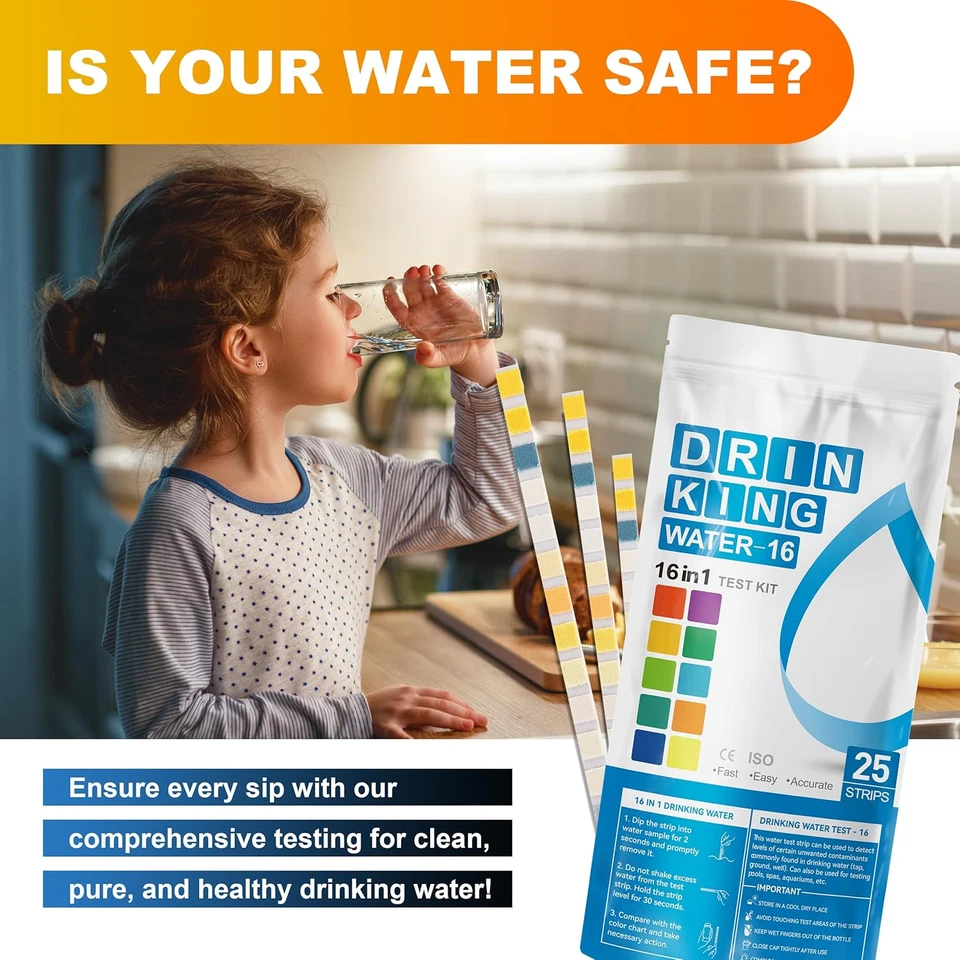
Well water testing kits can be a useful first step for understanding changes in a private well’s water quality. They may identify conditions such as hard water, low pH, elevated iron, or the possible presence of bacteria or nitrate, depending on the kit. But a kit result is a screening result—not a complete safety clearance for drinking water.
The right approach depends on what you need to know. An at-home strip or color-comparison kit can help track basic water conditions quickly. A laboratory kit, which includes proper sample containers and shipping instructions, is usually the better choice when testing for health-related contaminants or making a treatment decision.
This guide explains what well water testing kits can and cannot tell you, which tests matter most, how to collect a meaningful sample, and when to move from a home screening kit to certified laboratory testing.
What Well Water Testing Kits Do
Well water testing kits measure selected characteristics of water. Some provide immediate results at home, while others are collection kits used to send a sample to a laboratory. The difference matters because the test method, sample handling, detection limits, and quality controls affect how much confidence you can place in the result.
Most kits fall into one of these categories:
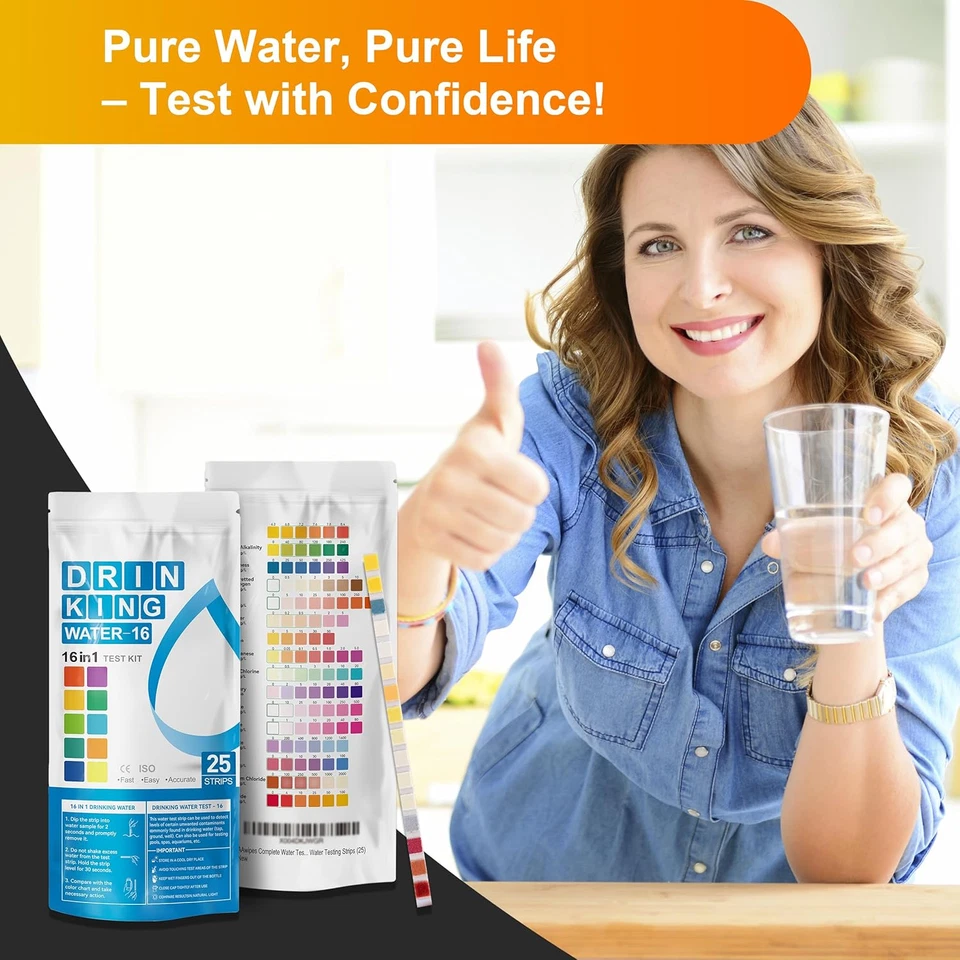
- At-home test strips: Paper strips that change color after being dipped in water. They commonly screen for pH, hardness, nitrate/nitrite, chlorine, iron, copper, or alkalinity.
- Drop-count or color-comparator kits: Reagents are added to a measured water sample. These can be more useful than strips for some basic measurements, such as hardness or pH, when instructions are followed closely.
- Digital meters: Devices that measure a specific property, such as pH, conductivity, or total dissolved solids (TDS). They require calibration and maintenance to remain reliable.
- Mail-in laboratory kits: A kit containing laboratory-approved bottles, forms, preservation materials when needed, and shipping directions. The laboratory analyzes the sample using methods suited to the requested contaminants.
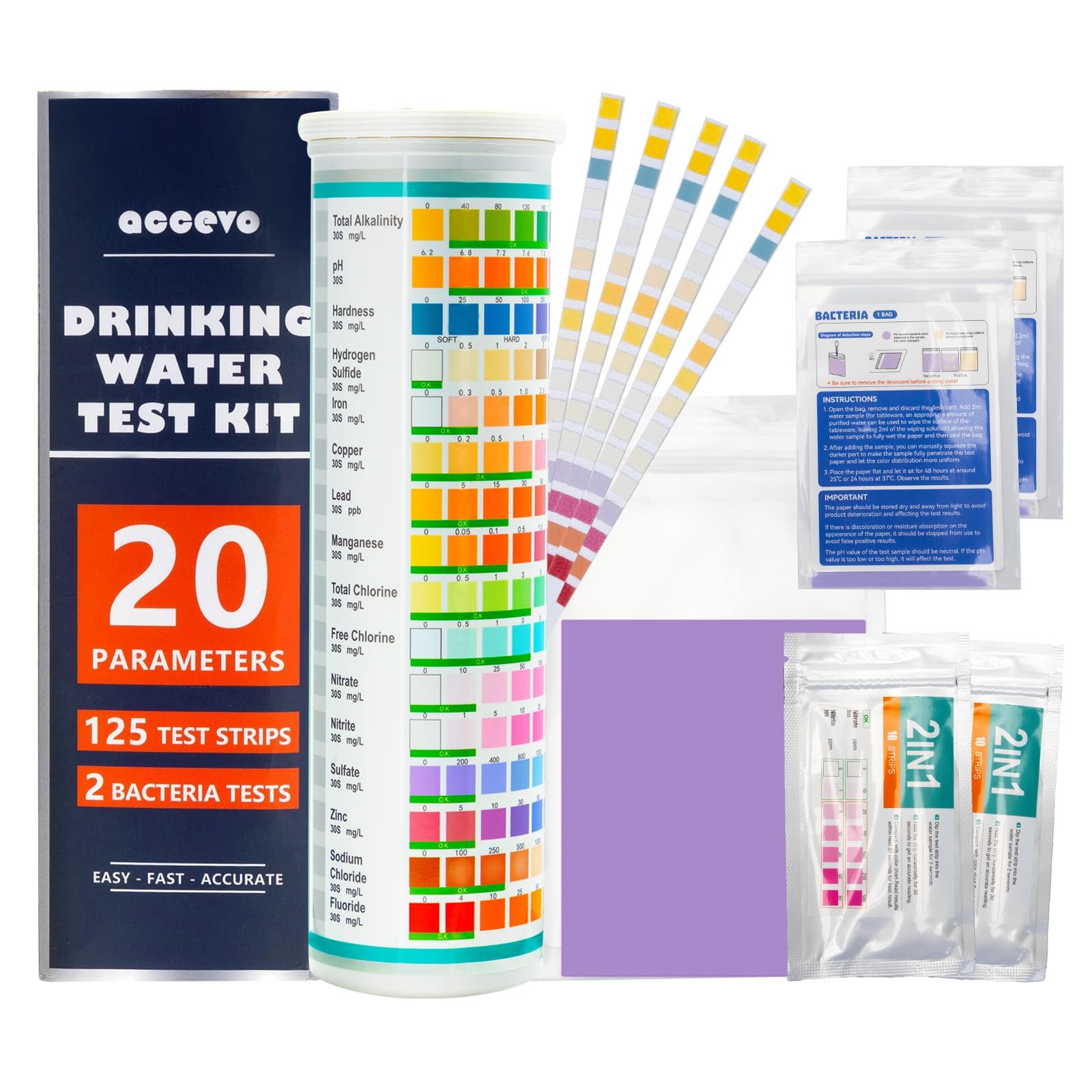
A broad “all-in-one” home kit may be convenient, but it does not test for every possible contaminant. It may not detect arsenic, lead, volatile organic chemicals, PFAS, pesticides, radon, or many other contaminants that require specialized laboratory methods.
Home Screening Kits vs. Laboratory Water Tests
Home kits and laboratory testing serve different purposes. A home kit can be useful for spotting a change or establishing a rough baseline. Laboratory testing provides results that are generally more appropriate for health decisions, real-estate transactions, treatment design, and follow-up after a contamination event.
| Testing option | Best use | Main limitations |
|---|---|---|
| Test strips | Quick screening for a limited set of basic conditions | Color reading can be subjective; results can be affected by expired strips, lighting, and user technique |
| Drop-count kit | Basic checks such as hardness, pH, or selected mineral conditions | Limited analyte range and depends on careful measuring and reagent handling |
| TDS or conductivity meter | Tracking changes in dissolved ions over time | Cannot identify which dissolved substances are present or determine whether water is safe |
| Mail-in lab kit | Health-related testing, treatment planning, and detailed water analysis | Requires correct sampling, timely delivery, and selection of the right test panel |
If a home kit suggests a concerning result, treat it as a reason to confirm the result with a qualified laboratory rather than as a final diagnosis. This is especially important for bacteria, nitrate, arsenic, lead, and contaminants associated with nearby industrial activity, fuel storage, agriculture, or flooding.
What to Test in Private Well Water
There is no single water test that fits every private well. The best test panel depends on your location, geology, nearby land use, well construction, household plumbing, and changes in the water itself. Private wells are not routinely monitored in the same way as public water systems, so homeowners are responsible for arranging testing.
Core tests for many private wells
Many homeowners start with a general laboratory panel that includes bacteria and common water chemistry measurements. The exact panel varies by laboratory, but useful baseline tests often include:
- Total coliform bacteria and E. coli: Indicators of possible contamination pathways. Their presence calls for prompt follow-up, but the result does not identify every organism that may be present.
- Nitrate and nitrite: Important where fertilizer, septic systems, livestock, or agricultural runoff may affect groundwater. Results must state whether nitrate is reported as nitrate or as nitrate-nitrogen because the numerical values use different reporting bases.
- pH: Measures whether water is acidic or alkaline. Low pH can contribute to plumbing corrosion and blue-green copper staining, while higher pH affects some treatment choices.
- Total dissolved solids: A broad measure of dissolved material. It can help describe mineral content or track change, but it does not identify contaminants.
- Hardness: Useful for choosing and setting a water softener. Hardness is generally caused by calcium and magnesium.
- Iron and manganese: Helpful when water causes orange, brown, or black staining, metallic taste, sediment, or filter fouling.
The U.S. Environmental Protection Agency provides private-well guidance that can help homeowners identify routine and situation-specific testing needs: EPA private well resources.
Tests driven by local risks
Some contaminants are highly regional or source-specific. A local health department, state environmental agency, county extension office, or accredited laboratory may be able to suggest tests based on known groundwater risks in your area.
- Arsenic: Occurs naturally in some groundwater formations and cannot be identified by taste, smell, or appearance.
- Lead: More often associated with household plumbing components than the well itself. A first-draw sample may be needed when investigating plumbing-related lead exposure.
- Radon: May be relevant in groundwater in certain regions and requires a specialized sampling method.
- Volatile organic compounds: May be appropriate near fuel spills, dry-cleaning operations, industrial sites, or certain waste-disposal areas.
- Pesticides or herbicides: May be considered near agricultural activity or where chemicals have been stored or applied.
- Sodium and chloride: Can be useful near coastal areas, roads treated with deicing salt, or where a water softener discharge or other salt source may affect groundwater.
If your well is near a known contamination site, use the testing recommendations from local or state authorities rather than relying on a general home test kit.
When to Test Your Well Water
Routine testing helps establish whether water quality is stable, but testing is also important after events that could introduce contamination or change groundwater conditions. Annual testing for bacterial indicators and nitrate is commonly recommended for private wells, while other tests may be needed less often or whenever local conditions warrant them.
Arrange additional testing if you notice any of the following:
- A sudden change in taste, odor, color, cloudiness, or sediment
- Flooding around the well, well cap, or nearby septic area
- Damage to the well casing, cap, seal, or visible components
- Well repair, pump work, construction, or other disturbance near the well
- A new baby in the household or a household member with increased health vulnerability
- A nearby fuel spill, chemical release, agricultural change, or new land development
- Repeated plumbing corrosion, unusual staining, or treatment equipment that suddenly performs poorly
Do not wait for a visible problem to test. Many health-related contaminants have no obvious smell, taste, or color. Conversely, a rotten-egg odor or orange stain may be unpleasant but does not, by itself, establish a specific health hazard.
Credit: ebay.com
How to Choose a Well Water Test Kit
Start by deciding whether you need screening information or a result suitable for a health or treatment decision. The package should clearly state what the kit tests for, how results are reported, and what the detection range or detection limit is.
Questions to ask before buying
- Which specific analytes does the kit measure?
- Is it an instant screening test or a sample collection kit for a laboratory?
- Does the kit provide results in meaningful units, such as mg/L, µg/L, grains per gallon, or pH units?
- For laboratory kits, is the laboratory accredited for the tests you need?
- Does the laboratory provide sampling instructions, preservation requirements, and a deadline for returning the sample?
- Will the report explain detection limits and identify results that may need follow-up?
- Is the kit designed for untreated well water, treated water, or both?
For treatment planning, test the water at the point that reflects the treatment goal. For example, water-softener sizing should be based on untreated water entering the equipment, while a drinking-water concern may require a sample from the kitchen tap. If you are comparing raw and treated water, use separate samples and label them clearly.
Be cautious with broad safety claims
A kit that says it tests “drinking water quality” may only cover a handful of parameters. A normal strip result does not mean a well is free of bacteria, metals, chemicals, or other contaminants outside the kit’s scope. Likewise, a low TDS reading does not prove water is safe; some contaminants can be present at concentrations that do not cause high TDS.
Choose a laboratory package when the result could affect whether your household uses the water for drinking, cooking, bathing, infant formula, or treatment system design.
How to Collect a Reliable Water Sample
Good testing starts with good sampling. A precise laboratory method cannot correct a sample that was taken from the wrong location, collected in the wrong container, or delivered after its allowed holding time.
Follow the kit or laboratory instructions exactly. This is particularly important for bacteria, volatile chemicals, lead, and radon testing, because containers, preservation, sampling location, and delivery time can vary by analyte.

Credit: qualitywatertreatment.com
General sampling practices
- Read the instructions before opening the container. Some bottles contain preservatives and should not be rinsed.
- Use the specified faucet. The laboratory may ask for a sample from a tap without a filter, aerator, or treatment device. For other tests, it may request a first-draw or untreated-water sample.
- Do not substitute containers. Household jars and bottles can add contamination or interfere with analysis.
- Avoid touching the inside of bottles or caps. This is especially important for bacterial samples.
- Observe flushing directions. Some tests require flushing the line first; others intentionally require water that has sat in the plumbing.
- Label the sample accurately. Note the date, time, sample location, and whether the water was before or after treatment.
- Return the sample on time. Deliver or ship it according to the laboratory’s stated holding-time and temperature requirements.
If you are testing after flooding, a repair, or suspected contamination, ask the laboratory or local health department which panel and sample location are appropriate. A poorly chosen sample can answer the wrong question.
Understanding Your Results
Read a water report by looking at the analyte name, result, unit, detection limit, test method, and comparison value. Do not compare a number to an online guideline unless the units and reporting basis match.
Health-based limits, aesthetic guidelines, and treatment goals
Not every water-quality number means the same thing. Some values are health-based, while others address appearance, taste, odor, staining, corrosion, or treatment performance. For example, hardness can be inconvenient and damaging to appliances without being a drinking-water contaminant in the same sense as bacteria or nitrate.
A result below a laboratory reporting limit means the lab did not detect that analyte at or above that limit in that sample. It does not prove the contaminant is absent under all conditions, at all locations in the home, or at lower concentrations.
What to do with a concerning result
For a possible health-related issue, use a known safe water source for drinking and food preparation while you seek guidance from your local health department, a qualified well professional, or the testing laboratory. The appropriate response depends on the contaminant.
- Bacteria: Investigate potential entry points and well integrity. Disinfection may be part of the response, but it should follow an applicable official or qualified professional procedure, followed by confirmation testing.
- Nitrate, arsenic, lead, or chemical contaminants: Do not assume boiling will solve the problem. Boiling does not remove these hazards and can concentrate some dissolved contaminants.
- Iron, manganese, hardness, low pH, or sulfur odor: Confirm the cause and concentration before choosing equipment. Treatment may involve different technologies depending on the full water chemistry.
Do not select a filter based only on a single symptom. Activated carbon, sediment filters, reverse osmosis, ultraviolet systems, softeners, and oxidation-based iron or sulfur systems address different problems. A treatment system should match the tested contaminant, water chemistry, flow needs, and maintenance requirements.
Common Mistakes With Well Water Testing Kits
- Using a home test as a complete safety assessment: Most do not cover the full range of relevant contaminants.
- Testing only after water looks or smells unusual: Important contaminants may have no noticeable sensory signs.
- Sampling through existing treatment equipment: This can hide the raw-water condition needed for diagnosis or equipment sizing.
- Ignoring expiration dates: Old strips and reagents can produce unreliable readings.
- Reading color strips in poor light: Color comparison is inherently approximate and can be influenced by lighting and timing.
- Confusing nitrate units: Nitrate reported “as nitrogen” is not numerically interchangeable with nitrate reported “as nitrate.”
- Buying treatment before confirming the problem: The wrong system can add cost and maintenance without addressing the actual issue.
- Assuming a passing result lasts indefinitely: Water quality can change with seasons, groundwater conditions, flooding, repairs, and nearby land use.
Credit: amazon.com
FAQ
Are well water testing kits accurate enough to trust?
They can be useful for basic screening when used before expiration and according to the instructions. However, laboratory testing is more appropriate when a result affects health decisions, treatment purchases, or confirmation of bacteria and other contaminants that require controlled sampling and specialized methods.
Can a TDS meter tell me if my well water is safe to drink?
No. A TDS meter estimates the amount of dissolved material that conducts electricity in water. It cannot identify those substances and cannot detect many contaminants reliably enough to determine drinking-water safety.
Should I test water before or after my water softener?
That depends on the question. Test before the softener when diagnosing raw well water or sizing treatment equipment. Test after the softener when checking whether the installed system is changing hardness as expected. Label both sample locations clearly if comparing results.
How long does a mail-in water test take?
Turnaround time depends on the laboratory and the test panel. Bacteria samples often have strict delivery requirements, while specialized chemical analyses may take longer after the sample reaches the lab. Check the laboratory’s instructions before collecting the sample so it can be shipped or delivered within the required timeframe.
Do I need to retest after installing a water treatment system?
Yes, confirmation testing is a practical way to verify that the system addresses the specific issue it was installed to treat. Use a test method appropriate for that contaminant, sample at the correct location, and continue routine maintenance and periodic testing because treatment performance can change over time.