
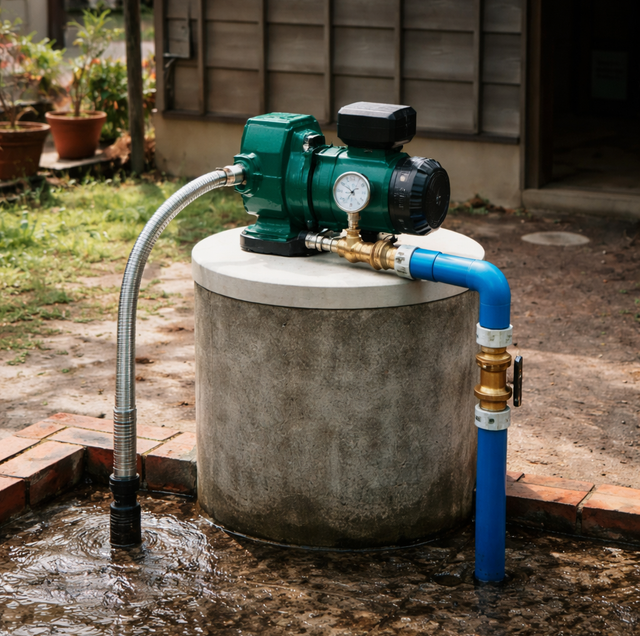
When a well pump runs but no water reaches the house, the cause may be as simple as a closed valve or as serious as a low-producing well, damaged pump, or broken underground pipe. The key is to identify where water stops moving through the system before assuming the pump itself has failed.
Start with safe observations: Does the problem affect every fixture or only one? Is the pressure gauge rising while the pump runs? Did the issue begin after a power outage, drought, plumbing repair, flooding, or an unusually high-demand day? Those details can narrow the problem quickly.
Do not open electrical controls, repeatedly reset a tripped breaker, or pull a submersible pump from a well yourself. A running pump can also be damaged if it operates without adequate water, so turn it off if it runs continuously without building pressure and arrange qualified service.
Start With the Pressure Gauge and the Scope of the Problem
A pressure gauge near the pressure tank is one of the most useful diagnostic tools in a private well system. Watch it briefly while no one is using water in the home.
| What you observe | What it may indicate | Useful next step |
|---|---|---|
| Pump runs and gauge pressure does not rise | The pump may not be moving water, the well water level may be too low, or water may be escaping through a leak. | Turn off the pump if it keeps running without pressure gain; contact a well professional. |
| Gauge rises normally, but fixtures have little or no water | A valve may be closed, a filter may be clogged, or there may be a restriction after the pressure tank. | Check accessible valves and treatment equipment according to manufacturer instructions. |
| Pressure is low and falls quickly when water is used | The system may have insufficient flow, a restriction, a leak, or a well-yield problem. | Note when the problem occurs and whether it improves after the system rests. |
| Only one faucet, shower, or toilet has no water | The issue is probably in that fixture or its branch plumbing, not the well pump. | Check the fixture shutoff valve, aerator, cartridge, or frozen pipe risk if relevant. |
If no fixture in the home has water, the well system, main plumbing line, treatment equipment, or a main shutoff valve is more likely involved. If cold water works but hot water does not, the problem may be at the water heater or its plumbing rather than at the well.
Common Reasons a Well Pump Runs but No Water Comes Out
The well water level has dropped below the pump intake
A well can temporarily run low when water use exceeds its available yield. Long irrigation cycles, filling a pool, multiple loads of laundry, guests, drought conditions, or a gradual change in the well can all contribute. A pump may continue running even though there is not enough water entering its intake.
This issue is especially likely when water returns after the well sits unused for several hours. For example, the home may have normal water in the morning, lose water after heavy use, then recover later. That pattern does not prove low well yield, but it gives a contractor an important clue.
Repeated dry running can overheat and damage a pump. A qualified well contractor can evaluate static water level, pumping water level, recovery rate, pump depth, and pump output. These measurements matter more than well depth alone.
A jet pump has lost its prime
Above-ground jet pumps depend on a water-filled pump casing and suction line to create suction. If air enters the suction side or water drains back toward the well, the pump may run without delivering water. This is commonly called losing prime.
Possible reasons include:
- A leak in the suction pipe or fittings
- A failed foot valve or check valve that allows water to drain back
- A loose priming plug or damaged gasket
- A pump that was drained for winterizing or repair
- A low well water level
Only a jet pump can have a conventional priming problem. A submersible pump sits down inside the well and is not primed by filling an above-ground pump housing. Applying jet-pump priming instructions to a submersible system will not solve the problem.
If you have the exact pump manual and are comfortable performing its manufacturer-approved priming procedure, follow that procedure precisely. If the pump repeatedly loses prime, however, the underlying air leak, valve failure, or water-supply problem needs repair.
A valve is closed or a pipe is blocked
Water may be available at the pressure tank but unable to reach fixtures because of a closed or partially closed valve. This sometimes happens after plumbing work, filter service, water-softener maintenance, or winterization.
Look only at accessible, clearly labeled valves. Common locations include:
- The main shutoff after the pressure tank
- Bypass valves around a water softener or whole-house filter
- Valves before and after treatment equipment
- Outdoor hydrant or irrigation isolation valves
A severely clogged sediment filter can also restrict flow enough to make it seem as though there is no water. If your system has a filter housing with a pressure-relief button, follow the manufacturer’s safe service procedure before opening it. Never loosen a pressurized filter housing. Replace cartridges only with the correct type and rating for the housing and system.
A treatment system is restricting the water line
Whole-house treatment equipment can create a major flow restriction when it is clogged, incorrectly set, frozen, or malfunctioning. Sediment filters, iron filters, carbon filters, water softeners, and ultraviolet systems each have different maintenance needs and failure points.
A treatment bypass may help identify whether the equipment is involved, but use it only if your system has a clearly marked bypass and the manufacturer permits it. Bypassing treatment can send untreated water into the home. That may be unsuitable where the equipment addresses a known health-related contaminant or a serious water-quality problem.
If water flow returns on bypass, the pump may be working normally and the treatment system needs service. If there is still no water, the problem is more likely upstream of the treatment equipment.
A leak or broken pipe is letting water escape
If the pump runs but pressure will not build, water may be leaving the system through a broken pipe, cracked fitting, failed check valve, or underground leak. A leak can occur in the drop pipe inside the well, the line between the well and house, or plumbing near the pressure tank.
Signs that support a leak diagnosis include:
- Wet ground or unexplained pooling near the well or buried water line
- Air sputtering from faucets after water briefly returns
- Pressure that drops when no water is being used
- A pump that runs much longer than usual or runs continuously
- Sudden changes after freezing weather, excavation, or vehicle traffic over a buried line
Not every pressure loss is a leak. A damaged pump, depleted well, or faulty check valve can produce similar symptoms. A contractor can isolate sections of the system and determine where pressure is being lost without guessing.
The pump, motor, or impeller is damaged
A pump can make normal operating sounds while producing little or no water. Worn impellers, damaged internal components, motor problems, sand abrasion, or a disconnected pipe can reduce or stop pumping.
Submersible pumps are particularly difficult to diagnose from the surface because the pump and drop pipe are inside the well. A contractor may use electrical testing, flow testing, pressure observations, and well measurements to separate a pump fault from a water-supply or plumbing problem.
Do not assume that pump horsepower tells you whether the pump is adequate. Correct pump performance depends on the pumping water level, household flow demand, pipe size, pressure requirements, total dynamic head, and the pump curve for that specific model.
A pressure-system control problem is keeping the system from operating correctly
Some systems use a conventional pressure switch and pressure tank, while others use electronic controllers or constant-pressure equipment. A faulty control component can cause unusual pump behavior, including short cycling, failure to start, or failure to stop.
However, if the pump is truly running and pressure is not increasing, the problem is often related to water movement rather than the switch alone. The pump may be unable to obtain water, may be losing water through a leak, or may have a mechanical problem.
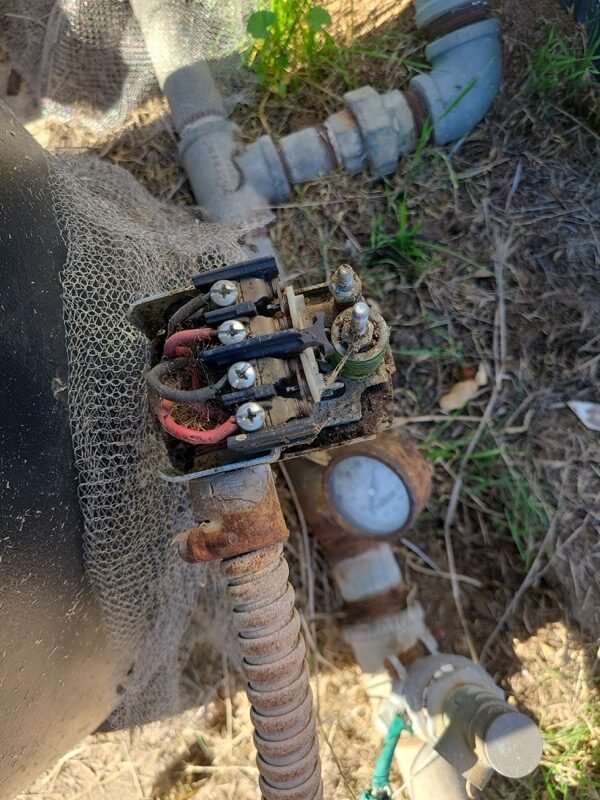
Do not remove a pressure-switch cover or adjust electrical components while energized. Pressure switches and pump controls involve live electrical connections and should be inspected by a qualified professional when their operation is in question.
Safe Checks a Homeowner Can Make
Before scheduling service, a few observations can make diagnosis faster. These checks do not require electrical work, well entry, or disassembling pressurized equipment.
- Confirm the outage affects the whole house. Try a cold-water faucet in more than one area of the home. If only one fixture is affected, focus on that fixture first.
- Check whether the pump has power. A pump that is audibly running differs from one that is silent. If a breaker has tripped once, note it, but do not repeatedly reset it. Repeated trips can signal an electrical or motor fault.
- Observe the pressure gauge. Write down whether pressure rises, falls, stays at zero, or stays low while the pump runs.
- Look for obvious accessible valve changes. Check the main shutoff and treatment bypass positions if they are clearly identified.
- Inspect for visible leaks. Look around the pressure tank, filter housings, water heater connections, and exposed plumbing. Do not disturb damaged piping.
- Consider recent events. Note power failures, water-treatment maintenance, freezing temperatures, plumbing work, flooding, drought, or unusually heavy water use.
- Listen for air or unusual cycling. Sputtering fixtures, hissing near pipes, or repeated pump starts can be useful information for a service technician.
If you suspect a broken water line, turn off the pump to prevent unnecessary operation and possible property damage. If the pump is controlled by an unfamiliar electronic system, use the system’s manual or contact a service professional rather than changing settings.
Credit: scwellservice.com

Credit: reddit.com
What a Well Professional May Need to Check
A well contractor or qualified pump technician can perform tests that are not appropriate for most homeowners. The goal is to determine whether the fault is in the water source, pump, well piping, pressure system, or household plumbing.
Depending on the symptoms, that evaluation may include:
- Measuring static and pumping water levels in the well
- Checking the well’s recovery and available yield
- Testing pump voltage, current draw, controls, and protection devices
- Inspecting the pressure tank, gauge, switch, controller, and check valves
- Locating leaks in the well line or house plumbing
- Evaluating the drop pipe and pump condition if the pump must be pulled
- Checking whether treatment equipment is creating excessive pressure loss
Provide the technician with the pump age if known, well records, recent water use changes, pressure-gauge observations, photos of visible leaks, and information about any treatment equipment. This can reduce unnecessary troubleshooting time.
When No Water May Be a Water-Quality Concern
A loss of water itself does not automatically mean the remaining water is contaminated. Still, use caution if the problem follows flooding, well damage, a broken well cap, sewage exposure, or a sudden change in color, odor, or taste.
Cloudy water, sediment, rotten-egg odor, or discoloration can point to several possible causes, but appearance and smell cannot confirm whether water is safe to drink. If harmful contamination is suspected, use a known safe water source for drinking, cooking, and other uses as advised by local health officials. Boiling does not remove harmful chemical contaminants.
After repairs, flooding, or a significant water-quality change, ask a certified laboratory or local health department which tests fit the situation. EPA guidance for private well owners is available at https://www.epa.gov/privatewells/protect-your-homes-water.
How to Prevent Future No-Water Problems
Not every failure can be prevented, but routine attention can catch warning signs before the system stops supplying water.
- Watch normal pressure behavior. Learn the usual pressure range and pump run time for your system. A sudden change is worth investigating early.
- Replace filters on schedule. Do not wait until a sediment or carbon filter causes a major pressure drop. Follow the equipment manufacturer’s service guidance.
- Protect the wellhead. Keep the well cap secure, slope surface water away from the casing, and avoid damaging the well with vehicles, excavation, or landscaping equipment.
- Manage high-demand water use. Spread out water-intensive activities if the well has limited yield. A storage solution or professionally designed pump-protection system may be appropriate for some wells.
- Address small leaks promptly. A dripping fitting or unexplained pump cycling can become a larger water-loss issue.
- Maintain treatment equipment. Backwashing filters, softeners, and other systems need the correct settings, media, drainage, and periodic service to avoid restrictions.
- Keep system records. Save well logs, pump information, treatment manuals, water-test reports, and repair invoices for future troubleshooting.
The best next step when a well pump runs but no water reaches the home is usually to determine whether pressure is building. If it is not, stop prolonged pump operation and contact a qualified well professional. If pressure builds normally, inspect accessible valves, filters, and treatment equipment before assuming the pump needs replacement.
Frequently Asked Questions

Credit: plumbinglab.com
Can a well pump run without water and still be okay?
It may run briefly without immediate failure, but prolonged dry running can overheat or damage the pump and its components. Turn the pump off if it runs continuously without building pressure, then have the cause investigated.
Why did my water return after I turned the pump off for a while?
This pattern can occur when the well has time to recover after heavy demand. It can also occur with intermittent control, leak, or pump problems, so it is not proof of a low-yield well. Record the timing and water-use conditions for a contractor.
Can a clogged water filter make it seem like the well is empty?
Yes. A severely restricted whole-house filter can greatly reduce flow to fixtures even when the pump and well are functioning. Check the filter’s service history and follow the manufacturer’s depressurizing and replacement instructions.
How can I tell whether I have a jet pump or submersible pump?
A jet pump is usually an above-ground pump near the pressure tank, often with piping that runs toward the well. A submersible pump is installed inside the well and is usually not visible from the home. Well records or a pump contractor can confirm the type.
Should I replace the pressure tank if the pump runs but water does not come out?
Not without diagnosis. A pressure tank can contribute to pressure and cycling problems, but it does not usually explain a pump that runs continuously without producing pressure. The well water level, pump output, piping, valves, and leaks should also be evaluated.