
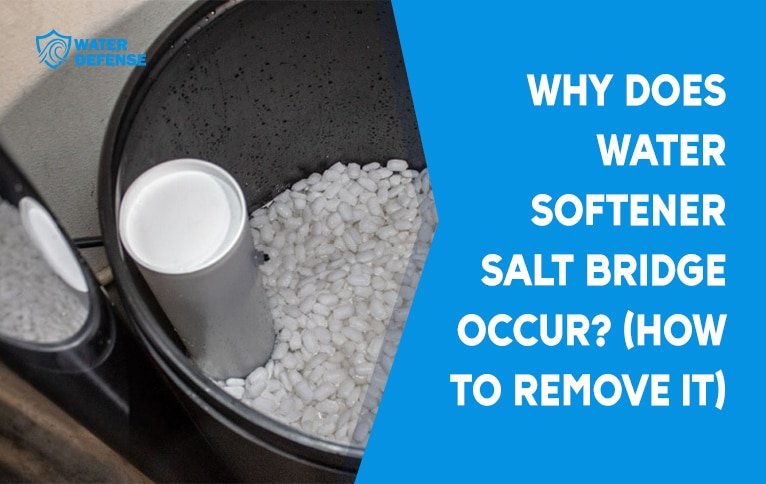
A water softener salt bridge is a hard, crust-like layer of salt that forms inside the brine tank and creates an empty space beneath it. The tank may look full of salt, but the salt is no longer reaching the water at the bottom, so the softener cannot make brine for regeneration.
This is a common reason a water softener suddenly stops producing soft water even though there appears to be plenty of salt in the tank. It is usually a maintenance issue rather than proof that the softener itself has failed.
Finding and clearing a salt bridge early can restore normal operation. However, it is also important to rule out related problems, such as salt mushing, a blocked brine line, incorrect regeneration settings, or a mechanical fault in the control valve.
What Is a Water Softener Salt Bridge?
A water softener salt bridge is a solid mass of compacted salt that spans across the brine tank. It commonly forms several inches above the tank’s water level, leaving a hollow pocket underneath. Because the bridge supports the salt above it, the salt cannot dissolve into the water below.
Most conventional ion-exchange water softeners use a brine tank containing salt and water. During regeneration, the system draws concentrated saltwater, called brine, through the resin tank. This process flushes accumulated hardness minerals from the resin so it can continue removing calcium and magnesium from household water.
When a bridge blocks the salt from contacting the water, the brine may be too weak for the system to regenerate properly. Over time, the home may experience classic hard-water symptoms again, including:
- Spots on dishes, glassware, faucets, and shower doors
- Soap that is harder to rinse away
- Stiff laundry or reduced detergent performance
- Scale buildup on fixtures and appliances
- Water that feels less slippery or soft during bathing
A salt bridge does not directly mean the water is unsafe to drink. It affects hardness treatment, not disinfection or contaminant removal. If your water has a new odor, discoloration, or suspected contamination issue, treat that as a separate problem and consider appropriate water testing.
How a Salt Bridge Forms
Salt bridges form when salt clumps and hardens instead of dissolving freely into the brine water. The exact cause varies, but moisture, salt quality, storage conditions, and tank maintenance often play a role.
High Humidity and Moisture
Brine tanks are naturally damp environments. In humid basements, garages, utility rooms, or well houses, moisture can cause salt pellets or crystals to stick together. Repeated wetting and drying may gradually create a solid layer.
Moisture can also enter when the brine tank lid is left open or does not fit properly. Keeping the lid in place helps limit debris and unnecessary humidity exposure.
Using the Wrong Salt or Low-Quality Salt
Not every bag labeled as water softener salt performs the same way. Salt with more insoluble material can leave residue in the brine tank, while some salt forms may compact more readily under certain conditions.
Choose a salt product intended for residential water softeners and follow the softener manufacturer’s recommendations. Pelletized salt is widely used, but the best option depends on the equipment and source water. For example, some well-water systems may need a salt choice that suits iron-related treatment requirements, while others may benefit from a product designed to reduce residue.
Do not assume a different salt type will solve an underlying mechanical or water-quality problem. If the brine tank repeatedly develops heavy residue, the cause may involve iron, sediment, excessive humidity, or the softener’s operation.
Keeping the Brine Tank Too Full
A deep, constantly topped-off salt bed can make it harder to notice when salt has stopped moving downward. The weight of a large amount of salt may also encourage compaction.
Many homeowners avoid running low by adding several bags at once. That can be convenient, but it also makes visual inspection more difficult. A more manageable approach is to add salt before the tank runs empty while still allowing the salt level and condition to be checked regularly.
Long Periods Without Regeneration
Salt can harden when it sits in a damp brine tank for an extended time. This may happen in a seasonal home, during long absences, or when a demand-initiated softener has not regenerated because household water use is unusually low.
Conversely, a softener that regenerates too often can waste salt and water. Regeneration frequency should be based on the system’s usable resin capacity, measured water hardness, household demand, and any relevant iron or manganese levels—not simply set to a generic schedule.
Salt Bridge vs. Salt Mush: Know the Difference
Salt bridges and salt mush can both prevent proper brine production, but they look different and call for different cleanup.
| Problem | What It Looks Like | What Happens | Typical Response |
|---|---|---|---|
| Salt bridge | A hard salt crust or shelf with an air gap underneath | Salt is held above the brine water and cannot dissolve normally | Carefully break up and remove the hardened salt |
| Salt mush | Soft, wet, sludgy salt at the bottom of the brine tank | The mush can block water movement or interfere with brine pickup | Remove the old salt and sludge, then clean the tank as appropriate |
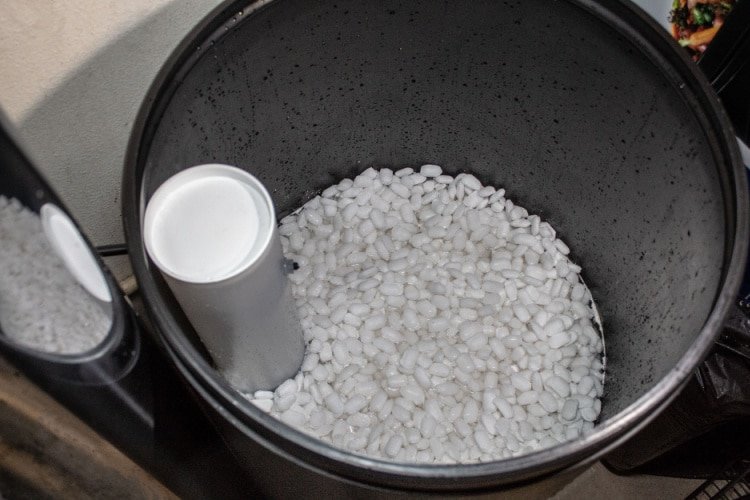
A salt bridge can make a tank look full even when very little usable salt is available. Salt mush is often less visible because it collects at the bottom, beneath loose salt. In some tanks, both conditions can occur together.
How to Tell Whether Your Softener Has a Salt Bridge
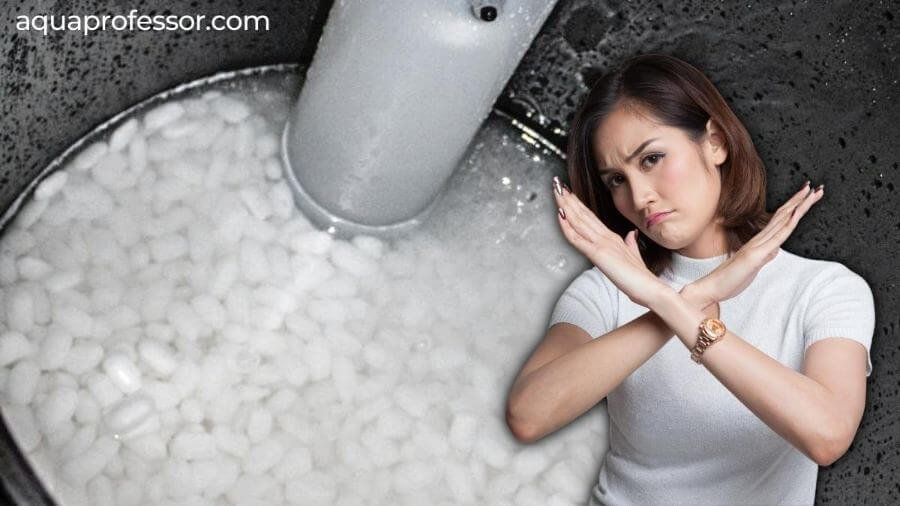
The simplest clue is a mismatch between what you see and how the softener performs. If the brine tank seems full but the home has hard water symptoms, inspect the salt level more closely.
Credit: aquaprofessor.com
Look for a Stable Salt Level
Check the brine tank before and after the softener has had time to regenerate normally. If the salt level never appears to drop, it may be sitting on a bridge rather than dissolving.
Keep in mind that some modern softeners use relatively little salt per regeneration, so a small change may not be obvious after one cycle. Look for a pattern over time instead of relying on a single day’s observation.
Probe the Salt Carefully
Before placing any tool into the tank, keep hands and tools away from electrical components and do not force anything near the brine well, float assembly, tubing, or valve connections. If you need to work around the equipment, follow the owner’s manual and isolate power according to the manufacturer’s instructions.
Using a long blunt handle, such as a broom handle, gently press down at several locations in the salt. A bridge often feels like a hard floor well above the actual bottom of the tank. If the handle suddenly drops through after light pressure, there may be a hollow area underneath.
Do not use sharp tools that could puncture the plastic tank, damage the internal brine well, or break small components. Avoid striking the tank walls or using excessive force.
Check the Water Level Without Guessing
The water level in a brine tank is not a universal diagnostic. Depending on the softener design and the point in the regeneration cycle, the tank may contain a small amount of water, more water, or very little visible water.
Refer to the manual for your model before deciding that the water level is wrong. A high water level can point to a separate issue, such as a blocked injector, restricted drain line, brine valve problem, or control malfunction. Breaking a salt bridge will not correct those faults.
How to Break Up a Water Softener Salt Bridge
Clearing a bridge is usually a homeowner-level maintenance task when the tank is accessible and the hardened salt can be reached without stressing the equipment. Stop if the tank is cracked, the brine components are damaged, water is overflowing, or the softener has electrical or plumbing problems. Those conditions warrant qualified service.
1. Confirm That the Salt Is Bridged
Remove the brine tank lid and inspect the salt surface. Use a long, blunt handle to probe gently in more than one location. If you find a solid layer and an empty space below it, you have likely found a salt bridge.
Do not climb into the tank or lean your body weight onto its rim. Brine tanks are not designed to support a person, and the salt surface may collapse unexpectedly.
2. Loosen the Hardened Salt Gradually
Press gently into the bridge with the blunt handle to create cracks. Work slowly from the center outward rather than hammering at the tank walls. The goal is to break the salt into manageable pieces, not to pulverize it or push it into the brine well.
If the salt has formed a very thick, solid mass, remove loose pieces from the top as you work. A severely hardened tank may be easier to empty and clean than to break apart in place.
3. Remove Large Chunks and Residue
Once the bridge collapses, scoop out large chunks that will not dissolve readily. If there is muddy residue, crusted salt, or salt mush at the bottom, it is often best to remove the old salt rather than covering it with fresh bags.
Take care around the brine well, which is the vertical tube that typically contains the float and brine pickup components. Do not pull, bend, or disconnect parts unless the manufacturer’s instructions specifically cover that maintenance.
4. Clean the Tank When Needed
If the tank contains significant debris or sludge, emptying and cleaning it can help prevent another blockage. Follow the softener manufacturer’s cleaning guidance for your specific unit. Avoid adding cleaners, chemicals, or disinfectants based on a generic recipe, since the appropriate method depends on the equipment and the issue being addressed.
If the brine tank is being fully cleaned, inspect it for cracks, damaged fittings, and signs of leaking. Also check that the lid fits and that the brine well cap, if present, is properly positioned.
5. Refill With Fresh Salt and Verify Operation
Add fresh salt appropriate for the softener. Do not overfill the tank simply because it is empty; leave enough room to inspect salt condition and to access internal components when needed.
After the softener completes its next scheduled or manufacturer-recommended regeneration, check whether the system has resumed normal operation. Depending on the hardness of the incoming well water and household water use, it may take some water usage before soft water is fully restored throughout the plumbing.
If hard-water symptoms continue, do not assume the remaining cause is another bridge. Confirm the softener settings, salt use, brine draw, bypass position, and water hardness with the help of the manual or a qualified water treatment professional.
What Not to Do When Clearing a Salt Bridge
A few shortcuts can turn a simple maintenance issue into a damaged brine tank or a more complicated service call.
- Do not use a sharp shovel, ice pick, or metal rod. These can puncture the tank or damage internal parts.
- Do not hit the tank from the outside. Plastic can crack, especially in colder utility spaces.
- Do not pour hot water over a heavy salt mass. Sudden temperature changes, excessive water, and dissolving salt can create a messy overflow or worsen the brine balance.
- Do not keep adding fresh salt over old crusted salt. This hides the problem and may make removal harder later.
- Do not adjust electrical controls or valve settings at random. Settings affect regeneration timing, water use, and salt efficiency. Use the manual or seek service if they are unclear.
- Do not assume hard water proves the softener is broken. A bypassed system, depleted salt, incorrect hardness programming, resin problems, plumbing changes, or untreated water blending can produce similar symptoms.

Credit: reddit.com
How to Prevent Salt Bridges in the Future
Most salt bridges can be reduced through routine brine tank checks and better salt management. Prevention is usually easier than removing a large hardened mass.
Use a Consistent, Suitable Salt Product
Use salt intended for residential water softeners and avoid mixing many different products unless the manufacturer recommends it. If your well water contains iron or manganese, discuss the best salt and maintenance routine with a water treatment professional. These minerals can complicate softener performance and may require treatment beyond ordinary salt selection.
Keep the Salt Level Manageable
Rather than filling the brine tank to the top, add salt in smaller amounts as needed. This makes it easier to notice salt usage, identify clumping, and clean the tank before residue becomes severe.
The ideal level is model-dependent. Some manufacturers provide a recommended salt range or maximum fill line. Follow that guidance rather than copying the level used in a different softener.
Inspect the Brine Tank Regularly
Check the tank periodically for a hard surface, unusually stable salt level, wet clumps, sludge, or signs that the salt is no longer moving downward. A quick inspection is especially helpful before adding a new bag.
Regular checks also help identify a softener that is using too much or too little salt. Unusual salt consumption can be caused by household water use, a running toilet, a plumbing leak, regeneration settings, or equipment problems.
Control Humidity Where Practical
If the softener is in a humid area, keeping the brine tank lid closed can help. Improving ventilation or addressing water leaks in the utility space may also reduce excess moisture around the equipment.
Do not seal a utility room in a way that creates another safety or ventilation issue. Focus on fixing moisture sources and maintaining the equipment area according to local conditions and manufacturer guidance.
Schedule Periodic Tank Cleaning
Brine tank cleaning frequency depends on salt quality, water chemistry, household use, and the softener design. A tank that remains clean and free-flowing may need less attention than one exposed to high humidity, iron-bearing water, or heavy residue.
Cleaning is particularly worth considering when changing salt products, after a severe salt bridge or mush problem, or when visible dirt and insoluble material collect at the bottom.
When a Salt Bridge Is Not the Real Problem
A water softener can stop delivering soft water for several reasons. If you clear the bridge and performance does not return, look beyond the brine tank.
| Possible Issue | Why It Can Resemble a Salt Bridge | Useful Next Check |
|---|---|---|
| Softener bypass is open | Hard water passes around the resin tank | Confirm the bypass valve position using the manual |
| Incorrect hardness setting | The softener may regenerate too late or use capacity inefficiently | Compare programming with a current hardness test result |
| Brine draw problem | The softener cannot pull enough brine during regeneration | Have the injector, brine line, drain path, and valve checked as appropriate |
| Resin fouling or aging | Resin may no longer exchange hardness minerals effectively | Evaluate source water, iron exposure, system age, and service history |
| Changed water chemistry | Hardness, iron, or manganese may exceed the system’s current setup | Order a laboratory water test suited to the suspected issue |
| Plumbing leak or high water use | Extra water demand can exhaust softening capacity sooner than expected | Check for running toilets, leaks, and recent household demand changes |
Water hardness should be measured rather than estimated from spotting alone. Hardness can change with well conditions, water source changes, blending, treatment adjustments, or seasonal factors. A laboratory test or a properly used hardness test can provide the information needed to program and size the softener appropriately.
When to Call a Water Treatment Professional
Consider professional service if the salt bridge returns frequently, the brine tank repeatedly overfills, the softener does not draw brine, or the control valve behaves unpredictably. Service is also sensible when the system has unknown settings, visible leaks, damaged internal components, or a history of iron, manganese, sediment, or bacterial problems.
Provide the technician with useful details: the softener brand and model, approximate age, salt type used, recent changes in water quality, current hardness test results, household size, and any observed regeneration behavior. This information can help distinguish a simple brine tank issue from a system configuration or treatment problem.
Credit: waterdefense.org
Frequently Asked Questions
Can a water softener salt bridge fix itself?
Sometimes a small salt crust may collapse as water levels change and salt dissolves around its edges, but a true bridge often remains in place. If the salt level is not dropping and hard-water symptoms are returning, inspect the tank instead of waiting for it to correct itself.
How often should I check my brine tank for salt bridging?
Checking whenever you add salt is a practical routine. Homes with humid utility areas, recurring salt residue, or frequent softener problems may benefit from more regular inspections.
Is it normal for there to be water in the bottom of a brine tank?
Often, yes. The normal amount and timing depend on the softener model and regeneration cycle. Use the manufacturer’s manual as the reference, since a water level that is normal for one unit may indicate a fault in another.
Can I use rock salt in a residential water softener?
Only use a salt type your softener manufacturer allows. Rock salt can contain more insoluble material than some other softener salts, which may increase residue in the brine tank and lead to more frequent cleaning.
Why is my water still hard after I removed the salt bridge?
The softener may need a successful regeneration before treated water reaches all fixtures. If hardness remains after normal operation resumes, check for bypass settings, depleted or fouled resin, incorrect programming, brine draw problems, leaks, or a change in the incoming well-water chemistry.