
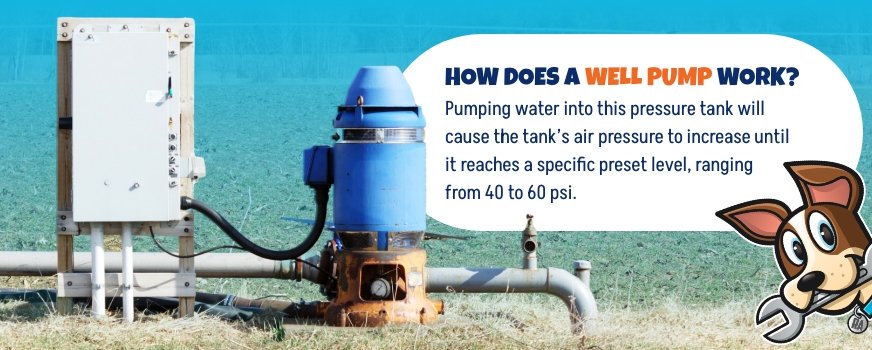
Understanding how does a water well pump work helps homeowners recognize what is normal, what may be causing a water-pressure problem, and when a symptom points to the pump versus another part of the system.
A private well pump does not create water underground. Its job is to move available groundwater from the well into the home’s plumbing system at a usable flow rate and pressure. The pump works with the well, drop pipe, pressure tank, pressure switch or controller, and household plumbing as one system.
Most residential well systems use either a submersible pump installed down inside the well or a jet pump located above ground. Both types move water, but they do it differently and are suited to different well conditions.
The Basic Job of a Well Pump
At its simplest, a well pump moves water from the well to a pressure tank or directly into a pressure-control system. When someone opens a faucet, water stored under pressure in the plumbing system flows to that fixture. As system pressure drops to the pump’s programmed cut-in point, the pump starts and refills the system.
Once water demand stops, pressure rises. The pump shuts off when the system reaches its cut-out pressure or when a variable-speed controller determines that the required pressure has been restored.
So, how do well pumps work in everyday use? They repeatedly perform this cycle:
- A faucet, shower, toilet, appliance, or outdoor fixture uses water.
- Water pressure in the plumbing system falls.
- A pressure switch or electronic controller signals the pump to run.
- The pump moves water from the well through a pipe toward the house.
- The pressure tank stores a limited amount of pressurized water and helps stabilize the system.
- When demand ends and pressure is restored, the pump shuts off or slows down.
The exact cycle depends on the equipment. A conventional pressure-tank system allows pressure to move between a lower and higher set point. A constant-pressure system may use a variable-speed pump or controller to adjust pump output while water is being used.
The Parts That Make a Well Water System Work
A pump alone cannot deliver reliable household water. Several components must work together.
| Component | What It Does |
|---|---|
| Well | Provides access to groundwater stored in the surrounding aquifer. |
| Well pump | Moves water from the well toward the home. |
| Drop pipe or suction pipe | Carries water between the pump and the surface plumbing, depending on pump type. |
| Check valve | Helps prevent water from flowing backward after the pump stops. |
| Pressure tank | Stores a usable amount of pressurized water and reduces frequent pump starts. |
| Pressure switch or pump controller | Starts and stops the pump, or regulates pump speed, based on system pressure and demand. |
| Pressure gauge | Shows system pressure and can help identify changes in pump operation. |
| Water treatment equipment | Filters or treats water when testing shows a specific need; it may also affect flow and pressure. |
A problem in any one of these parts can feel like a “bad well pump.” For example, clogged sediment filters, a leaking pipe, a waterlogged pressure tank, a failed check valve, or a restricted treatment system can all reduce pressure or cause unusual pump cycling.
How a Submersible Well Pump Works
A submersible pump is installed below the water level inside the well. It is a sealed electric pump that pushes water upward through a drop pipe. This is the most common arrangement for many deeper residential wells.
The pump motor and pumping section are typically connected as one long assembly. Electrical cable runs down the well to power the motor, while the drop pipe carries pumped water upward to the plumbing connection near the top of the well.
Why submersible pumps push water
A submersible pump uses a series of rotating impellers and diffusers. As the impellers spin, they add energy to the water and move it upward in stages. Multiple stages allow the pump to produce enough pressure to lift water from substantial depths and deliver it to the home.
Because the pump is already underwater, it does not need to pull water up from the well like a surface-mounted pump. Instead, it pushes water from below. This design avoids the practical suction-lift limits that affect above-ground jet pumps.
What happens when a submersible pump turns on
When pressure falls and the control system calls for water, electrical power reaches the motor. The motor spins the impellers, water enters the pump intake through a screen or inlet, and the pump sends water through the drop pipe. The water then passes through the wellhead plumbing, pressure tank connection, and home plumbing.
Submersible pumps are generally not “primed” in the same way as jet pumps. If a submersible system loses water pressure, the cause may involve the pump, controls, drop pipe, check valve, pressure tank, well yield, or a plumbing leak. It should not automatically be treated as a priming problem.
How a Jet Pump Works
A jet pump sits above ground, often in a basement, utility room, well house, or pump enclosure. It uses an electric motor and impeller to create pressure and move water through a jet assembly.
Unlike a submersible pump, a jet pump must draw water toward the pump. Atmospheric pressure helps push water up the suction pipe when the pump creates lower pressure in that line. This is why the height between the pump and the pumping water level matters so much for a shallow-well jet system.
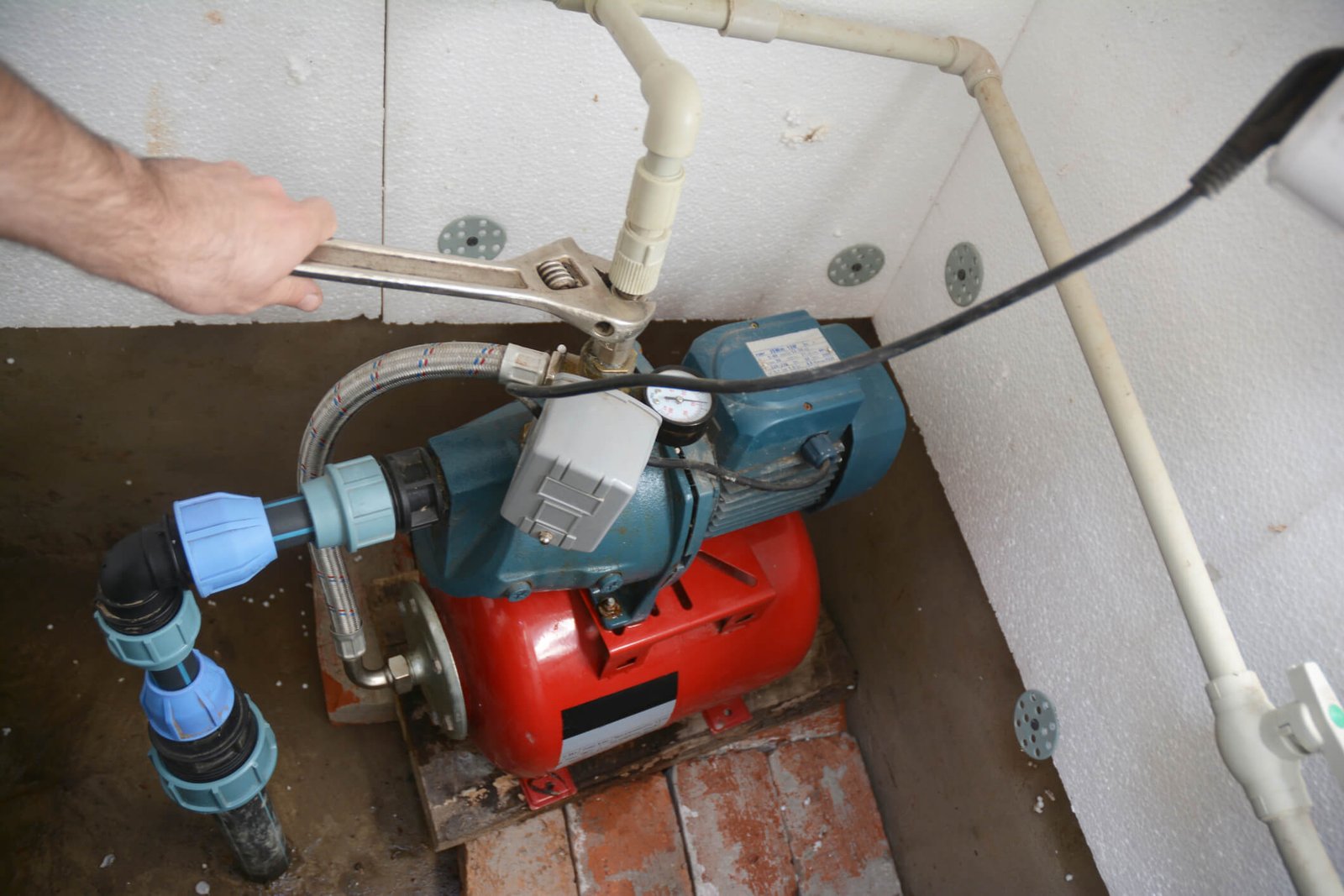
Credit: freshwatersystems.com
Shallow-well jet pumps
A shallow-well jet pump is generally used where the pumping water level is close enough to the pump for suction lift to be practical. The pump may use one pipe from the well to the pump, with the jet assembly located at or near the pump itself.
The important measurement is not simply the total drilled depth of the well. It is the depth to the pumping water level: the level water falls to while the pump is operating. A well can be drilled deep but still have water near the surface, or it can have a relatively shallow total depth with a water level too low for a shallow-well jet pump.
Deep-well jet pumps
A deep-well jet pump uses a separate jet or ejector assembly installed down in the well. It commonly uses two pipes: one sends water down to the jet assembly, and the other returns water and pumped flow to the surface.
The jet assembly uses moving water through a nozzle and venturi to help lift water from greater depths than a shallow-well jet pump can manage. However, this arrangement is usually less energy-efficient than a submersible pump for many deep-well applications.
Why jet pumps need priming
A jet pump and its suction line must be filled with water to operate properly. Air in the suction line can prevent the pump from drawing water. A loss of prime may happen after a repair, a leak on the suction side, a faulty foot valve or check valve, a long outage, or a period when the well ran low.
Follow the pump manufacturer’s instructions for priming. Do not run a jet pump dry for extended periods, and do not assume a recurring loss of prime is solved by repeatedly adding water. A recurring issue often means there is a leak, valve problem, or another fault that needs to be identified.
What Determines Water Pressure and Flow Rate
Water pressure and water flow are related, but they are not the same thing. Pressure is the force available to move water through the plumbing, usually measured in pounds per square inch (psi). Flow rate is the amount of water delivered over time, commonly expressed in gallons per minute (GPM).
A system can show normal pressure on a gauge yet provide poor flow at a shower if a filter is clogged, a valve is partly closed, a pipe is restricted, or too many fixtures are running at once. Likewise, strong flow from one faucet does not prove the pump can meet the home’s total demand.
Factors that affect pump performance
- Pumping water level: The deeper the water level is while pumping, the more lift the pump must overcome.
- Household demand: More bathrooms, appliances, irrigation, and simultaneous water use require more available flow.
- Total dynamic head: This includes vertical lift, desired pressure, pipe friction, and restrictions from plumbing or treatment equipment.
- Pump curve: Every pump has a performance curve showing how much flow it can provide at different pressure or head conditions.
- Well yield: The aquifer must be able to supply water at the needed rate without excessive drawdown.
- Pipe size and condition: Undersized, corroded, damaged, or restricted piping can limit delivered flow.
- Filters and treatment systems: Sediment filters, softeners, iron filters, and other equipment can add pressure loss as they become loaded or if they are undersized.
This is why horsepower alone does not tell you whether a pump is properly sized. A larger motor does not automatically mean better performance. Pump selection must match the well conditions, water level, required flow, plumbing layout, electrical supply, and pump curve.
The Role of the Pressure Tank
In a conventional well system, the pressure tank contains water and compressed air separated by a bladder or diaphragm. As the pump fills the tank with water, the air side compresses. That compressed air provides the pressure that pushes water through the plumbing when a faucet opens.
The tank does not usually hold as much usable water as its total physical size suggests. Its usable water volume, called drawdown, depends on tank design, air charge, and pressure-control settings.
A pressure tank helps prevent the pump from starting every time someone uses a small amount of water. Without enough drawdown, the pump may start and stop too frequently, a condition known as short cycling. Short cycling can increase wear on the pump motor, controls, and other system components.
Pressure switch and controller operation
Many conventional systems use a mechanical pressure switch. It starts the pump at a lower pressure setting and turns it off at a higher setting. The specific settings are system-dependent and should match the pump, tank, plumbing, and manufacturer guidance.
Other systems use electronic controls or variable-speed drives. These may maintain steadier pressure during water use by changing pump speed rather than allowing pressure to swing as widely between on and off points.
Do not adjust pressure-switch settings or tank precharge based on a generic rule alone. Electrical controls and pressure vessels can be hazardous. If a precharge inspection is permitted by the equipment manufacturer, power must be isolated and water-side pressure fully relieved before checking it. Leave uncertain electrical work and pressure-vessel repairs to a qualified well or pump professional.
Where the Water Comes From During Heavy Use
When the household uses water briefly, the pressure tank may supply much of the immediate demand before the pump starts. During a longer shower, laundry cycle, or irrigation period, the pump usually runs to keep up with demand and refill the tank.
If demand exceeds the pump’s available flow, pressure may gradually fall. If demand continues beyond what the well can supply, the pumping water level may drop substantially. Some systems include low-water protection to reduce the risk of pump damage when the well is not recovering fast enough.
A well that produces water slowly is not necessarily dry. It may have a lower yield than the household needs during peak use. In that case, a professional may evaluate the well’s recovery rate, pump placement, storage options, controls, and water-use patterns rather than simply installing a larger pump.
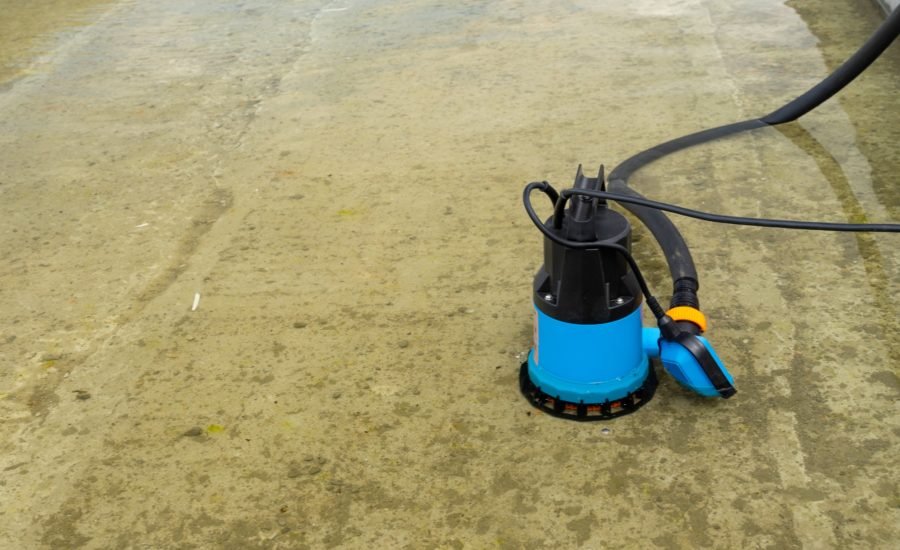
Credit: johnswelldrilling.com
Common Signs the System Needs Attention
Symptoms can help narrow down a problem, but they do not confirm a failed pump by themselves. Start with safe observations: check whether the issue affects the entire home or one fixture, note the pressure gauge behavior, look for visible leaks, and consider recent changes such as filter replacement, power outages, plumbing work, or unusually high water use.
Low pressure throughout the house
Whole-home low pressure may be related to a clogged sediment filter, treatment equipment restriction, partially closed valve, plumbing leak, pressure-control issue, falling well water level, worn pump, or an incorrectly matched pump. If only one faucet has low flow, the problem is more likely local to that fixture, such as an aerator or cartridge.
Rapid pump cycling
If the pump starts and stops repeatedly while water is being used lightly, possible causes include a pressure tank with little usable drawdown, a bladder or diaphragm problem, pressure-control malfunction, leak, or pump issue. Rapid cycling should be addressed because repeated starts are hard on pump systems.
No water or intermittent water
No water can result from a power problem, tripped protective device, failed controller, pressure-switch issue, pump fault, broken pipe, low well water level, or frozen plumbing in cold conditions. Avoid repeatedly resetting a breaker or bypassing protective equipment. If electrical equipment trips repeatedly, contact a qualified professional.
Air sputtering at faucets
Air may enter the system after plumbing work, but persistent sputtering can also suggest a falling water level, suction-side air leak on a jet pump, well-related issue, or plumbing problem. It is worth noting whether the symptom occurs at all fixtures and whether it began after a particular event.
Cloudy, sandy, or discolored water
Sand or sediment may point to well-screen, pump-placement, plumbing, or treatment issues, while discoloration can have several possible causes. Water appearance does not identify a contaminant or establish drinking-water safety. If water quality changes suddenly, particularly after flooding, well repairs, or a storm event, use a properly collected laboratory test matched to the concern and contact local health officials when contamination is suspected.
How to Protect a Well Pump and Pressure System
Routine attention can help identify small problems before they become a water outage. Homeowners can safely observe system behavior and maintain components that are intended for user service.
- Replace sediment filters and other consumable media on the schedule appropriate for the actual water conditions and equipment manual.
- Watch the pressure gauge during normal water use and note major changes in pump cycling behavior.
- Check accessible plumbing for drips, wet spots, corrosion, or damaged insulation.
- Keep the well cap secure and the area around the wellhead protected from runoff, chemicals, and physical damage.
- Maintain water treatment equipment according to its specific instructions; neglected filters can restrict flow and reduce pressure.
- Arrange professional evaluation when the pump runs continuously, pressure drops significantly, breakers trip, or the system repeatedly loses water.
A licensed or qualified well contractor can measure pumping water level, test pump output, inspect controls, evaluate pressure-tank performance, and compare actual results with the pump’s design requirements. Those measurements are more useful than guessing based on horsepower or well depth alone.
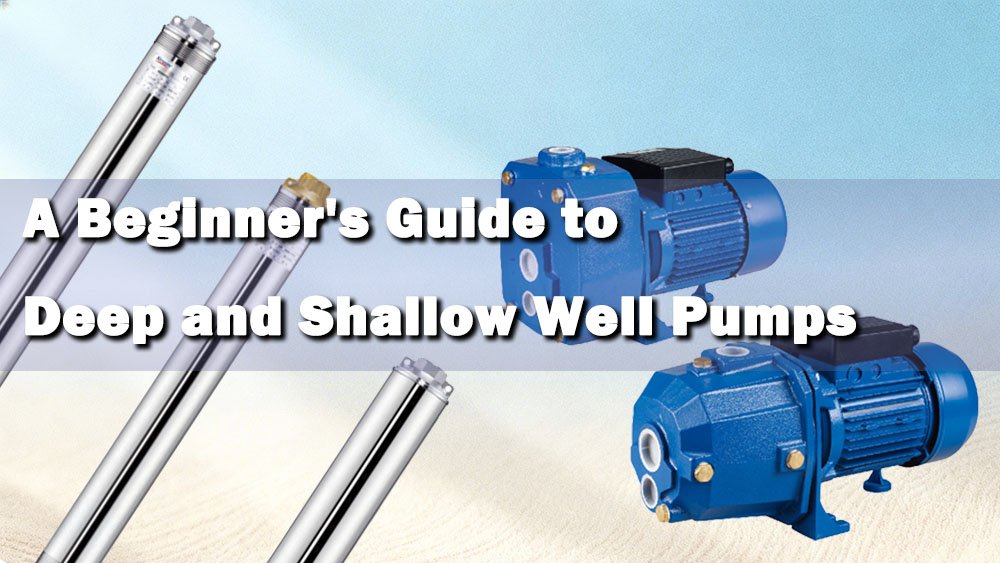
Credit: streampumps.com
FAQ
How long does a well pump run during a normal cycle?
There is no single normal run time. It depends on the pressure tank’s usable drawdown, pump flow rate, water demand, pressure settings, and well conditions. A sudden change from the system’s usual cycle pattern is more meaningful than a specific number of seconds or minutes.
Can a well pump run continuously?
A pump may run continuously during prolonged water use if demand is close to its available output. However, continuous running when no water is being used can indicate a leak, pressure-control problem, low well yield, or pump-related issue. It should be checked promptly to avoid unnecessary wear or overheating.
Does a deeper well always require a stronger pump?
Not necessarily. Pump selection depends mainly on the pumping water level, required household flow, pressure needs, pipe friction, and the pump’s performance curve. Total well depth alone does not determine the right pump.
Why does my well pump seem louder than before?
Above-ground jet pumps can become noticeably louder from vibration, loose mounting hardware, worn components, cavitation, or plumbing movement. A submersible pump is usually not heard directly, so new noises may come from the pressure tank, pipes, relay, controller, or nearby equipment. A new or harsh noise deserves inspection rather than assumption.
Should I test well water if the pump is working normally?
Yes. A properly operating pump only moves water; it does not confirm water quality. Private well owners should use laboratory testing based on routine recommendations, local groundwater risks, and events such as flooding, well repairs, or changes in taste, odor, color, or sediment.