
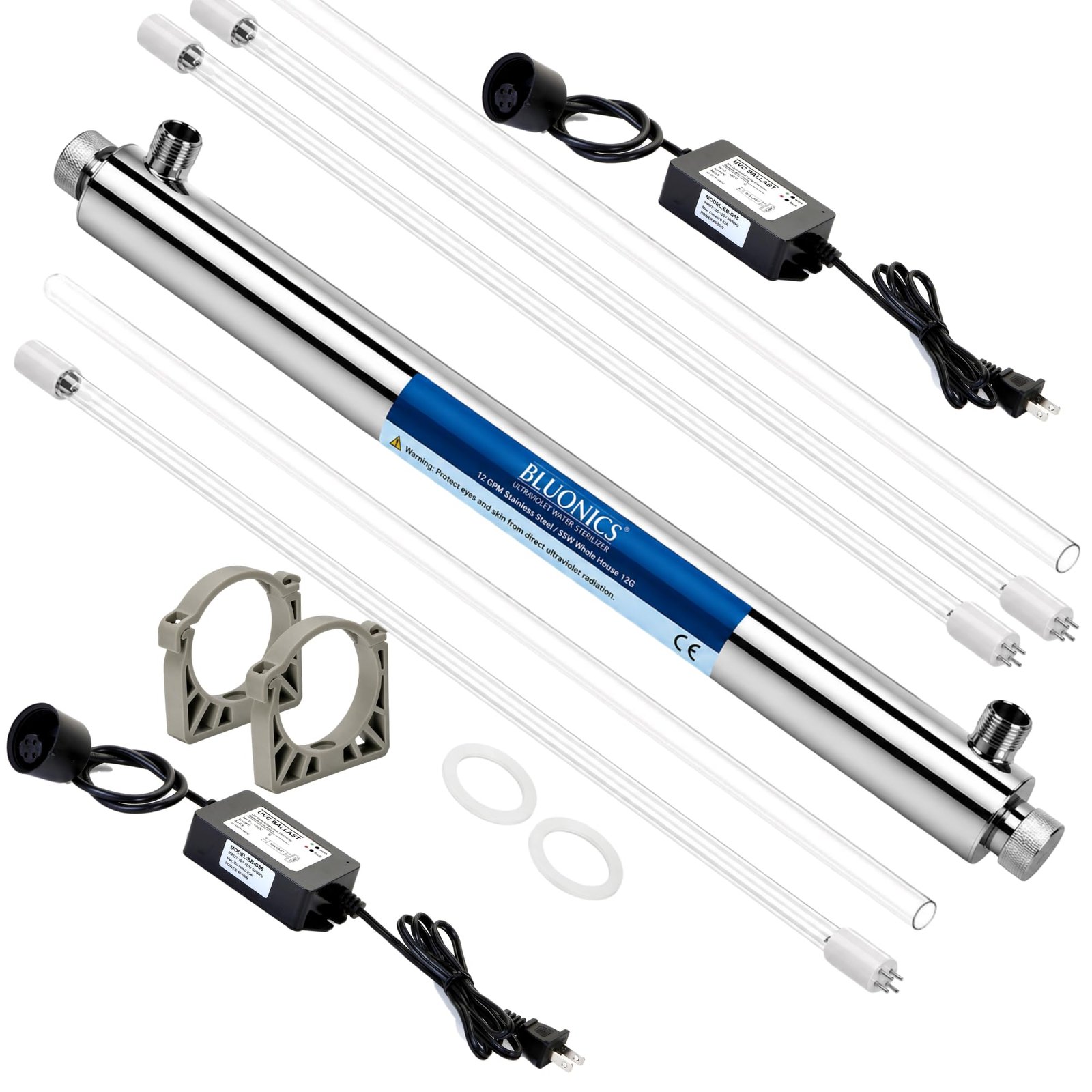
UV light for well water is a disinfection method that uses ultraviolet energy to inactivate microorganisms as water passes through a treatment chamber. It can be an effective final barrier against bacteria and other disease-causing microbes when the system is correctly sized, installed, and maintained.
However, a UV system does not make every well-water problem disappear. It does not remove sediment, iron, hardness, sulfur odor, pesticides, nitrate, arsenic, or other dissolved contaminants. Its performance also depends heavily on water clarity and the condition of the UV lamp and protective sleeve.
For many private well owners, the right approach is to test the water first, correct any water-quality issues that interfere with UV treatment, and then select a unit matched to the home’s real peak flow demand.
What a UV Water Treatment System Does
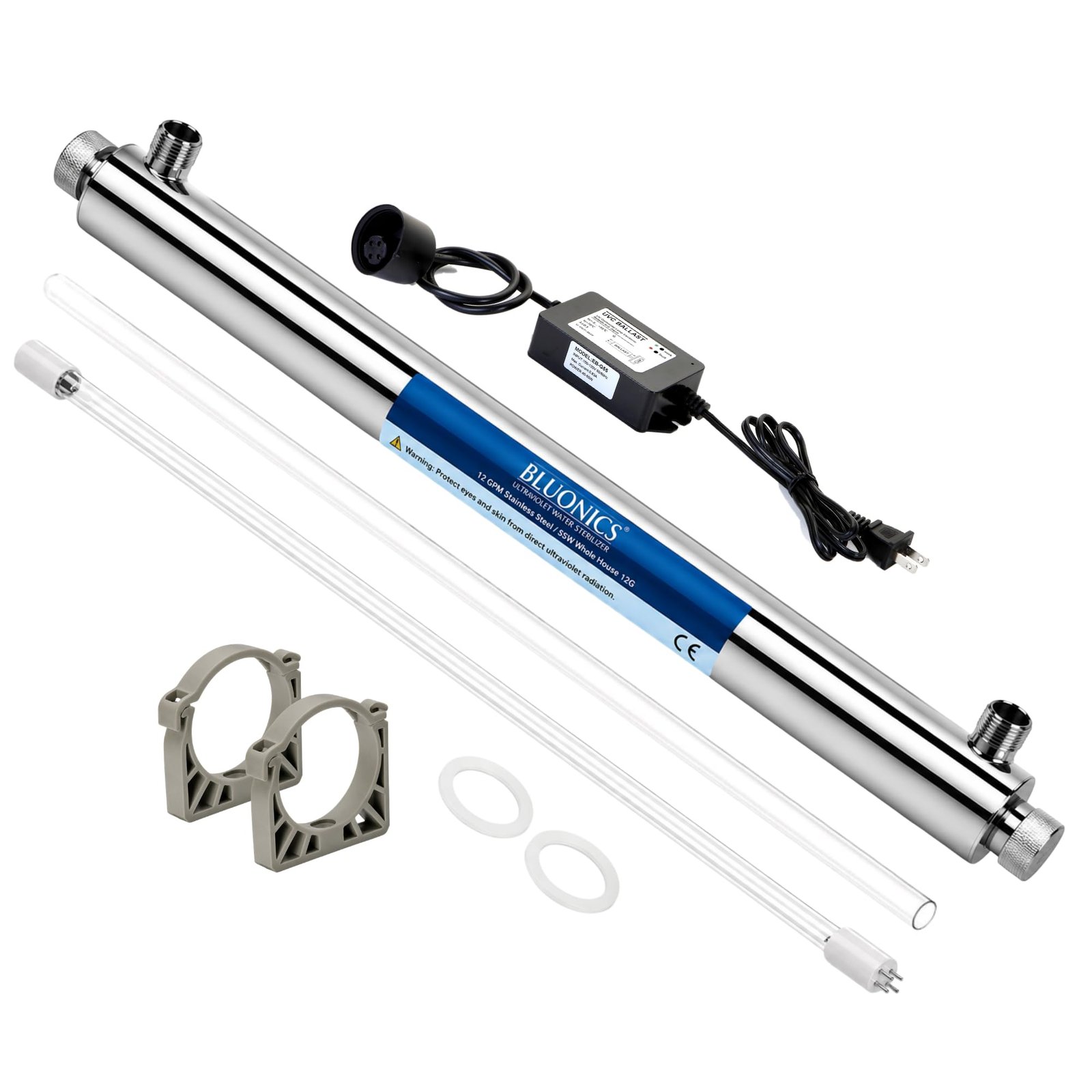
A residential UV system usually consists of a stainless-steel treatment chamber, a UV lamp, a quartz sleeve that protects the lamp from water, and a controller. Water flows through the chamber while the lamp emits germicidal ultraviolet light.
When microorganisms receive an adequate UV dose, the light damages their genetic material. This prevents them from reproducing and, depending on the organism and conditions, reduces their ability to cause infection.
Unlike chlorination, UV does not add a chemical disinfectant to the water. It also does not create a lasting disinfectant residual in plumbing. Water is treated only as it passes through the chamber.
Microorganisms UV may address
A properly designed UV light for well water may be used to control microorganisms such as:
- Coliform bacteria
- E. coli
- Many viruses
- Protozoa, including organisms that can be more resistant to ordinary chlorine treatment
Actual performance depends on the system’s validated dose, water quality, flow rate, lamp output, and maintenance. A UV unit should not be treated as proof that water is safe unless appropriate testing confirms the condition of the water supply and the system is being maintained as designed.
What UV does not remove
UV is a disinfection technology, not a filter. It does not physically remove contaminants from well water. A UV system will not solve problems involving:
- Cloudiness or suspended sediment
- Iron or manganese staining
- Hydrogen sulfide odor
- Hardness minerals
- Low pH or corrosive water
- Nitrate, arsenic, lead, PFAS, or other dissolved chemical contaminants
- Salt or high total dissolved solids
Those problems require treatment chosen for the specific test results. If a well has both bacterial concerns and iron staining, for example, iron treatment and sediment removal may need to come before the UV chamber.
When UV Treatment Makes Sense for a Private Well
UV disinfection can be a practical choice when a well has confirmed or recurring microbiological contamination, or when a homeowner wants an additional microbial barrier after addressing the source of contamination. It is often installed as the final whole-house treatment stage, after equipment that removes particles and other UV-blocking material.
Before relying on UV, it is important to understand why bacteria were found. Contamination can be associated with a damaged well cap, poor site drainage, flooding, a compromised casing, recent well service, improper plumbing connections, or problems with a storage system. UV can protect water at the treatment point, but it does not repair a well defect or remove the need to investigate repeated positive bacterial results.
Situations that call for water testing first
Laboratory testing is especially important when:
- A well has tested positive for total coliform or E. coli.
- Floodwater has reached the well area or the well may have been submerged.
- The well, pump, pressure system, or plumbing has recently been repaired.
- Water quality, taste, odor, or appearance has changed.
- A home has an infant, older adult, pregnant person, or an immunocompromised resident.
- The property is being purchased or has a previously unknown well history.
A certified laboratory can test for total coliform and E. coli, and may recommend other tests based on local groundwater risks. A home test strip, a TDS meter, clear-looking water, or the absence of odor cannot confirm microbiological safety.
If testing suggests potentially harmful contamination, use a known safe water source and contact the local health department for guidance. Boiling may be appropriate for certain microbial emergencies when public-health officials advise it, but it does not remove harmful chemical contaminants.
Why Water Quality Matters Before the UV Chamber
UV light must reach microorganisms to work effectively. Anything that blocks, absorbs, or scatters the light can reduce treatment performance. This is why pretreatment is often as important as the UV unit itself.
Particles and cloudy water
Sediment, silt, rust particles, and other suspended material can shield microorganisms from the UV light. They can also collect in the chamber or on the quartz sleeve. A sediment filter is commonly installed upstream where particulate matter is present.
Filter selection should be based on the type and amount of sediment, required household flow, and pressure loss. A micron rating alone does not establish that a filter provides microbial protection. For UV pretreatment, the practical goal is clear water that allows the system to deliver its intended dose.
Iron, manganese, and hardness
Iron and manganese can coat the quartz sleeve and reduce the amount of UV energy reaching the water. Hard water can form mineral scale on the sleeve for the same reason. These conditions may require iron treatment, softening, or another pretreatment step before UV.
A water softener removes hardness through ion exchange, but it is not a disinfectant. Likewise, a salt-free scale-control device may reduce some scale formation under suitable conditions but does not remove hardness minerals in the way an ion-exchange softener does.
Color, tannins, and UV transmittance
Some well water contains dissolved organic matter, often seen as yellow or tea-colored water. Dissolved color can absorb UV energy even when the water appears free of visible particles. Manufacturers may express a unit’s water-quality requirement as UV transmittance, sometimes abbreviated UVT.
UVT is not the same as a simple visual inspection. If source water has color, unusual chemistry, or a history of treatment problems, discuss the laboratory results with a qualified water treatment professional or the UV manufacturer before choosing equipment.
Choosing the Right UV System Size
UV system sizing is primarily about flow rate and validated disinfection performance, not just chamber size or lamp wattage. The system must provide an adequate dose at the highest flow it will realistically see.
For a whole-house installation, size the unit for peak demand rather than average daily water use. A home may use relatively little water over a day but still create a high short-term demand when showers, a washing machine, and kitchen fixtures operate at the same time.
Credit: amazon.com
Key sizing factors
- Peak flow rate: The expected maximum gallons per minute (GPM) used by the home.
- Water quality: UV transmittance, turbidity, hardness, iron, manganese, and other factors that affect light delivery.
- Validated dose: The unit’s performance at a stated flow and water-quality condition.
- Pressure drop: Restriction through the chamber and any required pretreatment filters.
- Installation location: Whether the system treats all water entering the home or only water at one tap.
- Electrical reliability: The ability to keep the controller powered continuously.
A system rated for a lower flow than the home’s actual peak use may allow water to pass too quickly for the intended treatment level. Oversizing can provide useful capacity, but it does not compensate for poor pretreatment, an aging lamp, a dirty sleeve, or loss of electrical power.
Whole-house versus point-of-use UV
| Installation type | What it treats | Best suited for | Main limitation |
|---|---|---|---|
| Whole-house UV | Water supplied to household fixtures after the treatment point | Homes needing microbial treatment for drinking, cooking, bathing, laundry, and general household use | Must be sized for peak household flow and installed after suitable pretreatment |
| Point-of-use UV | Water at a specific drinking-water tap or appliance line | Situations where treatment is needed only for drinking and cooking water | Does not disinfect water at showers, bathroom sinks, ice makers, or other untreated fixtures |
A whole-house system is usually the more appropriate choice when a private well has bacterial contamination affecting the household supply. A point-of-use unit may be part of a targeted drinking-water system, but it does not address microbial exposure elsewhere in the home.
Understanding UV Certification and Product Claims
When comparing UV equipment, look beyond broad phrases such as “kills germs” or “sterilizes water.” The useful question is whether the specific model has been independently evaluated for the intended use, at the stated flow rate and water conditions.
NSF/ANSI 55 is a standard associated with ultraviolet microbiological water treatment systems. It distinguishes between systems intended for microbiological water treatment and systems intended to supplement treatment of already disinfected water. The exact classification, reduction claims, flow rating, and installation conditions are model-specific.
Do not assume that a brand’s certification applies to every model it sells. Check the manufacturer documentation and applicable certification listing for the exact unit. The NSF consumer guide to water treatment standards explains why certification claims should be matched to the individual product and its stated purpose.
Where a UV System Fits in a Well Water Treatment Train
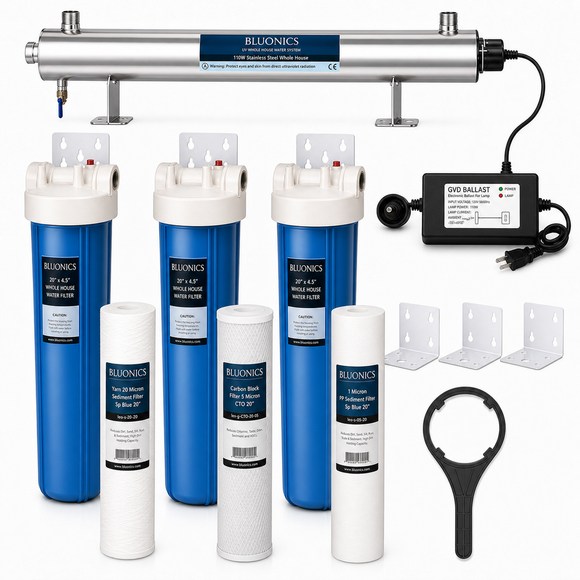
The order of treatment equipment matters. In a typical whole-house arrangement, water should be cleaned of UV-interfering material before entering the UV chamber. UV is commonly placed near the end of the treatment line so the treated water does not pass through equipment that could add contamination afterward.
A possible system sequence may look like this:
- Well pump and pressure system
- Sediment removal, when needed
- Iron, manganese, sulfur, pH, or hardness treatment based on water testing
- Activated carbon or other specialty treatment, if appropriate for the tested issue
- UV disinfection as the final whole-house treatment stage
This is not a universal plumbing diagram. Some treatment systems require a different sequence, a backwashing filter may have its own flow requirements, and a home may need no pretreatment beyond sediment filtration. The correct arrangement depends on the water test, plumbing layout, treatment equipment, and required service flow.
Why UV is usually installed after filters
Installing UV ahead of sediment or iron treatment can leave the quartz sleeve exposed to fouling and can allow particles to interfere with disinfection. It may also mean that water travels through downstream equipment after being exposed to UV, which is not ideal where biofilm or contamination in those components is a concern.
For a new installation after confirmed bacterial contamination, the well, plumbing, and treatment equipment may need professional evaluation and disinfection according to an appropriate procedure. Simply adding UV without addressing contaminated downstream plumbing may not resolve the underlying issue.
Installation Considerations for Homeowners
A UV chamber needs a protected location with power, enough clearance to remove the lamp and sleeve, and plumbing that supports the manufacturer’s specified orientation and flow direction. The location should remain above freezing and should be accessible for routine service.
Many systems are installed with shutoff valves and a bypass arrangement. A bypass can make maintenance easier, but it must be managed carefully because bypassed water is untreated. Some installations also include sampling points so the homeowner or laboratory can collect water samples from appropriate locations.
Electrical and plumbing installation should follow local requirements and the exact manufacturer instructions. UV controllers should not be repeatedly reset or bypassed when they indicate a fault. If a system includes an alarm, flow control device, or automatic shutoff feature, understand what it does before an interruption occurs.
Credit: bluonics.com
Questions to ask before installation
- What is the household’s measured or estimated peak GPM?
- Do laboratory results show sediment, iron, manganese, hardness, color, or other issues requiring pretreatment?
- Is there sufficient space to service the lamp and sleeve without removing major plumbing?
- Will the system remain powered continuously?
- What happens if the lamp fails, the controller alarms, or power is lost?
- Where should follow-up water samples be taken?
UV Lamp and Quartz Sleeve Maintenance
A UV system is not maintenance-free. The lamp may still glow after its useful germicidal output has declined, so visual inspection alone is not enough. Follow the replacement interval in the manufacturer’s manual rather than waiting for the lamp to burn out.
The quartz sleeve also needs attention. Mineral scale, iron deposits, and film on the sleeve can reduce UV transmission even when the lamp is functioning. Homes with hard water, iron, or manganese may need more frequent sleeve inspection and cleaning than homes with relatively clean water.
Typical maintenance tasks
- Replace the UV lamp on the manufacturer’s stated schedule.
- Inspect and clean the quartz sleeve as directed by the manufacturer.
- Replace sediment filters and service pretreatment equipment on schedule.
- Check controller displays, alarms, and indicator lights.
- Inspect for leaks around fittings, seals, and the chamber.
- Keep records of lamp changes, sleeve service, filter changes, and water tests.
Turn off power and fully isolate and depressurize the water side according to the manufacturer’s procedure before servicing a UV unit. UV lamps can be hot, quartz sleeves are fragile, and electrical components must remain dry. If the chamber, sleeve, wiring, seals, or controller appear damaged, arrange qualified service rather than attempting an unsafe repair.
Common UV System Problems and What They May Mean
Most UV issues are related to maintenance, water quality, power, or flow conditions rather than a mysterious failure inside the well. Start with safe observations: check the controller status, confirm that pretreatment is being maintained, and look for leaks or a recent change in water appearance.
| Symptom | Possible cause | Practical next step |
|---|---|---|
| Controller alarm or warning | Lamp age, lamp failure, sensor issue, power interruption, or model-specific fault | Review the exact manual and arrange service if the cause is not clear |
| Low water pressure after installation | Restricted prefilter, undersized equipment, partially closed valve, or plumbing issue | Check filter maintenance and have the system flow and pressure loss evaluated |
| Frequent sleeve fouling | Hardness, iron, manganese, or inadequate upstream treatment | Test water and reassess pretreatment rather than only cleaning the sleeve repeatedly |
| Positive bacteria test after UV installation | Sampling issue, contaminated plumbing, failed maintenance, excess flow, poor water quality, or a source problem | Use safe water guidance from local health officials and investigate the complete system |
| No visible lamp glow | Power issue, failed lamp, connector problem, or controller fault | Do not open electrical components while energized; follow the manual or contact a qualified technician |
A positive bacteria result should not be dismissed because a UV system is installed. The test result applies to the sample collected, and it may indicate that the system, water quality, plumbing, or well source needs further evaluation.
Cost Factors to Consider
The cost of adding UV treatment includes more than the chamber and lamp. A homeowner may also need sediment filtration, iron or hardness treatment, plumbing changes, electrical work, installation labor, periodic lamp replacement, sleeve maintenance, and follow-up laboratory testing.
Upfront price varies substantially by required flow capacity, validation standard, controls, monitoring features, plumbing complexity, and pretreatment needs. A lower-cost unit may not be suitable if it cannot meet the home’s peak flow or source-water conditions. Conversely, buying a large chamber without correcting iron, scale, or sediment can lead to poor performance and unnecessary maintenance.
When requesting an estimate, provide the recent water test report, the number of bathrooms and occupants, the pressure system details, any existing treatment equipment, and the home’s known peak water-use patterns. This gives an installer or treatment professional better information than choosing a system by lamp wattage alone.

Credit: amazon.com
FAQ
Can UV light treat well water with a rotten-egg smell?
UV does not remove hydrogen sulfide, the common cause of a rotten-egg odor. The odor source should be identified through testing and system evaluation. Depending on the cause, treatment may involve aeration, oxidation, filtration, or another method, with UV used separately if microbial disinfection is also needed.
Will a UV unit work during a power outage?
No. A conventional UV lamp and controller need electricity. Water passing through an unpowered chamber is not being disinfected. Homes that depend on UV should understand the system’s outage guidance and use a known safe water source when treatment cannot operate.
Does UV treatment change the taste of drinking water?
UV usually does not noticeably change taste, odor, pH, hardness, or mineral content because it does not remove dissolved substances or add a chemical disinfectant. If water tastes unusual, testing is needed to identify the cause rather than assuming UV will correct it.
How can I tell whether my UV system is still protecting my water?
Follow the manufacturer’s lamp and sleeve service schedule, maintain upstream filters, respond to alarms, and keep the system powered. Periodic laboratory testing for the relevant microbial analytes is the best way to check water quality; an illuminated lamp alone is not confirmation of effective treatment.
Is UV better than shock chlorination for a contaminated well?
They serve different purposes. Shock chlorination is a temporary disinfection procedure that may be used in specific situations under appropriate guidance, while UV provides treatment as water enters the home. Repeated bacterial contamination requires investigation of the well and plumbing condition, not reliance on either method alone.