How often should a water softener regenerate? The best answer is: when it has used most of its available softening capacity—not simply on a fixed number of days.
For many homes, regeneration may occur every few days to about once every one or two weeks. The right interval depends on your water hardness, household water use, the softener’s usable capacity, and whether the system uses a demand-initiated meter or a time-based timer.
A properly programmed softener regenerates often enough to keep hard water from reaching fixtures, appliances, and plumbing, but not so often that it wastes salt and water. The goal is dependable soft water with efficient operation.
What Regeneration Does in a Water Softener
A conventional salt-based water softener removes hardness minerals, mainly calcium and magnesium, through ion exchange. Inside the mineral tank, resin beads attract hardness minerals as water flows through the system.
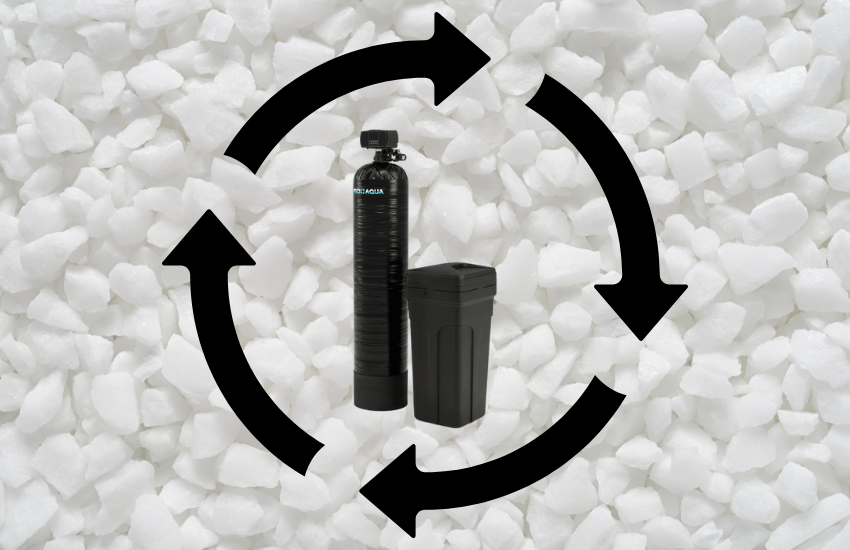
Over time, the resin becomes loaded with hardness minerals and can no longer soften water effectively. During regeneration, the system uses a saltwater solution called brine to rinse those minerals off the resin. The softener then flushes the wastewater to a drain, rinses the resin, and refills the brine tank for the next cycle.
Regeneration restores the resin’s ability to soften water. It does not disinfect water, remove every contaminant, or correct unrelated water problems such as bacteria, nitrate, arsenic, or sediment.
The Best Frequency Depends on Your Household
There is no single answer to how often does a water softener regenerate because every well-water system and household uses water differently. A softener installed in a two-person home with moderately hard water may go much longer between cycles than the same unit in a large household with very hard water.
Water hardness
Hardness is usually measured in grains per gallon (gpg) or milligrams per liter (mg/L). Higher hardness uses up the softener’s capacity faster. A water test is the most reliable way to establish the hardness level used for programming.
Private well water may also contain iron or manganese. Depending on the equipment and the form of those minerals, they can consume some softening capacity or foul the resin. A softener may therefore need more frequent service or regeneration than hardness alone would suggest.
Daily water use
Every gallon of water that passes through the softener contributes to capacity use. Water use rises with:
- More people in the home
- Longer or more frequent showers
- High-efficiency versus older plumbing fixtures
- Laundry loads and dishwasher use
- Guests, holidays, and seasonal occupancy changes
- Watering, cleaning, or other uses connected downstream of the softener
A softener should generally treat indoor water that needs softening. Connecting large irrigation demand to a softener can use capacity quickly and increase salt and water use without providing much benefit to the landscape.
Usable softening capacity
The number advertised for a softener is not always the capacity it should be programmed to use. Resin volume, salt setting, control valve, and salt efficiency all affect usable capacity.
For example, a unit described as having a high maximum grain capacity may require a large amount of salt to reach that maximum. Programming it at a lower, more efficient capacity can reduce salt use per grain removed. The correct setting depends on the specific softener and its manufacturer’s programming guidance.
This is why two systems with similar-looking tank sizes can regenerate on different schedules and use different amounts of salt.
Control valve type
The controller has a major effect on how often water softener regeneration occurs.
| Control type | How it decides when to regenerate | Typical result |
|---|---|---|
| Demand-initiated or metered | Measures water use and triggers regeneration after programmed capacity is used. | Usually the most efficient approach because the cycle follows actual demand. |
| Time clock | Runs regeneration on selected days, whether capacity is used or not. | Can waste salt and water if set too often, or allow hard water through if set too rarely. |
| Smart or proportional brining control | Uses metered demand and may adjust brine use based on capacity remaining. | Can improve efficiency when it is correctly sized and programmed. |
Many metered softeners also have a maximum number of days between regenerations. This “day override” can trigger a cycle even if the home has used little water. The correct override setting is model-specific, so use the owner’s manual or ask the installer how it applies to your valve.
How to Estimate a Reasonable Regeneration Interval
You can make a rough estimate if you know your water hardness, average daily water use, and the softener’s programmed usable capacity. This calculation is useful for checking whether a schedule seems reasonable, but it does not replace the setup instructions for your particular control valve.

Credit: justplumbingaz.com
The basic calculation
First, estimate daily hardness demand:
Daily hardness demand = water used per day × hardness in grains per gallon
Then estimate the number of days between regeneration:
Days between cycles = usable softener capacity ÷ daily hardness demand
Suppose a household uses an estimated 240 gallons per day and the tested hardness is 15 gpg. Its daily hardness demand would be 3,600 grains per day.
If the softener is programmed with 24,000 grains of usable capacity, the estimated interval would be about 6 to 7 days. That is only an example. It does not account for iron, changing water use, reserve capacity, or a manufacturer-required override.
Include iron only when the equipment guidance supports it
Some softener programming methods use a hardness compensation factor for dissolved iron. However, the right approach depends on the type and concentration of iron, the softener resin, pretreatment, and the control valve. Iron bacteria, oxidized iron, or significant sediment can create problems that a standard softener is not designed to solve alone.
If your well water causes orange staining, cloudy water, or recurring resin fouling, use a laboratory water test to identify the issue before changing programming. A softener may be part of the solution, but it is not automatically the correct primary treatment for every iron problem.
How Often Is Too Often or Not Often Enough?
A softener that regenerates frequently is not always malfunctioning. Very hard water, high household demand, a small softener, or iron in the water can all produce short intervals. Still, unusually frequent cycles deserve attention because they can increase salt use, wastewater, and wear on components.
Signs the softener may be regenerating too often
- The unit regenerates every day or nearly every day despite ordinary household water use.
- Salt use has increased noticeably without a clear change in occupancy or water use.
- The brine tank needs refilling much more often than expected.
- A metered controller shows water use that seems much higher than your actual use.
- The softener begins a regeneration cycle at seemingly random times, even when little water has been used.
Possible causes include incorrect hardness programming, an undersized unit, a stuck or inaccurate water meter, a toilet leak, a plumbing leak, a malfunctioning valve, or an incorrectly configured day override. Do not assume the softener itself is at fault until water use and settings have been checked.
Signs it may not regenerate often enough
- Soap becomes harder to rinse away or produces less lather.
- White scale returns on fixtures, glassware, or shower doors.
- Water feels less slippery after washing.
- Hardness symptoms appear before the next scheduled cycle.
- A hardness test taken after the softener shows hardness breakthrough.
These signs are not proof of a specific problem. For example, scale can be old buildup, and changes in soap performance can have other causes. But if hardness is present in water sampled downstream of the softener while the unit is supposed to be in service, inspect the settings and consider professional service.
Demand-Initiated Regeneration Is Usually Preferable
For most households, demand-initiated regeneration is preferable to choosing a rigid calendar schedule. A metered softener tracks water use and regenerates when its programmed capacity is nearly depleted.
This approach better accommodates everyday changes. A home may use more water during school breaks, holidays, laundry days, or visits from family, then much less during travel. A time-clock softener cannot account for those changes unless someone continually adjusts the schedule.
Demand-based regeneration also usually includes a reserve capacity. The reserve helps prevent hard water from reaching the home before the next scheduled regeneration, particularly when water demand changes unexpectedly.
Even with a metered valve, correct programming matters. The valve needs accurate information about hardness, capacity, and household use assumptions. Incorrect settings can make a sophisticated softener operate inefficiently.
How to Check Whether Your Softener Is Set Correctly
Homeowners can safely review visible settings, salt levels, and water-use clues without disassembling the valve or changing electrical components. Before changing any programming, record the current settings or take clear photos of the control display. This makes it easier to restore the previous configuration if needed.
- Find the latest water test. Use the measured hardness result, not an estimate based on a neighbor’s well or a local average. If the test is old or the water quality has changed, consider retesting.
- Confirm the hardness units. Make sure the control is set for the same unit used by the test report. Do not confuse mg/L with grains per gallon.
- Review the programmed capacity and salt setting. Compare them with the softener manufacturer’s documentation. Capacity and salt dosage must work together.
- Check the regeneration history. Many digital valves display the last regeneration date, number of days since regeneration, or total gallons used.
- Look for unexpected water use. A running toilet, dripping fixture, hidden plumbing leak, or water treatment equipment stuck in a cycle can cause more frequent regeneration.
- Test treated water for hardness. A simple hardness test can help show whether the softener is currently removing hardness. For persistent problems, use a qualified water-treatment professional.
A low TDS reading does not confirm that a softener is working, and a TDS meter cannot measure hardness removal reliably. Ion-exchange softening swaps hardness minerals for sodium or potassium ions, so total dissolved solids may change very little.

Credit: aquasureusa.com
Salt Use, Brine Levels, and Regeneration Efficiency
More frequent regeneration generally means more salt and more water sent to the drain. However, trying to stretch the interval as long as possible is not always efficient or effective. The resin needs adequate regeneration to continue supplying soft water.
The most efficient setup balances usable capacity, salt dose, and actual water demand. A softener should not be programmed to use its maximum theoretical capacity automatically if that requires an excessive salt dose for relatively little added capacity.
Keep enough salt available
Check the brine tank regularly and add the salt recommended by the softener manufacturer. Do not wait until the tank is completely empty if your system instructions advise maintaining a working salt level.
Also avoid filling the tank beyond what is practical for inspection and maintenance. Salt can form a hardened crust, called a salt bridge, that leaves an empty space beneath it. The tank may look full even though salt is not reaching the water needed to make brine.
Do not mistake a salt bridge for a programming problem
If the softener appears to regenerate but hard water returns, inspect the brine tank visually for a salt bridge or a large solid mass. Follow the manufacturer’s maintenance instructions before attempting to break up hardened salt. Avoid forcing tools into the tank near tubing or internal components.
If the brine level is unusually high, the system is not drawing brine, or wastewater backs up near the drain connection, stop treating it as a simple salt issue. Those symptoms can involve the injector, drain line, float assembly, valve, or drain arrangement and may require service.
When a Different Regeneration Schedule Will Not Fix the Problem
Changing the regeneration frequency cannot solve every water-quality complaint. If you have odor, discoloration, cloudy water, black staining, or a sudden change in taste, do not assume hardness is the cause.
For example, a rotten-egg odor may involve hydrogen sulfide, bacteria, a water heater issue, or other conditions. Orange or black staining may involve iron or manganese. A water softener can sometimes be part of a treatment train, but the right equipment depends on test results and the source of the problem.
Water that looks clear and softened is not necessarily safe to drink. Private well owners should use appropriate laboratory testing for health-related concerns and after events such as flooding, well repairs, or unexplained changes in water quality. The EPA provides private-well guidance at https://www.epa.gov/privatewells/protect-your-homes-water.
When to Call a Water Treatment Professional
Professional help is useful when the softener’s cycle pattern changes sharply, treated water remains hard, or the system has recurring salt, brine, or drain problems. A qualified technician can verify the control valve settings, measure flow through the meter, inspect the resin condition, and evaluate whether the softener is properly sized.
Ask the technician to explain the tested hardness, iron or manganese results if applicable, programmed capacity, salt dose, regeneration trigger, and day override. Those details help you understand why the softener regenerates when it does and make future maintenance easier.
Credit: proaquawater.com
Frequently Asked Questions
Can a water softener regenerate every night?
It can, but nightly regeneration is not typical for an adequately sized, correctly programmed softener serving an average household. It may be appropriate in a high-demand home with very hard water, but it can also indicate excessive water use, incorrect settings, a leak, or an undersized system. Check the water meter, hardness setting, and regeneration history before assuming replacement is necessary.
Should I manually start a regeneration cycle?
Manual regeneration may be appropriate after the brine tank has run out of salt, after certain maintenance tasks, or when the manufacturer specifically recommends it. It is not a routine substitute for correcting programming or mechanical problems. Review the owner’s manual before starting a manual cycle, especially if you are unsure where the system discharges wastewater.
Will using less water make my softener regenerate less often?
With a demand-initiated softener, lower water use will usually extend the time between cycles until the day override triggers a regeneration. With a time-clock system, using less water may not change the schedule at all because the unit regenerates according to the programmed day setting.
Does softened water mean the water is safe to drink?
No. Softening addresses hardness minerals and may reduce certain dissolved iron or manganese under suitable conditions, but it does not establish microbiological or chemical safety. Well water safety requires testing for the specific contaminants of concern.
How can I tell if my softener is too small for my home?
A softener may be undersized if it regenerates very frequently, delivers hard water before scheduled regeneration, or cannot keep up during normal household demand even after proper programming and maintenance. A sizing review should consider tested hardness, water use, flow rate needs, resin capacity, iron or manganese, and the control valve’s operating limits—not tank size alone.