
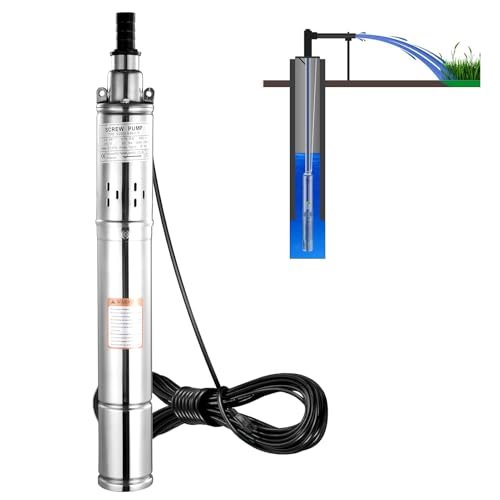
A submersible well water pump is the pump most commonly used in modern drilled private wells. It sits below the water level inside the well casing and pushes water up to the home, rather than pulling it from above ground.
This design is efficient, quiet, and well suited to deep wells. But choosing, maintaining, or troubleshooting a submersible pump requires more than knowing the well depth or selecting the highest horsepower rating. The pump must match the well’s available water, plumbing layout, pressure system, and household demand.
This guide explains how submersible well pumps work, how to size one correctly, what common problems may mean, and when a homeowner should call a qualified well or pump professional.
How a Submersible Well Water Pump Works
A submersible pump is a sealed electric pump and motor assembly installed inside the well. It is usually positioned far below the ground surface, beneath the pumping water level. When the pressure tank or pressure controller calls for water, the pump turns on and forces water upward through a drop pipe that leads to the home’s plumbing system.
Unlike a shallow-well jet pump, a submersible pump does not need to create suction to lift water from the well. It pushes water instead. That is why it can serve wells that are much deeper than the practical suction limit of most above-ground pumps.
The surrounding well water also helps cool the submersible motor. Proper water flow around the motor matters, particularly in wells with larger casing diameters or lower-yield conditions where a flow sleeve may be needed. This is an installation detail for the pump professional to evaluate.
Main Parts of the System
A working well-water system includes more than the pump itself. Understanding the major components makes symptoms easier to describe and helps avoid replacing the wrong part.
- Pump and motor: The submerged assembly that moves water and powers the pump stages.
- Drop pipe: The pipe carrying water from the pump to the top of the well.
- Power cable: A waterproof electrical cable running from the controls to the pump motor.
- Check valve: A valve that helps prevent water from flowing backward down the pipe when the pump stops.
- Well cap and pitless adapter: Components that protect the well opening and route water underground from the casing toward the home.
- Pressure tank: A tank that stores a limited usable volume of pressurized water and reduces rapid pump cycling in conventional systems.
- Pressure switch or pump controller: The control that starts and stops the pump based on system pressure or demand, depending on the design.
- Water treatment equipment: Filters, softeners, UV systems, or other devices installed after the pressure system when water testing shows they are needed.
Why Submersible Pumps Are Used in Private Wells
Submersible pumps are especially useful for drilled wells because they can push water over long vertical distances and maintain adequate pressure at the home when properly sized. They are hidden below ground, so they are usually quieter and less exposed to freezing weather than an above-ground jet pump.
| Feature | Submersible Pump | Jet Pump |
|---|---|---|
| Typical location | Inside the well, below water level | Above ground or in a pump house |
| How it moves water | Pushes water upward | Uses suction and, in some systems, an ejector arrangement |
| Best fit | Most drilled wells and deeper pumping conditions | Many shallow wells and certain existing installations |
| Noise and weather exposure | Usually quiet and protected underground | More audible and may need freeze protection |
| Service access | Requires pulling the pump from the well | More accessible from the surface |
A submersible system is not automatically the right answer for every property. Existing well construction, service access, budget, electrical setup, and water demand all matter. Still, it is the standard configuration for many residential drilled wells.
Submersible Pump Sizing: What Actually Matters
Pump sizing is one of the most important decisions in a well system. A pump that is too small may struggle to provide enough flow or pressure. A pump that is too large may cycle excessively, overdraw a low-yield well, or create unnecessary stress on plumbing and controls.
Horsepower alone does not tell you whether a pump is suitable. Two pumps with the same horsepower can have different flow and pressure performance because their pump stages, motor design, and curves differ.
Well Depth Is Not the Same as Pumping Water Level
A well may be drilled hundreds of feet deep, but the pump does not necessarily lift water from the bottom of the borehole. The more useful measurement is the pumping water level: the depth to water while the pump is operating at the expected flow rate.
For example, a deep well with a high water level may require less lift than a shallower well where the water level drops substantially while pumping. A pump installer may use well records, static water level, pumping level, and recovery information to assess the conditions.
Total Dynamic Head Determines the Work Required
Pump professionals use total dynamic head, often called TDH, to estimate how much resistance the pump must overcome. TDH includes more than vertical lift.
- Vertical distance from the pumping water level to the home or pressure tank
- Required pressure at the tank or pressure controller
- Friction loss through pipe, fittings, valves, filters, treatment equipment, and plumbing runs
- Elevation changes between the wellhead and the home
Pressure and flow are related but different. Pressure is commonly measured in psi, while flow is measured in gallons per minute, or GPM. A pump must provide the needed GPM at the required TDH, not merely deliver a high flow rate under easier conditions.
Household Demand and Well Yield Must Both Be Considered
A larger household may need more water during peak use, such as when showers, appliances, and irrigation overlap. However, the well itself can only provide water at its sustainable yield. Installing a pump that can move water faster than the well can recover does not create more groundwater.
When a well has limited yield, the solution may involve pump protection, storage, controls, or a carefully designed water-management system. The appropriate approach depends on the well test information and household use pattern.
Use the Pump Curve, Not Guesswork
A pump curve shows how much water a specific pump model can deliver at different head conditions. It is the key document for matching a pump to the system. A qualified installer should select a point on the curve that meets expected demand without exceeding the well’s practical supply or creating damaging operating conditions.
Useful information to provide during a pump-sizing discussion includes:
- Well depth, casing diameter, and available well log
- Static and pumping water levels, if known
- Documented well yield or recovery information
- Distance and elevation from the well to the pressure tank
- Desired household pressure range
- Number of bathrooms, occupants, appliances, and irrigation zones
- Existing pipe size and water treatment equipment
- Electrical service details and any past pump problems
Pressure Tanks, Switches, and Constant-Pressure Systems
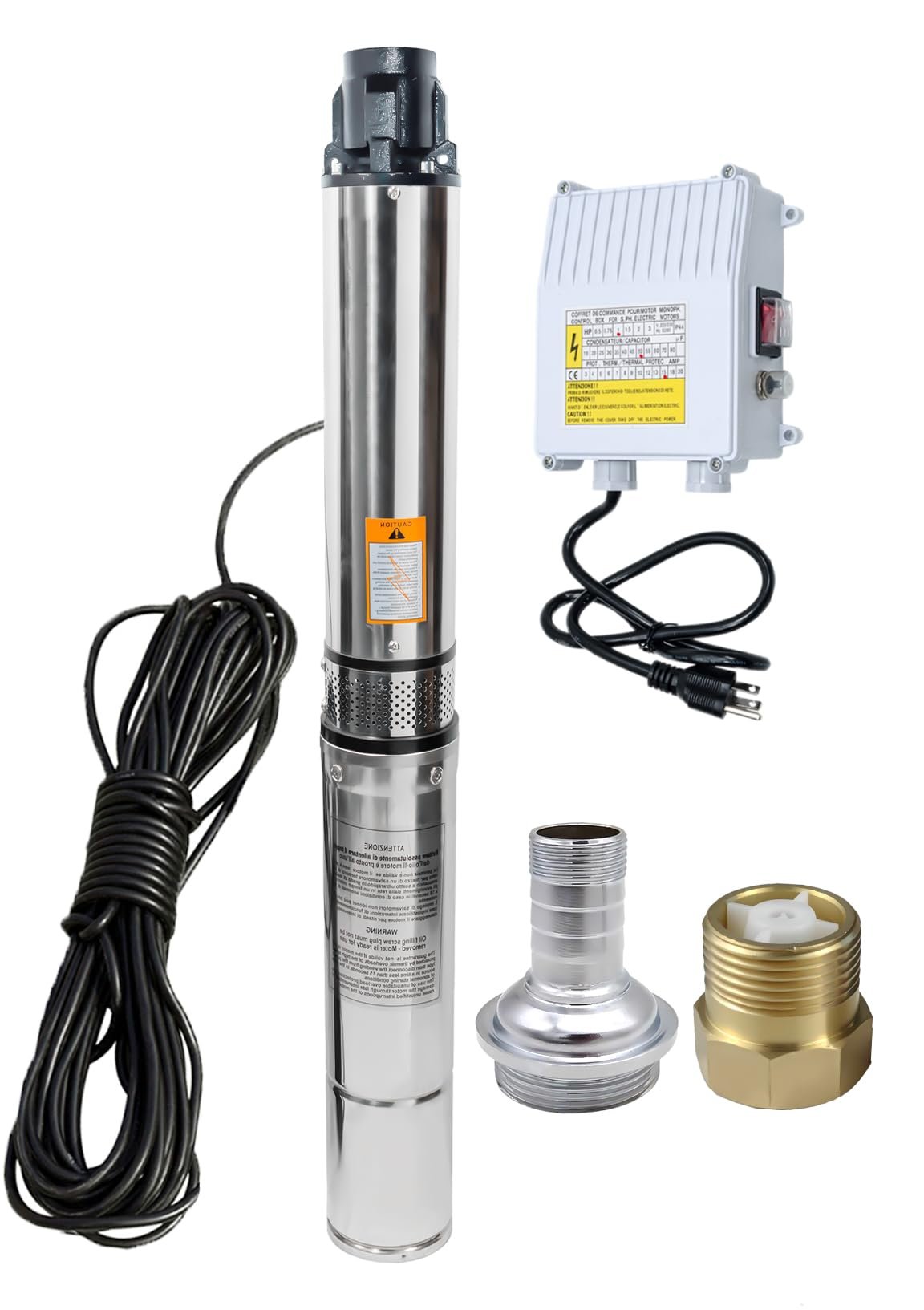
A submersible pump operates as part of a pressure system. In a conventional arrangement, the pressure switch starts the pump at a lower pressure and stops it at a higher pressure. The pressure tank provides drawdown, which is the usable amount of water delivered before the pump needs to start again.
Tank volume is not the same as drawdown. A large tank does not hold its entire labeled volume as available water because it also contains compressed air. The actual drawdown depends on tank design, air charge, and the system’s pressure settings.
Some homes use variable-speed or constant-pressure controls instead of a conventional pressure-switch system. These systems may keep pressure steadier during changing demand and often use a smaller tank. Their troubleshooting and setup requirements differ from a standard pressure tank and switch arrangement.
Credit: amazon.com
Do Not Assume Every Pressure Problem Is a Pump Problem
Weak water pressure can result from a partially blocked sediment filter, fouled treatment equipment, a closed valve, a plumbing restriction, a pressure-switch issue, a failing pressure tank, a leak, or a pump problem. A pump replacement may not correct the problem if the actual restriction is after the pressure tank.
Similarly, frequent on-and-off cycling can be caused by a waterlogged tank, incorrect air precharge, a control issue, a leak, or a pump that is improperly matched to the system. It is a symptom that needs diagnosis, not proof that the submerged pump has failed.
Installation Considerations
Installing or replacing a submersible well water pump is usually not a typical do-it-yourself project. The pump, drop pipe, electrical cable, safety rope where applicable, check valves, splices, and wellhead components must be assembled and lowered without damaging the well, wiring, or pump.
There are also electrical and contamination risks. Never work on live well-pump wiring, repeatedly reset a breaker that trips, enter a well pit or confined space, or attempt to pull a deep-well pump without proper equipment and qualified help.
What a Proper Installation Should Address
- Correct pump depth based on water level, well construction, and pump manufacturer requirements
- A pump model matched to the required flow and total dynamic head
- Compatible pipe, wiring, controls, pressure tank, and electrical protection
- Secure, watertight electrical connections suitable for well use
- Appropriate check-valve placement based on the pump and system design
- Protection against dry running or low-water conditions when the well requires it
- A sanitary well cap and properly protected wellhead components
- Post-installation checks for pressure performance, leaks, cycling, and water quality concerns
If the well is opened for pump service, ask the contractor how the wellhead will be protected from debris and contamination during the work. If water quality changes after repairs, flooding, or other well disturbances, laboratory testing may be appropriate. A visible change in water does not identify the contaminant or establish whether the water is safe to drink.
Common Submersible Pump Problems and What They May Mean
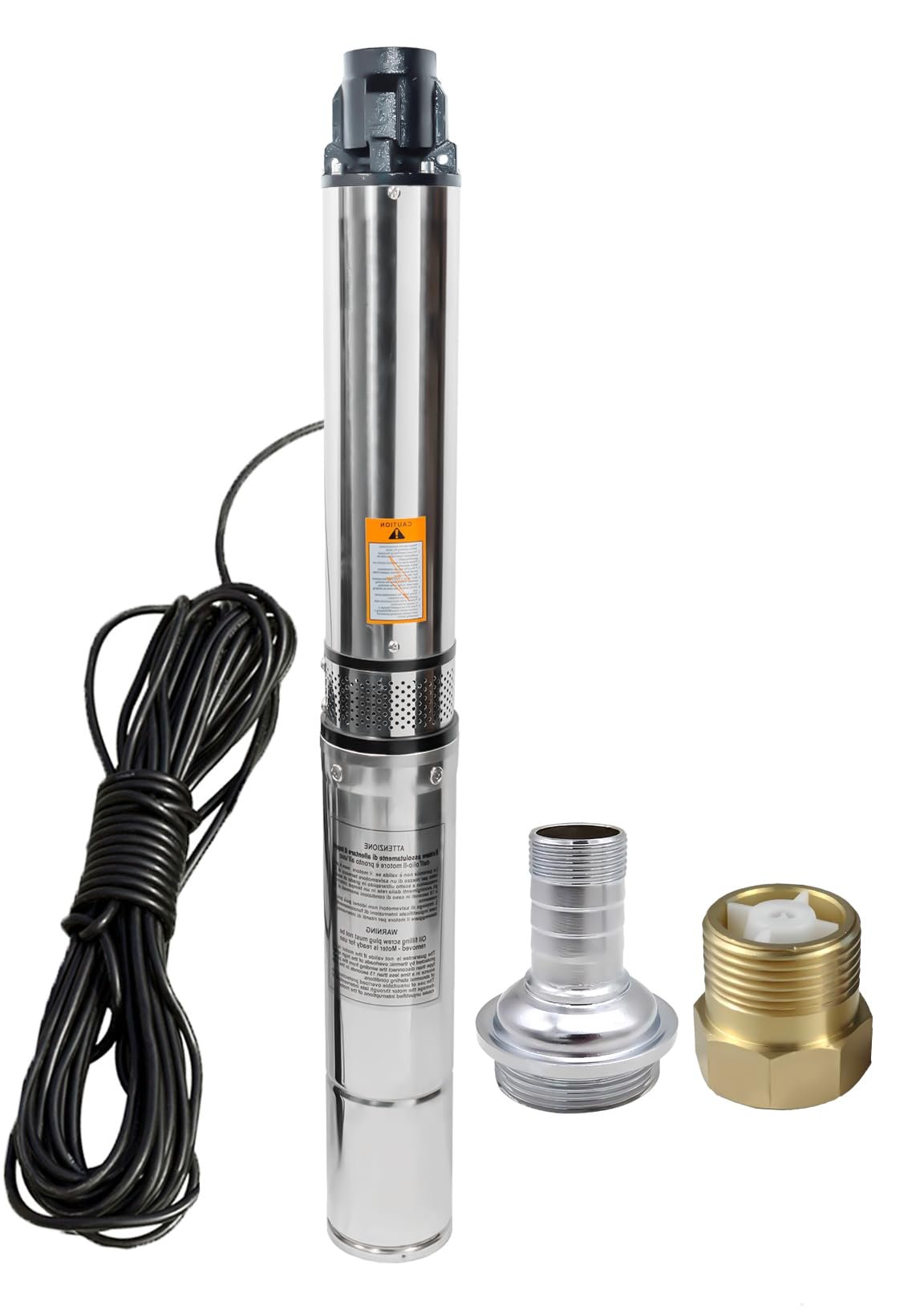
Many pump-related symptoms overlap with pressure tank, plumbing, electrical, and water-treatment problems. Start with safe observations: Does the issue affect the entire home or only one fixture? Did it begin after a storm, power outage, filter replacement, plumbing repair, or change in water use? What do the existing pressure gauge and controls show?
Credit: amazon.com
No Water at Any Fixture
If the entire house has no water, possible causes include a power interruption, tripped protection device, failed pressure control, a plumbing issue, an empty or low-producing well, a failed pump motor, damaged wiring, or a problem with the pump’s internal components.
Check whether the home has power, whether other electrical circuits are affected, and whether the pressure gauge shows an unusual reading. Avoid removing electrical covers or attempting live diagnostics. A pump professional can test the controls, wiring, motor circuit, and well conditions safely.
Low Pressure or Reduced Flow
Low pressure at every fixture may point to a clogged whole-house filter, treatment-system pressure loss, a partially closed valve, a pressure-control problem, a leak, worn pump components, or declining well performance. If only one faucet or shower is affected, the issue is more likely local to that fixture.
Before assuming the well pump is weak, review any filter cartridges and treatment equipment according to their manufacturer instructions. Sediment filters can become restrictive as they load with debris, and some treatment systems need periodic service to maintain flow.
Short Cycling
Short cycling means the pump starts and stops more often than normal, sometimes even when little water is being used. This can increase wear on the pump motor and controls.
Common possibilities include a pressure tank that has lost its air cushion, a bladder or diaphragm problem, a system leak, incorrect control operation, or a pump that does not match the system. A qualified technician should identify the cause before changing pressure settings or replacing equipment.
Air Spitting From Faucets
Air in household water can occur after plumbing work, but persistent air may indicate a falling water level, a leak in piping, a well-related condition, or another system issue. It is not normal to solve persistent air problems by simply increasing pump pressure.
Discolored or Cloudy Water During Pump Operation
Cloudiness, sediment, discoloration, or sudden changes in water appearance may come from disturbed sediment, well conditions, corroding plumbing, treatment equipment, or a pump-related issue. If the water becomes visibly unusual after a change in pump performance or well work, avoid treating appearance alone as a diagnosis.
Use a known safe water source if contamination is suspected, especially after flooding or well damage. Contact the local health department or a certified laboratory for guidance on appropriate testing. Boiling does not remove harmful chemical contaminants.
Maintenance That Helps Protect the Pump System
A submerged pump has few homeowner-serviceable parts, but the surrounding system benefits from regular attention. Maintenance can catch restrictions and pressure problems before they lead to a no-water emergency.
- Watch for changes in water pressure, flow, noise, cycling frequency, or water appearance.
- Replace sediment filters and maintain treatment equipment on the schedule appropriate for the actual equipment and water conditions.
- Keep the well cap secure and the area around the wellhead clear of chemicals, fuel, animal waste, and standing water.
- Review the pressure gauge periodically for normal operating behavior.
- Arrange service when the pump cycles abnormally, pressure drops persistently, or electrical protection trips.
- Test private well water on a routine schedule and after flooding, well repairs, or a meaningful change in taste, odor, or appearance. EPA guidance for private well owners is available at EPA’s private wells resource.
Do not adjust tank air precharge or pressure-switch settings based on a generic rule. Those settings are system-dependent. If a manufacturer-approved precharge check is appropriate, power must be isolated and water-side pressure fully relieved according to the exact equipment instructions. Electrical adjustments and pressure-vessel work are best left to qualified professionals.
Repair or Replacement: Making the Practical Decision
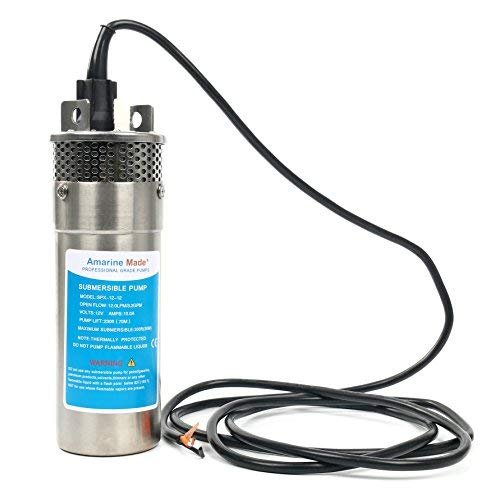
Because a submersible pump is inside the well, diagnosing and replacing it requires pulling the assembly. Before approving replacement, ask what evidence points to the pump rather than the control box, pressure switch, tank, wiring, pipe, check valve, or plumbing system.
A good service assessment should explain the observed symptoms, tests performed, likely failed component, condition of the existing pump and pipe, and whether the current pump was appropriately sized. If the pump is being replaced, it is a useful time to review pressure-tank performance, electrical protection, well yield information, and treatment-related flow restrictions.
Replacement cost varies widely with pump depth, pump size, pipe material, accessibility, wiring condition, control equipment, regional labor, and whether other repairs are needed. An estimate should separate the major parts and labor so you can understand whether the price includes pump removal, new pipe or wiring, controls, pressure-system work, and testing.
Credit: amazon.com
Authoritative References & Safety Note
Well-system note: Pump, pressure-tank, pressure-switch, wiring, and controller settings are equipment-specific. Use the exact manufacturer manual and a qualified well/pump professional for electrical work, pressure-vessel work, pump removal, or settings that affect system safety. After well repair, flooding, or a noticeable change in water quality, private-well owners should consider appropriate water testing rather than assuming restored flow means the water is safe.
Frequently Asked Questions
How long can a submersible well pump last?
Service life varies considerably. Water chemistry, sediment, well yield, pump sizing, electrical conditions, cycling frequency, installation quality, and maintenance of the pressure system all affect longevity. A pump that runs under difficult conditions may fail sooner than one installed in a stable, properly matched system.
Can a submersible pump run if the well is low on water?
It may run temporarily, but operating without adequate water can overheat or damage the pump and motor. Low-yield wells may need dry-run protection, pump controls, or storage designed around the well’s recovery rate. A well professional can assess the appropriate safeguard.
Does a larger horsepower pump provide better household water pressure?
Not necessarily. Pressure depends on the selected pump’s performance curve, the pumping water level, pipe friction, system controls, and restrictions in the plumbing or treatment equipment. Oversizing can create cycling and well-yield problems rather than better service.
Why does my water pressure drop when a filter is overdue for replacement?
As a sediment filter captures particles, it can become more restrictive and reduce flow through the plumbing. This may feel like a pump problem even when the pump is operating normally. Use the filter manufacturer’s replacement guidance and investigate unusually rapid clogging, which can signal changing sediment conditions.
Should I test my well water after a pump is pulled or replaced?
Testing can be a sensible precaution if the well was opened, if there was flooding or visible water-quality change, or if the contractor or local health department recommends it. Select laboratory tests based on the event and local risks, and follow the laboratory’s sampling instructions for containers, timing, and preservation.