
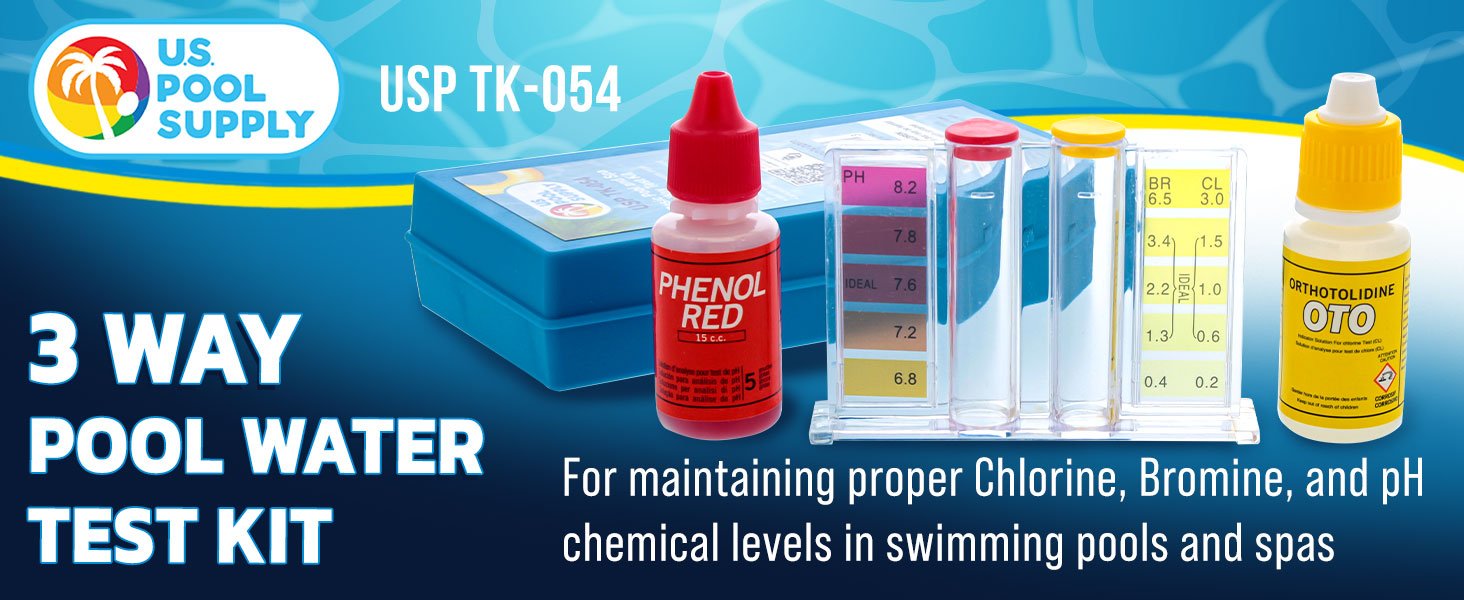
A chlorine test for water measures chlorine disinfectant in a sample, usually as free chlorine, total chlorine, or both. It is most useful when you are monitoring chlorinated well water after disinfection, checking a treatment system, or confirming whether chlorine is present before using another filter or test method.
For private well owners, chlorine testing is often a temporary part of well maintenance rather than a routine drinking-water test. Most private wells are not continuously chlorinated. If your well water has been shock chlorinated, the test helps track the remaining disinfectant—but it does not prove the water is safe to drink or confirm that bacteria are gone.
Understanding which chlorine result you need, where to collect the sample, and how to read the kit can prevent misleading results and unnecessary treatment changes.
What a Chlorine Water Test Measures
Chlorine is added to water as a disinfectant. When it is present, it can exist in more than one form. A chlorine test for water may measure free chlorine, total chlorine, or both.
| Test result | What it represents | Why it matters |
|---|---|---|
| Free chlorine | Chlorine available to disinfect water, before it has reacted with contaminants. | Useful for checking active disinfectant residual in chlorinated water. |
| Combined chlorine | Chlorine that has reacted with ammonia, nitrogen compounds, or organic material. | Can indicate that chlorine has been used up by reactions in the water. |
| Total chlorine | The sum of free chlorine and combined chlorine. | Useful when checking all chlorine forms present in a sample. |
When a method is designed to measure both results, combined chlorine can generally be calculated by subtracting free chlorine from total chlorine:
Combined chlorine = Total chlorine − Free chlorine
Not every test strip or comparator kit provides separate free and total chlorine readings. Read the package carefully before assuming a “chlorine” result refers to one specific form.
Why Private Well Owners May Need to Test for Chlorine
Private wells normally do not contain chlorine unless it has been intentionally added or the water comes from a system with chlorination equipment. A test can be helpful in several situations.
After shock chlorination
Shock chlorination is sometimes used after certain well repairs, flooding, confirmed bacterial contamination, or other situations where disinfection is recommended by a health authority or qualified well professional. Chlorine testing can show whether a residual remains while the system is being flushed.
However, a chlorine reading is not the same as a successful disinfection result. Chlorine can be present even if bacteria remain in an untreated part of the plumbing system, if the well has an ongoing pathway for contamination, or if sampling is done incorrectly. Follow the applicable health department or well contractor instructions, then use a certified laboratory test when confirmation for total coliform or E. coli is needed.
Before collecting a bacteria sample
Chlorine can interfere with a bacterial water test because it may kill bacteria in the sample container before the laboratory can analyze it. Laboratories commonly provide a sterile bottle that contains a chlorine-neutralizing agent when chlorinated water is expected. Use only the bottle and instructions supplied by the lab.
Do not collect a bacteria sample while chlorine residual is still present unless the laboratory specifically directs you to do so. The lab’s collection instructions, preservation requirements, holding time, and delivery deadline take priority over general advice.
Checking a chlorination or injection system
Some homes use continuous chlorination to control certain water problems or provide disinfection as part of a designed treatment system. In those systems, free and total chlorine testing may be part of normal operation.
The correct target residual depends on the equipment design, contact time, source-water chemistry, treatment goals, and any downstream carbon filtration. A single number is not appropriate for every home. Follow the treatment system manufacturer’s instructions and work with a qualified water-treatment professional when system adjustments are needed.
Confirming chlorine removal after carbon filtration
Activated carbon filters are commonly used to reduce chlorine taste and odor in treated water. Testing before and after a carbon filter may help identify whether chlorine is breaking through because the media is exhausted, flow is too high, or the system needs service.
A chlorine result alone does not establish that a carbon filter is removing other contaminants. Carbon performance depends on the specific contaminant, filter design, contact time, flow rate, cartridge condition, and the manufacturer’s tested claims.
Common Types of Chlorine Test Kits
Chlorine can be tested with strips, color-comparison kits, photometers, and laboratory methods. The right option depends on why you are testing and how precise the result needs to be.

Credit: nrgideas.com
Test strips
Chlorine test strips are quick and convenient. A strip is dipped in the sample, allowed to develop for the stated time, and compared with a printed color chart. Some strips measure free chlorine, while others measure total chlorine or multiple water-quality parameters.
Strips can be useful for basic screening, but results can be affected by humidity, expired strips, poor lighting, an incorrect dip time, or a subjective color match. Keep the container tightly closed and do not use strips past their expiration date.
DPD color-comparator kits
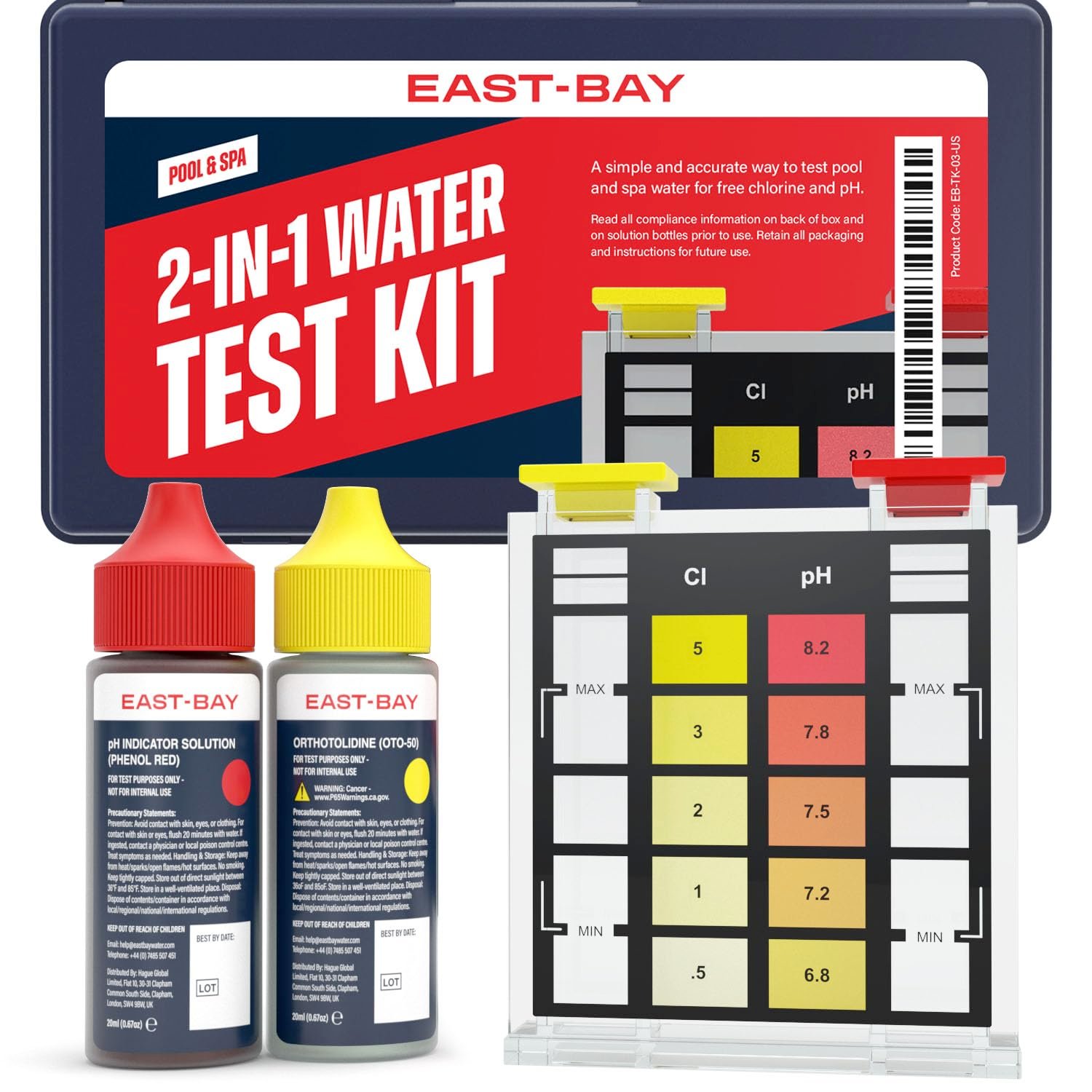
Many homeowner kits use DPD reagents. DPD is a chemical indicator that turns pink or red in the presence of chlorine. Depending on the kit and reagent sequence, it may provide free chlorine, total chlorine, or both.
These kits often give a more controlled reading than strips because the color is compared in a dedicated sample cell. Still, accuracy depends on clean equipment, fresh reagents, the correct sample volume, and reading the color within the manufacturer’s stated time window.
Digital colorimeters and photometers
Digital meters measure the color developed by a reagent rather than relying on the user’s visual color comparison. They can be useful when a system needs closer monitoring or when slight color differences are difficult to read.
A meter is only as reliable as its method, reagents, calibration checks, and operating condition. It should not be assumed to provide a valid result outside its stated measurement range.
Laboratory testing
A certified laboratory may be appropriate when chlorine testing is part of a broader water-quality investigation, compliance-related work, or a treatment-system evaluation. Laboratories can use controlled methods and document the sample handling and reporting process.
For most homeowners, a laboratory chlorine result is not a substitute for testing the actual problem of concern. For example, a chlorine result does not replace testing for coliform bacteria, nitrate, arsenic, lead, hardness, iron, manganese, or other contaminants that may be relevant to a private well.
How to Choose the Right Chlorine Test
Start by identifying the decision the result will support. A test is more useful when it matches the purpose.
- Tracking a remaining chlorine residual after disinfection: Choose a test with a range suitable for the expected residual and follow the applicable well-disinfection instructions.
- Checking a continuous chlorination system: Use the free chlorine or total chlorine measurement specified by the system designer or manufacturer.
- Checking carbon filter performance: Test at both the inlet and outlet using the same method and consistent sampling conditions.
- Preparing for a bacterial laboratory sample: Follow the laboratory’s directions; do not rely on a general household strip as the only decision tool.
- Investigating taste, odor, or illness concerns: Use a broader water-testing plan. Chlorine may be only one part of the issue.
Check the kit’s reporting range before purchase. A low-range test intended for small residuals may not be suitable when chlorine was recently added to a well. Conversely, a high-range kit may not give enough detail to evaluate very low residuals after a treatment device.
How to Collect a Water Sample for Chlorine Testing
Chlorine levels can change quickly after water is drawn. Heat, sunlight, aeration, time in an open container, and contact with organic material can all lower the result. Test the sample promptly and use a clean container or the test vial supplied with the kit.
Use the right sampling point
The location depends on what you are trying to learn:
- To check chlorinated water entering the home, sample near the point where water enters the plumbing system, if a safe and accessible sampling point is available.
- To compare treatment performance, take one sample before the treatment unit and another after it.
- To check a specific fixture, sample from that fixture after removing any aerator or attachment only if the test instructions or investigation calls for it.
- To collect a certified lab sample, use the exact faucet and collection method specified by the laboratory.
A sample from a refrigerator dispenser, pitcher filter, softener, reverse osmosis faucet, or tap with a built-in filter may not represent the water elsewhere in the house. Document the sampling point so results can be compared later.
Follow the kit instructions exactly
Different chlorine methods have different requirements for sample volume, reagent drops or powder pillows, mixing, development time, and color reading. Small deviations can change the result. Do not combine reagents from different kits or estimate a reading from a color chart intended for another product.
Use natural or white light for visual comparisons. Avoid reading colors in dim rooms, under strongly colored lighting, or against a dark background. If the sample is cloudy, heavily colored, or contains visible particles, the result may be harder to interpret. The kit manufacturer may provide guidance for these conditions.
Understanding Chlorine Test Results
Most homeowner chlorine tests report results in parts per million (ppm) or milligrams per liter (mg/L). For water testing at these low concentrations, ppm and mg/L are commonly treated as approximately equivalent.
A result should always be interpreted with context. There is no universally “good” chlorine number for every private well because many wells should have no chlorine at all, while a properly designed chlorinated system may require a monitored residual at a particular point in the treatment process.

Credit: amazon.com
When the test reads zero
A zero or non-detect result may mean there is no measurable chlorine at that tap. It can also mean chlorine has dissipated, reacted with material in the water or plumbing, been removed by carbon filtration, fallen below the kit’s detection range, or been missed because of expired reagents or improper testing.
After a well has been disinfected, do not assume zero chlorine means the water is ready for unrestricted use. Follow the disinfection plan and any local health guidance. If bacterial contamination was the concern, confirmation testing should be based on a properly collected laboratory sample.
When free chlorine is lower than total chlorine
If total chlorine is higher than free chlorine, combined chlorine may be present. This indicates that some chlorine has reacted with substances in the water. It does not identify exactly what those substances are or prove that the water contains a particular contaminant.
In continuous chlorination systems, a persistent difference between free and total chlorine may warrant review of the source water, chemical feed, contact tank, filtration, and maintenance history. A water-treatment professional can help interpret the pattern without guessing at a cause from one reading.
When the result is higher than expected
A higher-than-expected reading can occur after recent disinfection, when a chemical feed system is delivering too much disinfectant, or when a sample is taken at a point before chlorine-removal treatment. It can also result from testing errors, such as using the wrong reagent sequence or comparing the color after the allowed time.
Do not try to correct a high chlorine reading by mixing chemicals, bypassing safety equipment, or making electrical adjustments to a treatment system. If a chlorination system appears to be malfunctioning, use an alternative known-safe water source when appropriate and contact the service provider or a qualified water-treatment professional.
What Chlorine Testing Cannot Tell You
A chlorine test is valuable, but its limits are important. It measures disinfectant residual, not overall drinking-water quality.
- It cannot confirm that well water is free of bacteria, parasites, chemicals, or metals.
- It cannot identify the cause of a rotten-egg odor, staining, cloudiness, or unusual taste.
- It cannot prove that shock chlorination fixed a contaminated well.
- It cannot verify that an activated carbon filter removes every contaminant of concern.
- It cannot replace a certified laboratory test for analytes such as total coliform, E. coli, nitrate, arsenic, or lead.
If your water quality changes suddenly, if a well has flooded, or if there has been a repair to the well or plumbing, chlorine testing may be only one step in a more complete evaluation. The U.S. Environmental Protection Agency provides private-well guidance at https://www.epa.gov/privatewells/protect-your-homes-water.
Common Chlorine Testing Mistakes
Many inaccurate results come from sampling or handling problems rather than the water itself.
Credit: amazon.com
Testing water that has sat in a cup
Chlorine can dissipate after sampling. Fill the test vial directly from the tap when the kit permits, and begin the test promptly.
Using old or poorly stored reagents
DPD tablets, powders, liquids, and strips can deteriorate with age, heat, moisture, or sunlight. Check expiration dates and storage instructions. If the result is surprising or inconsistent, repeat the test with fresh supplies before drawing conclusions.
Testing through a filter without realizing it
Carbon filters, refrigerator filters, and point-of-use systems may change the chlorine level. Test the correct side of the treatment equipment for the question you are asking.
Confusing chlorine with total dissolved solids
A TDS meter does not measure chlorine residual. It estimates the conductivity of dissolved material in water and cannot identify chlorine, bacteria, nitrate, lead, or most other specific contaminants.
Assuming clear water means disinfection is complete
Water can look clear while chlorine is still present, and water can look normal while it contains contaminants. Never use appearance, smell, taste, or a single screening result as proof of drinking-water safety.
Frequently Asked Questions
Can pool chlorine test strips be used for drinking water?
Some pool strips measure chlorine, but they may not have the range, precision, instructions, or reporting format needed for household drinking-water monitoring. A test intended for potable-water or treatment-system use is usually the better choice, especially when results will guide a maintenance decision.
Does boiling water remove chlorine?
Heating and aeration can reduce chlorine over time, but boiling is not an appropriate way to address suspected chemical contamination or make unknown well water safe. It does not reliably remove many dissolved contaminants and can concentrate some chemicals as water evaporates.
Why does chlorine disappear faster from some well water?
Chlorine can react with iron, manganese, sulfur compounds, organic material, ammonia-related compounds, and material inside plumbing or treatment equipment. Warm water, sunlight, and open storage also speed chlorine loss. Further testing is needed to identify the specific cause.
Should chlorine be tested at the hot-water tap?
Usually, test cold water unless you are investigating a water heater or a problem limited to hot water. Heat can alter chlorine residual, and a hot-water result may not represent water coming directly from the well or treatment system.
How often should a private well be tested for chlorine?
A well without continuous chlorination generally does not need routine chlorine testing. Test when chlorine has been intentionally added, when monitoring a chlorination system, when checking chlorine-removal treatment, or when directed by a laboratory, health department, or qualified professional.