
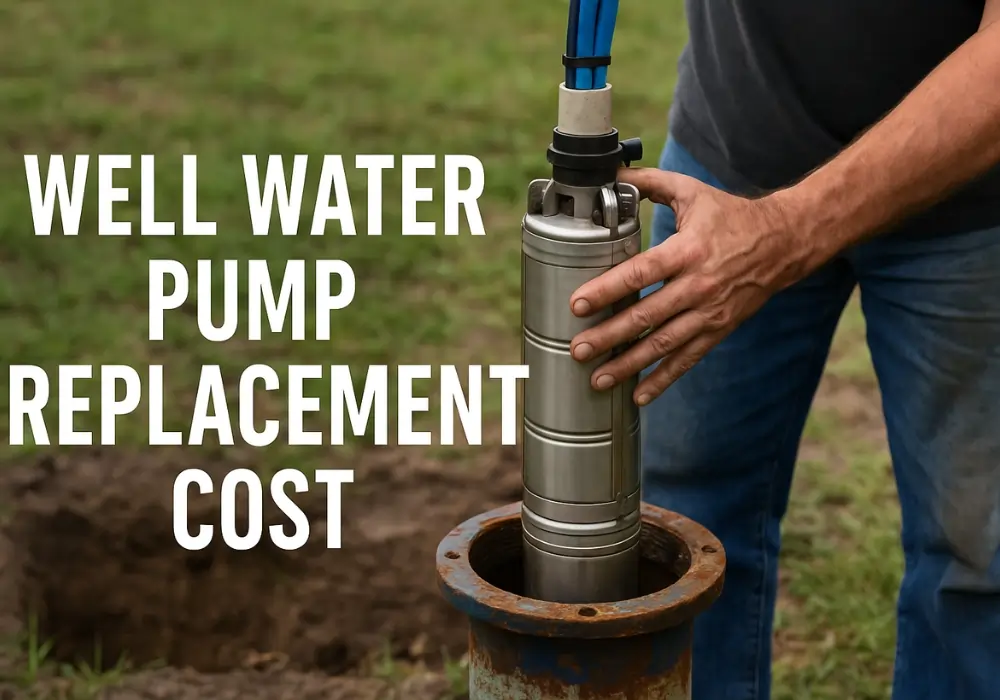
How much to replace well water pump depends mainly on the pump type, well depth, pipe length, labor required, and whether other parts of the pressure system need attention at the same time. For many homeowners, a professionally installed replacement falls somewhere between roughly $1,000 and $3,000, but a deep submersible-pump job or a complicated repair can cost more.
The well water pump replacement cost is not simply the price of the new pump. Pulling a submersible pump from a deep well can require specialized lifting equipment and a larger crew. A shallow jet pump is generally easier to access, but diagnosing the real cause of poor water service still matters before replacing anything.
If the home has low pressure, no water, or frequent pump cycling, do not assume the pump has failed. A pressure tank, pressure switch, electrical supply issue, plumbing leak, clogged filter, low well yield, or failed check valve can create similar symptoms. A proper diagnosis can prevent spending money on the wrong repair.
Typical Well Pump Replacement Cost
Most residential well pump replacements include the pump, labor, service call, removal of the old equipment, and at least some related fittings or wiring work. The final invoice may also include a new pressure switch, pump control box, check valve, pressure tank service, water-line repairs, or well-cap work if those components are worn or damaged.
| Cost component | Typical role in the total cost | What affects it |
|---|---|---|
| Pump and compatible components | Often a significant portion of the bill | Pump type, horsepower, voltage, flow capacity, materials, and whether a control box is needed |
| Labor and service call | Can range from modest to substantial | Local labor rates, diagnostic time, access, emergency service, and job complexity |
| Well access and pump removal | Usually higher for deep submersible pumps | Depth to the pump, drop-pipe type, pitless-adapter condition, wellhead access, and lifting needs |
| Pipe, wire, and fittings | May add a small or major amount | Length of pipe and wire, corrosion, cracked fittings, damaged safety rope, and check-valve condition |
| Pressure-system repairs | Optional but common on older systems | Condition of the tank, switch, gauge, controller, and pressure-relief components |
| Water testing or treatment follow-up | Usually separate from pump work | Flooding, well repairs, a change in water quality, or a concern about contamination |
A simple above-ground jet-pump replacement may cost less than a deep-well submersible replacement because the equipment is accessible. In contrast, a pump set hundreds of feet below ground may require much more labor, longer replacement pipe and wire, and more careful handling during removal and installation.
Requesting an itemized estimate is one of the best ways to understand how much to replace a well water pump at your home. It should separate diagnostic charges, labor, pump equipment, pipe and wire, replacement fittings, electrical work, permits where applicable, and any recommended but optional repairs.
What Makes One Well Pump Replacement More Expensive Than Another?
Pump type: submersible or jet pump
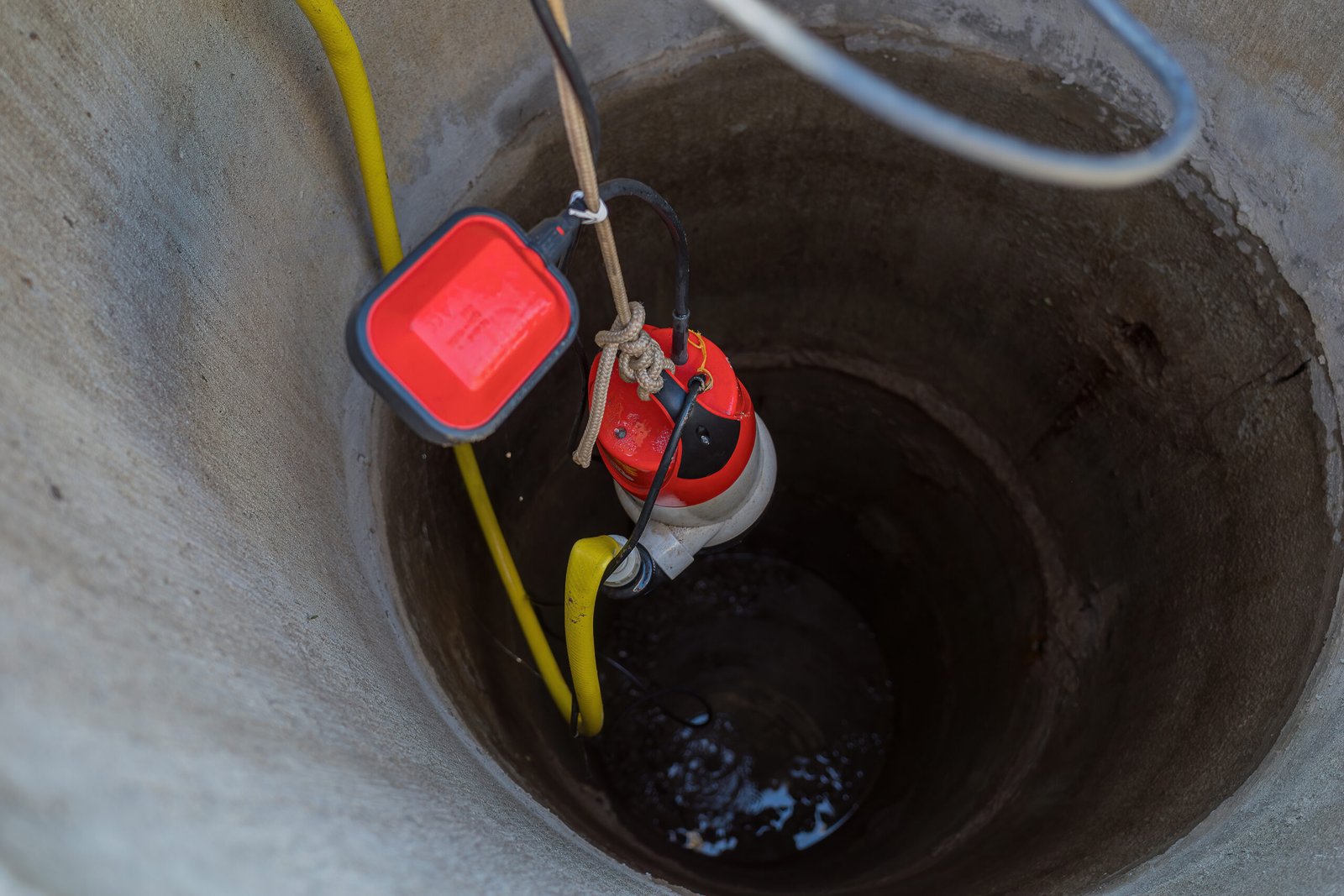
Submersible pumps sit inside the well below the water level. They are common for deeper wells and are usually pulled through the well casing when replacement is needed. Their location protects them from some weather exposure, but reaching them can make replacement labor-intensive.
Jet pumps are installed above ground, often in a basement, utility room, well house, or pump enclosure. A shallow-well jet pump may be relatively straightforward to access. Deep-well jet systems can still be more involved because they may use components in the well and require careful priming after service.
A submersible pump is not automatically more expensive as a product, but it often costs more to replace because of the work required to pull and reinstall it.
Well depth and pump setting depth
Well depth and the depth at which the pump is installed are related but not identical. A well may be drilled several hundred feet deep while the pump is set at a shallower level. Conversely, a pump may need to be set relatively deep to stay below the pumping water level and maintain reliable service.
The farther the pump is set below ground, the more drop pipe, electrical cable, and labor may be involved. Contractors also need to work carefully around the pitless adapter, which is the connection that routes water from the well casing to the buried line serving the house.
Pump sizing and electrical compatibility
Replacing a failed pump with the same horsepower is not always the right answer. Horsepower alone does not determine whether a pump matches the well and household. Proper selection may consider:
- The pumping water level rather than only the total drilled depth of the well
- Well yield, or how much water the well can provide over time
- Household demand and desired flow rate in gallons per minute (GPM)
- Total dynamic head, including lift, pressure requirements, and friction loss in piping
- The pump curve for the specific model
- Voltage, wire size, controller or control-box requirements, and pressure-system compatibility
An undersized pump may struggle to meet household demand. An oversized pump can contribute to rapid cycling, unnecessary energy use, or stress on the well and pressure system if the rest of the system is not designed for it. A contractor may recommend a different pump size if household use, plumbing, tank setup, or well conditions have changed since the original installation.
Age and condition of drop pipe, wire, and fittings
Once a deep pump has been pulled, it may make sense to replace aging components that would be costly to access later. Depending on their condition, this can include the drop pipe, electrical wire, splice connections, torque arrestor, check valve, or safety rope where used and appropriate for the system.
Not every component must be replaced with every pump. Reusing sound pipe and wire can reduce cost, while replacing visibly corroded, cracked, damaged, or unreliable parts may reduce the chance of another pull-out job soon after the repair.
Emergency timing and site access
After-hours or weekend service can raise labor costs. So can difficult access to the wellhead, landscaping that obstructs equipment, a damaged well cap, a cramped pump-house installation, or winter conditions in colder areas.
If the home has no water, a service company may need to prioritize restoring basic supply. Even then, ask what was tested and whether the proposed work addresses a confirmed fault or the most likely cause.
Cost Ranges by Common Replacement Scenario
Broad price ranges can help with planning, but they are not quotes. Local labor costs, depth, equipment selection, and hidden problems can move the final price considerably. The ranges below are general planning estimates for residential private-well systems in the United States.
| Replacement scenario | General planning range | Why the cost varies |
|---|---|---|
| Accessible jet pump replacement | Often about $500 to $1,500 | Access is usually easier, but priming, plumbing changes, electrical repairs, or a new pressure component can add cost. |
| Standard submersible pump replacement | Often about $1,000 to $3,000 | Includes the pump plus pulling and reinstalling equipment in the well. Depth and pipe length are major variables. |
| Deep well or difficult-access submersible replacement | Can exceed $3,000 | Longer pipe and wire runs, special lifting equipment, corroded components, and challenging access can substantially raise labor and material costs. |
| Pump replacement with pressure-system upgrades | Varies widely beyond pump-only pricing | A pressure tank, switch, controller, gauge, plumbing repair, or electrical correction may be needed or recommended. |
These figures are best used as a starting point for a household budget, not a substitute for a site-specific estimate. A low quote may exclude pipe, wire, permit fees, haul-away, or pressure-system repairs. A higher quote may include preventive replacement of aging components that would otherwise require another service visit later.
Credit: colleenroberts.com
Why Symptoms Do Not Always Mean the Pump Needs Replacement
A well pump is only one part of a home water system. Before authorizing a replacement, it is reasonable to ask what evidence points to pump failure and what other causes were ruled out.
Low pressure may come from restrictions or pressure controls
Low water pressure is not the same as low flow rate, although homeowners often experience them together. A clogged sediment filter, partially closed valve, scale buildup, failing pressure switch, inaccurate gauge, pressure-tank problem, or plumbing restriction can reduce service without a failed pump.
First note whether the problem affects every fixture or only one area of the home. If only one shower or faucet has weak flow, the problem is more likely to be a local fixture, aerator, cartridge, or branch-line issue than the well pump.
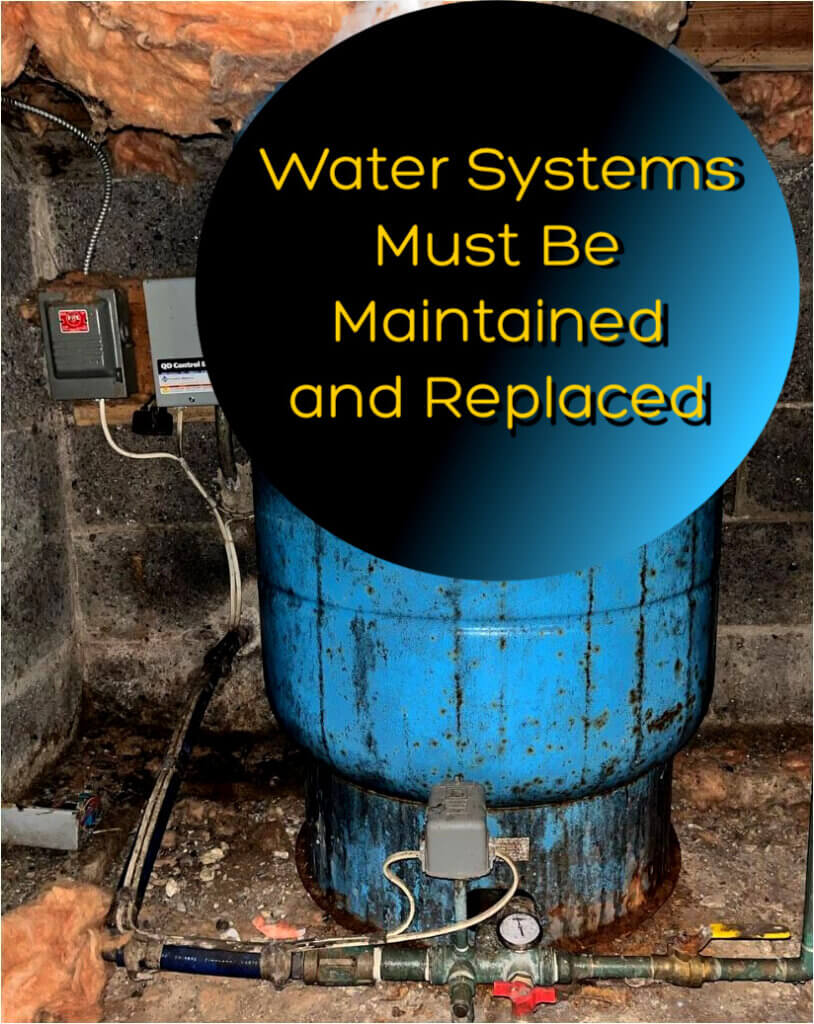
Short cycling may involve the pressure tank
Short cycling means the pump turns on and off frequently during modest water use. A waterlogged pressure tank, damaged bladder or diaphragm, pressure-switch problem, leak, improperly configured system, or an undersized tank can contribute to this behavior.
A failed tank does not always mean the pump is bad, although repeated short cycling can eventually shorten pump life. Tank volume is also not the same as usable drawdown, which is the amount of water available between pump cut-in and cut-out pressures.
Do not adjust pressure-switch settings or tank air pressure without understanding the exact system and following manufacturer instructions. Checking a conventional tank’s air precharge generally requires shutting off power and fully relieving water-side pressure first. Constant-pressure systems and certain specialty tanks may use different procedures. Electrical work and damaged pressure vessels should be left to qualified professionals.
No water can have several causes
No water throughout the house may result from a tripped breaker, failed control box, pressure-switch issue, wiring fault, dry well condition, plumbing failure, failed check valve, or a pump problem. Avoid repeatedly resetting a breaker that trips, bypassing controls, or opening live electrical equipment.
Useful observations to share with a service professional include:
- Whether the pressure gauge reads zero, low pressure, or normal pressure
- Whether the pump appears to run continuously, cycle rapidly, or remain silent
- Whether the issue began after a storm, power outage, plumbing repair, drought, or heavy water use
- Whether neighbors with wells are reporting low groundwater conditions
- Whether water returns temporarily after resting the system
- Whether there are visible leaks near the pressure tank, filters, or exposed plumbing
These details help narrow the diagnosis without asking a homeowner to perform unsafe electrical or well work.
What a Professional Well Pump Estimate Should Include
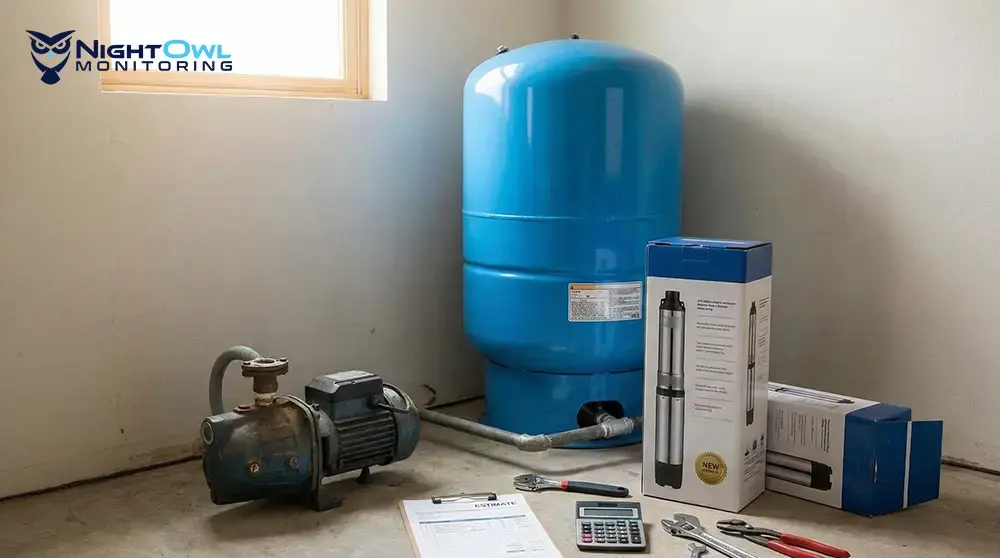
A clear estimate makes it easier to compare bids fairly. It also helps distinguish an urgent repair from optional upgrades that may be worthwhile but are not necessary to restore water service.
Credit: nightowlmonitoring.com
Diagnosis and proposed scope of work
The estimate should state the suspected fault or test findings in plain language. For example, it may identify a pump that cannot build pressure, damaged pump wiring, a failed control component, a leaking drop pipe, or a pressure-tank issue. If the exact cause cannot be confirmed until the pump is pulled, that uncertainty should be explained before work begins.
Ask whether the contractor has tested the pressure system, electrical supply, controls, and visible plumbing before recommending replacement. Some failures are only confirmed after the pump is removed, but the diagnostic path should still be understandable.
Equipment details
The quote should identify the pump type and key compatibility information, such as voltage, expected flow range, and whether a control box or controller is included. It should also explain whether the proposed pump is intended to match the existing system or whether it is being resized based on well and household conditions.
If the contractor recommends a larger pump, ask why. More horsepower is not automatically better. The answer should relate to measured or known conditions such as pumping water level, demand, pressure needs, plumbing losses, and the pump’s performance curve.
Related materials and possible contingencies
For a submersible replacement, ask whether the estimate includes new drop pipe, wire, splice kits, check valves, fittings, pitless-adapter parts, or well-cap repairs. A contractor may quote a base price and list additional costs that apply only if worn components are found after pulling the pump.
That approach can be reasonable if the contingencies are clearly described. It is better than receiving an unexpectedly large invoice for parts that were never discussed.
Warranty and follow-up
Ask separately about the equipment warranty and the labor warranty. They may have different terms. Also ask who handles warranty service if the system has a problem shortly after installation and whether the quote includes pressure testing, system startup, and cleanup.
Ways to Control Replacement Costs Without Cutting Corners
There is little value in choosing the lowest price if it means installing a poorly matched pump or reusing damaged components. Still, homeowners can make informed choices that help avoid unnecessary expense.
- Get a diagnosis before approving a pump. Confirm whether the symptom actually points to the pump rather than the tank, switch, filter, plumbing, or electrical supply.
- Compare itemized estimates. Check whether each quote includes the same equipment, labor, pipe and wire allowance, haul-away, and warranty coverage.
- Provide accurate well information. Share the well record if available, approximate depth, prior pump invoices, pump model information, water-pressure settings, and any recent changes in water use.
- Address clearly worn pull-out components. If pipe, wire, or fittings are near the end of their service life, replacing them while the pump is already out may be less expensive than paying for another well pull later.
- Maintain the pressure system. Promptly address leaks, clogged filters, abnormal cycling, and control issues that can place extra strain on the pump.
- Plan ahead when possible. If the pump is aging but still operating, learning the likely replacement scope and identifying qualified local well contractors can reduce the pressure of an emergency decision.
When Replacement May Be Better Than Repair
Some well pump problems can be repaired without replacing the pump assembly. Depending on the system, a contractor may be able to replace an external pressure switch, control box, capacitor, gauge, wiring section, or plumbing fitting. These repairs can cost far less than pulling a submersible pump.
Replacement is more likely to make sense when the pump motor has failed, the pump cannot produce adequate pressure or flow under tested conditions, internal components are worn, or pulling the unit reveals damage that makes continued use unreliable. The age of the pump also matters, but age alone does not prove it should be replaced.
For a submersible pump, labor to pull the equipment can be a large share of the bill. If the pump is already out and has a confirmed internal problem, replacing it may be more practical than reinstalling an old unit with uncertain remaining life. The best choice depends on the diagnosis, cost of parts, condition of related equipment, and the homeowner’s tolerance for another service call.
Water Quality Considerations After Well Work
Well pump replacement does not normally change the natural chemistry of the groundwater, but work at the wellhead can create a reason to pay attention to water quality. If the well was flooded, the cap was damaged, the system was opened, or the water’s smell, color, or clarity changed after repairs, ask a local health department, state extension program, or certified laboratory about appropriate testing.
Private-well owners commonly consider testing for bacteria after certain well events, while other tests depend on local risks and the specific concern. Follow the laboratory’s sample container, preservation, timing, and delivery instructions. A water test only reports the analytes tested in that sample; clear water and normal pressure do not confirm drinking-water safety.
If there is a concern about harmful contamination, use a known safe water source for drinking and food preparation and contact the local health department for guidance. Boiling or ordinary disinfection does not solve harmful chemical contamination.
Credit: callmattioni.com
Frequently Asked Questions
How long does it take to replace a well pump?
An accessible jet pump may be replaced in a relatively short service visit when the diagnosis is clear and compatible parts are available. Pulling and replacing a submersible pump can take longer because the crew must safely remove and reinstall pipe, wire, and the pump from the well. Deep wells, damaged components, weather, and unexpected repair needs can extend the job.
Can I replace a well pump myself to save money?
Replacing a shallow, accessible jet pump may appear manageable, but correct sizing, plumbing, priming, pressure control, and electrical safety still matter. Pulling a submersible pump involves heavy equipment, deep-well components, and electrical connections. DIY work can risk injury, well damage, contamination, or an incorrectly matched pump, so professional service is generally the safer choice for submersible systems.
Does homeowners insurance cover a failed well pump?
Coverage depends on the policy, the cause of failure, endorsements, and whether the damage resulted from a covered event. Ordinary wear, mechanical breakdown, or gradual deterioration may not be covered under a standard policy. Review the policy language and contact the insurer before repairs if you believe a storm, fire, covered electrical event, or other insured loss contributed to the failure.
What information should I give a well contractor before scheduling service?
Provide the symptoms, when they started, whether the issue affects the whole house, any pressure-gauge readings, recent power outages or storms, visible leaks, well depth if known, and prior pump records. Mention changes in water use, recent plumbing work, recurring low-water periods, or unusual water appearance or odor. This information can help the contractor arrive with more appropriate diagnostic tools and parts.
Should I replace the pressure tank when replacing the pump?
Not necessarily. A pressure tank should be evaluated based on its condition, drawdown behavior, bladder or diaphragm performance, corrosion, and compatibility with the pressure system. If it is working properly, replacing it may not be needed. If it is waterlogged, damaged, undersized for the system, or contributing to short cycling, replacing it during pump work may prevent another service visit later.