A potable water test kit can be a useful first check when you want to know whether your household water has noticeable quality issues such as hardness, chlorine, iron, nitrate, bacteria indicators, or an unusual pH. However, “potable” means suitable for drinking, and no basic home kit can prove that water is safe from every possible contaminant.
For private well owners, a test kit is best viewed as a screening tool or a way to monitor a known condition between laboratory tests. The right kit can help you spot changes, decide which laboratory analysis to order, and check whether a treatment system appears to be addressing the problem it was installed to handle.
The most reliable path is to match the test to your water source, local risks, symptoms, and concerns. A kit that measures hardness and pH may be helpful for choosing a water softener, for example, but it cannot confirm whether the water is free of bacteria, arsenic, lead, pesticides, or other health-related contaminants.
What Is a Potable Water Test Kit?
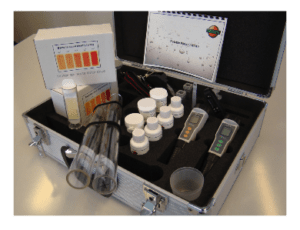
A potable water test kit is a product designed to measure one or more characteristics of water intended for household use or drinking. Depending on the kit, it may use test strips, liquid reagents, color comparison charts, digital meters, sample bottles, or mail-in laboratory analysis.
Some kits are made for quick household screening. Others include a sample container and instructions for sending water to a certified laboratory. These are very different products, even when both are marketed as drinking-water or potable-water test kits.
Most home kits measure general water-quality indicators rather than providing a complete drinking-water safety assessment. Common parameters include:
- pH, which indicates whether water is acidic, neutral, or alkaline
- Hardness, usually related to dissolved calcium and magnesium
- Iron, which can cause orange or brown staining
- Free chlorine or total chlorine, often relevant for municipal water or disinfection systems
- Nitrate or nitrite, which can be a concern in agricultural areas and shallow wells
- Alkalinity, which affects corrosion and treatment decisions
- Total dissolved solids (TDS), a broad measure of dissolved material
- Some bacterial indicators, depending on the kit design
A result from a potable water test kit should always be interpreted according to the specific analyte measured, the method used, the kit’s detection range, and its instructions. A “normal” result for one measurement does not establish overall water safety.
Why Private Well Owners Should Test Their Water
Private wells are not routinely monitored in the same way as public water systems. The homeowner is generally responsible for testing, maintaining, and treating the water supply. Water quality can change because of flooding, drought, nearby land use, construction, a damaged well cap, plumbing changes, or a problem with the well itself.
Testing is especially useful when you notice a change in water quality, such as:
- A rotten-egg, musty, chemical, metallic, or earthy odor
- Orange, reddish-brown, black, blue-green, or cloudy water
- Scale buildup on fixtures, glassware, or water heaters
- Soap that does not lather well or laundry that feels stiff
- Staining in toilets, sinks, tubs, or appliances
- A sudden change in taste, pressure, or sediment levels
- Illness concerns after a flood, well repair, or plumbing work
These symptoms can point toward a water-quality issue, but they do not identify the cause by themselves. For example, a sulfur-like odor may be associated with hydrogen sulfide, bacteria in plumbing or a water heater, or another source. A test is needed before choosing treatment.
Routine well-water testing is also important when no obvious symptom exists. The U.S. Environmental Protection Agency recommends that private well owners test regularly for common contaminants and test after flooding, repairs, or changes in water quality. Guidance and priorities can vary by region, so a local health department, extension office, or certified laboratory can help identify relevant local risks. The EPA provides private well resources at https://www.epa.gov/privatewells/protect-your-homes-water.
What a Home Water Test Kit Can and Cannot Tell You
A home potable water test kit can be valuable when it answers a focused question. It may indicate whether hardness is high enough to justify further softener sizing work, whether chlorine is present after a treatment stage, or whether pH appears low enough to warrant a laboratory confirmation and corrosion assessment.
Its limitations matter just as much.
What home test kits are good for
- Screening for common water-quality characteristics
- Monitoring a known issue, such as hardness or chlorine residual
- Comparing untreated and treated water at different locations in the home
- Identifying changes that justify more complete testing
- Providing preliminary information before speaking with a water-treatment professional or laboratory
What they cannot reliably establish
- That water is safe to drink in all respects
- That every contaminant has been tested or ruled out
- The source of a contaminant or water-quality symptom
- Whether a treatment system is properly sized or maintained without additional data
- Compliance with a local regulation, real-estate requirement, or lender requirement unless the required test method is used
Do not assume that clear, odor-free water is potable. Many contaminants with potential health significance have no obvious smell, taste, or color. Likewise, a low TDS reading does not prove that water is safe. TDS does not identify which dissolved substances are present, and it does not measure bacteria, many organic chemicals, or every metal of concern.
Types of Potable Water Test Kits
The best type of kit depends on what you need to know and how much confidence the decision requires.
| Test type | How it works | Best use | Main limitation |
|---|---|---|---|
| Test strips | A strip changes color after being dipped in water. | Quick screening for pH, hardness, chlorine, nitrate, nitrite, iron, or similar parameters. | Color matching and timing can affect accuracy; ranges may be broad. |
| Liquid reagent kits | Water is mixed with drops, tablets, or powders and compared with a color chart. | Focused testing for selected parameters, including hardness or chlorine. | Requires careful measuring, clean containers, and proper storage. |
| Digital meters | A probe measures a specific property, such as TDS, conductivity, or pH. | Frequent monitoring of a defined measurement. | A meter measures only its intended parameter and may need calibration. |
| In-home bacterial kits | A sample is exposed to a growth medium or indicator. | Preliminary screening when bacteria is a concern. | Collection, incubation, and interpretation errors can affect results; laboratory confirmation is often appropriate. |
| Mail-in laboratory kits | Water is collected in laboratory-provided containers and analyzed by a lab. | Health-related decisions, property transactions, treatment design, and detailed water profiles. | More expensive and time-sensitive; strict sampling instructions apply. |
Mail-in kits can be a convenient way to access laboratory testing, but check what the package actually includes. “Comprehensive” is a marketing term, not a standardized test panel. Review the analytes, method, laboratory credentials, sample holding times, and whether the panel fits your concerns.
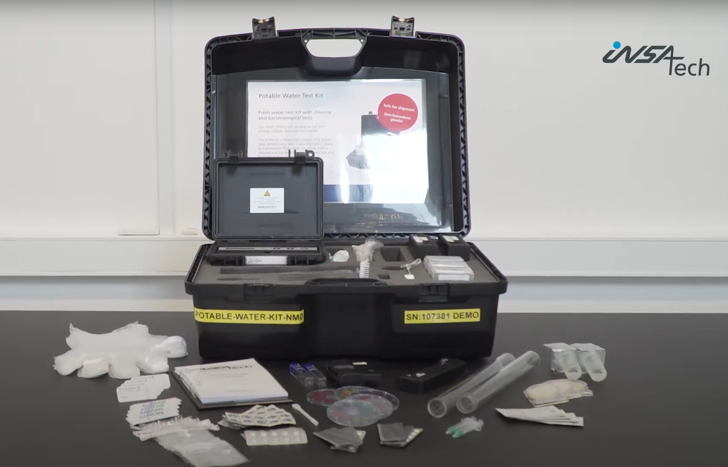
Credit: insatechmarine.com
Parameters Worth Testing for in Well Water
There is no universal testing panel for every private well. A useful baseline test often includes microbiological indicators and water chemistry that affects health, plumbing, and treatment choices. Additional tests should reflect local geology, nearby agriculture or industry, and household conditions.
Coliform bacteria and E. coli
Total coliform testing looks for a broad group of bacteria that can indicate a pathway for contamination. E. coli is a more specific indicator associated with fecal contamination. These results should be taken seriously because they may indicate that disease-causing organisms could enter the water supply.
Bacteria testing requires careful sample collection and prompt delivery or processing. A home bacterial kit may be useful as an initial screen, but a certified laboratory result is the stronger basis for a health decision, follow-up disinfection plan, or repair investigation.
Nitrate and nitrite
Nitrate and nitrite can enter groundwater from fertilizer, septic systems, animal waste, or other sources. They are particularly important to evaluate where infants, pregnant people, or vulnerable household members use the water.
When reviewing results, confirm whether nitrate is reported as nitrate or as nitrate-nitrogen. These reporting bases are different, and the result must be compared with the correct reference value. If a result is elevated or unclear, use a certified laboratory and seek guidance from local health authorities.
pH, hardness, alkalinity, and TDS
These measurements are often most useful for plumbing protection and treatment planning. Low pH can contribute to corrosion and may be associated with blue-green staining from copper plumbing. Hardness contributes to scale and can reduce the effectiveness of soaps and detergents. Alkalinity influences how stable pH is and can matter when selecting neutralizing equipment.
TDS is not a contaminant-specific safety test. It is best treated as a broad trend indicator. A sudden change in TDS can be worth investigating, but it cannot identify what changed.
Iron, manganese, and sulfur-related concerns
Iron and manganese can cause staining, metallic tastes, dark deposits, and nuisance problems in plumbing or treatment equipment. Hydrogen sulfide can produce a rotten-egg odor, but odor alone cannot confirm it. A proper test should guide whether the solution is aeration, oxidation and filtration, carbon treatment, plumbing maintenance, or another approach.
Arsenic, lead, and other local contaminants
Arsenic can occur naturally in groundwater in certain regions. Lead is often associated with household plumbing components rather than the well itself, especially if water is corrosive. Other location-specific concerns may include fluoride, uranium, pesticides, volatile organic compounds, radon in water, or contaminants related to nearby industrial activity.
These are generally laboratory-testing questions, not test-strip questions. Ask a certified laboratory or local health department which analytes are relevant in your area and whether first-draw or flushed samples are needed for the concern being evaluated.
How to Choose the Right Kit
Start with the decision you need to make. Buying the largest multi-parameter kit is not always the best choice if it leaves out the contaminant you actually need to assess.
- For a new well or an unknown water supply: Choose a certified laboratory panel recommended for private wells in your area.
- For hard water symptoms: Use a hardness test for initial screening, then obtain a more complete analysis before sizing a softener, especially if iron or manganese may be present.
- For odor, stains, or discoloration: Look beyond general strips. Test for the likely causes and consider a laboratory water analysis if the symptom is persistent.
- For a treatment-system check: Select a kit that measures the parameter the system is intended to address, such as hardness before and after a softener or chlorine where a disinfection process requires monitoring.
- For suspected contamination: Skip general screening as the only step and arrange appropriate laboratory testing.
Before buying, review the kit label or instructions for the following details:
- The exact analytes tested
- The reported units and measurement ranges
- The detection limit, if provided
- Whether the result is quantitative, approximate, or simply present/absent
- Expiration date and storage requirements
- Whether laboratory analysis is included and which laboratory performs it
- Required sample timing, preservation, and shipping instructions
A kit’s result is only as meaningful as its range. For instance, a strip that simply indicates “high hardness” may confirm a problem exists but may not provide enough precision to set up an efficient water softener regeneration schedule.
How to Collect a Useful Water Sample
Always follow the instructions provided with the specific potable water test kit. Sampling procedures differ by analyte. A sample for bacteria testing, for example, may require a sterile bottle and special handling, while a sample for lead may require water that has been sitting in plumbing for a specified period.
For general home screening, these practices reduce avoidable errors:
- Use a clean sampling container if the kit does not provide one.
- Test water from the location relevant to your question, such as untreated water before a filter or drinking water from the kitchen faucet.
- Note whether the water has passed through a softener, filter, reverse osmosis unit, or other treatment device.
- Run the faucet only as directed. Do not assume every test requires flushed water.
- Avoid sampling from a faucet with a dirty aerator, leaking connection, or removable filter unless that fixture is specifically what you are evaluating.
- Follow the timing instructions exactly when dipping strips, adding reagents, or reading colors.
- Record the date, sample location, observations, and results.
Do not use a drinking-water kit container for a sample unless it is designed for that analysis. Laboratory bottles may contain preservatives, and rinsing or refilling them incorrectly can invalidate the result. For time-sensitive samples, especially bacteria samples, follow the laboratory’s delivery requirements closely.

Credit: tektrak.co.uk
How to Interpret Results Without Overreacting
A test result should lead to a proportionate next step, not an immediate assumption that a major repair or expensive treatment system is needed. First, confirm what was measured and whether the result is within the kit’s reliable range.
If a home test produces an unexpected result, repeat the test with a fresh kit if practical and check whether the sample location or technique could explain the difference. Then decide whether laboratory confirmation is needed.
Aesthetic results versus health-related results
Some results mainly explain nuisance issues. Hardness, iron, manganese, pH, and sulfur-related odor can affect fixtures, laundry, taste, and equipment life, but their treatment needs vary. A water softener removes hardness through ion exchange; it is not a disinfectant and may not be appropriate for significant iron, manganese, bacteria, or other untreated water problems.
Other results may require faster action. A positive bacterial indicator result, a concerning nitrate result, or a suspected chemical contamination issue should be confirmed and addressed promptly. Use a known safe water source for drinking and food preparation while you obtain appropriate guidance. For suspected harmful chemical contamination, do not assume boiling makes the water safe; boiling does not remove most dissolved chemicals and can concentrate some contaminants.
Compare untreated and treated water carefully
Testing before and after treatment can help identify whether a system is affecting its intended target. However, results can be misleading if samples are taken from different water sources, if the treatment system is bypassed, or if the sample points have different plumbing conditions.
For example, a whole-house softener should be evaluated with samples from before and after the softener, not by comparing a kitchen faucet supplied by reverse osmosis with an untreated outdoor faucet. Record the sample locations so future results are meaningful.
When a Certified Laboratory Test Is the Better Choice
Use certified laboratory testing when the result will affect health decisions, a home sale, treatment design, or a significant repair. It is also the better option when symptoms are persistent, when a home kit result is unclear, or when you need to test contaminants that basic kits do not measure reliably.
Laboratory testing is particularly appropriate in these situations:
- A new private well or a property with little water-quality history
- Flooding near the well, a damaged well cap, or recent well work
- Positive or questionable bacteria screening results
- Nearby septic problems, livestock operations, agricultural land, fuel storage, or industrial activity
- Concerns about arsenic, lead, nitrate, pesticides, or other health-related contaminants
- Planning to install a whole-house treatment system
- Confirming that treatment addresses a specific tested problem
Ask the laboratory for a report that identifies analytes, units, method information, and any applicable benchmarks. A laboratory can also tell you whether the sample was received within its required holding time. That information is important when comparing results over time or discussing treatment options with a qualified professional.
Common Mistakes to Avoid
- Using a TDS meter as a safety test: TDS is not a measure of bacteria or a complete chemical safety screen.
- Testing only after a filter or softener: This can hide the untreated water condition that determines the correct treatment approach.
- Choosing equipment from one strip result: Whole-house treatment should be based on a suitable water analysis, household flow needs, and maintenance requirements.
- Ignoring kit expiration dates: Old strips and reagents can produce unreliable color changes or readings.
- Comparing results reported in different units: Confirm the reporting basis before deciding whether two results are truly different.
- Assuming odor or color identifies a contaminant: Similar symptoms can have different causes, requiring different solutions.
- Delaying follow-up after a major change: Sudden odor, discoloration, flooding, or suspected contamination deserves timely investigation.

Credit: insatechmarine.com
FAQ
Can I use a potable water test kit on both well water and city water?
Yes, many kits can be used with either source, but the priorities differ. Well owners often need testing for bacteria, nitrate, minerals, and local groundwater contaminants. Municipal-water users may be more concerned with chlorine, plumbing-related lead, taste, or treatment performance. Choose the analytes based on the specific source and concern.
How often should a private well be tested?
Routine testing frequency depends on the contaminant and local conditions. A regular annual check for common concerns is widely recommended for private wells, with additional testing after flooding, repairs, a change in water quality, or changes in nearby land use. Local health departments can recommend a suitable panel and schedule.
Are mail-in water test kits as reliable as going directly to a laboratory?
A mail-in kit can provide laboratory-quality analysis if it uses an appropriate laboratory and you follow its sampling, preservation, and shipping instructions exactly. The important questions are what the panel tests for, whether the laboratory is qualified for the analysis, and whether the sample reaches the lab within the required time.
Should I test water from the kitchen faucet or directly from the well?
Test at the point that matches your question. A kitchen faucet sample shows the water people may drink, while a sample before treatment helps identify raw well-water conditions. Testing both can be useful when evaluating a filter, softener, or other treatment system.
What should I do if my test kit shows a concerning result?
Check the instructions, sample location, expiration date, and testing procedure, then arrange laboratory confirmation when the result could affect health or require major treatment. If bacterial or chemical contamination is suspected, use a known safe water source for drinking and food preparation and contact your local health department or a qualified water professional for next steps.