
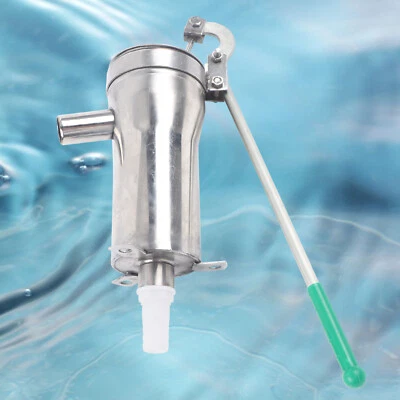
A deep well hand water pump can provide water when grid power is unavailable, but only if the pump type matches the well’s actual water level and construction. The key measurement is not simply the drilled depth of the well. It is the depth from ground level to the water level while pumping.
Many hand pumps work by suction and are limited to relatively shallow water levels. A true deep-well hand pump places its pumping cylinder down inside the well, below the water level, and uses a rod connected to the handle at the surface. This design can lift water from much greater depths than a typical pitcher-style hand pump.
For private-well homeowners, a hand pump is usually considered for emergency backup, off-grid water access, livestock use, or a secondary source of non-pressurized water. It does not automatically replace an electric well pump or provide normal household pressure.
What Is a Deep Well Hand Water Pump?
A deep well hand water pump is a manually operated pump designed to lift water when the water level is too far below the surface for an ordinary suction pump. Rather than pulling water up through a pipe from above, it uses a pump cylinder installed down in the well.
As the handle moves, it operates a long pump rod. The rod opens and closes valves within the submerged cylinder, lifting water upward through a drop pipe toward the pump head at the surface.
This distinction matters because water cannot be reliably lifted by suction from unlimited depths. Atmospheric pressure helps push water into a suction pipe, but it has practical limits. In most residential applications, a suction-style hand pump is generally suitable only when the static water level is roughly 20 to 25 feet or less below the pump. Conditions such as elevation, pipe restrictions, and worn seals can reduce that workable lift.
Deep-well models avoid that limitation by positioning the pumping mechanism below the water level. The handle still requires human effort, and a deeper installation usually means more effort per gallon, but the basic system can serve wells with substantially deeper water levels.
Well Depth Is Not the Same as Water Level
One of the most common mistakes when choosing deep well hand water pumps is selecting a pump based only on the total depth shown on a well record. A well may be drilled hundreds of feet deep while its water level sits much closer to the surface. Conversely, a relatively shallow well may have a water level too low for a suction pump.
Before choosing a pump, distinguish these measurements:
- Total well depth: The distance from ground level to the bottom of the drilled well.
- Static water level: The level of water in the well when no water is being pumped.
- Pumping water level: The water level while water is being withdrawn. This may be lower than the static level.
- Drawdown: The amount the water level falls during pumping.
- Well yield: The rate at which the well can provide water over time, often expressed in gallons per minute (GPM).
For hand-pump selection, the pumping water level is especially important. A pump cylinder installed too close to the water surface may lose reliable operation when the water level drops during use, seasonal dry conditions, or periods of heavy household demand.
A well driller’s report may list the static water level and total depth. If those records are unavailable or old, a qualified well contractor can measure the well safely. Avoid dropping improvised objects, electrical tools, or unclean measuring devices into the well, since they can damage equipment or introduce contamination.
How Deep Well Hand Pumps Work
Most deep-well hand pumps use a reciprocating piston system. The main components are straightforward, but they must be correctly matched and installed for the well.
| Component | Purpose |
|---|---|
| Pump head and handle | Converts hand movement into up-and-down motion. |
| Pump rod | Transfers movement from the handle to the submerged piston. |
| Drop pipe | Carries water from the cylinder to the surface. |
| Submerged cylinder | Contains the piston and check valves that lift water. |
| Well seal or mounting plate | Supports the pump and helps protect the well opening. |
| Spout or discharge connection | Directs pumped water into a container or compatible plumbing connection. |
On the upstroke, the piston arrangement draws water into the cylinder and begins lifting the water column in the drop pipe. On the downstroke, check valves prevent water from falling back into the well while allowing the piston to reset for the next stroke. Repeated strokes move water toward the surface.
Some designs are intended only to discharge water at the pump spout. Others may be capable of pushing water into a storage tank or low-pressure line. A pump that can lift water from depth is not automatically suitable for pressurizing a home’s plumbing. Pressure capability, cylinder size, handle leverage, pipe rating, and intended use all affect that decision.
Types of Manual Well Pumps
Credit: ebay.com
Shallow-well suction pumps
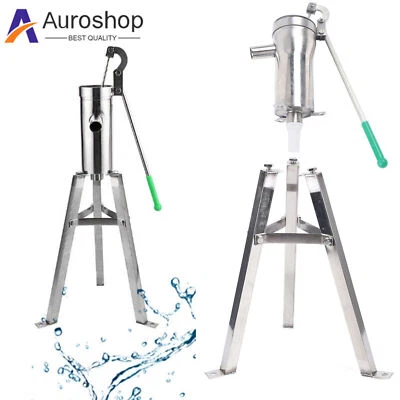
Traditional cast-iron pitcher pumps and similar surface pumps draw water upward through a suction pipe. They can be practical for shallow wells, cisterns, or storage tanks, but they are not generally appropriate where the pumping water level is deeper than their practical suction limit.
They also require a sealed suction line. Even a small air leak can prevent priming or cause weak output. A suction pump may work intermittently when the water level is near its limit, then stop working during dry weather or high demand.
Deep-well lift pumps
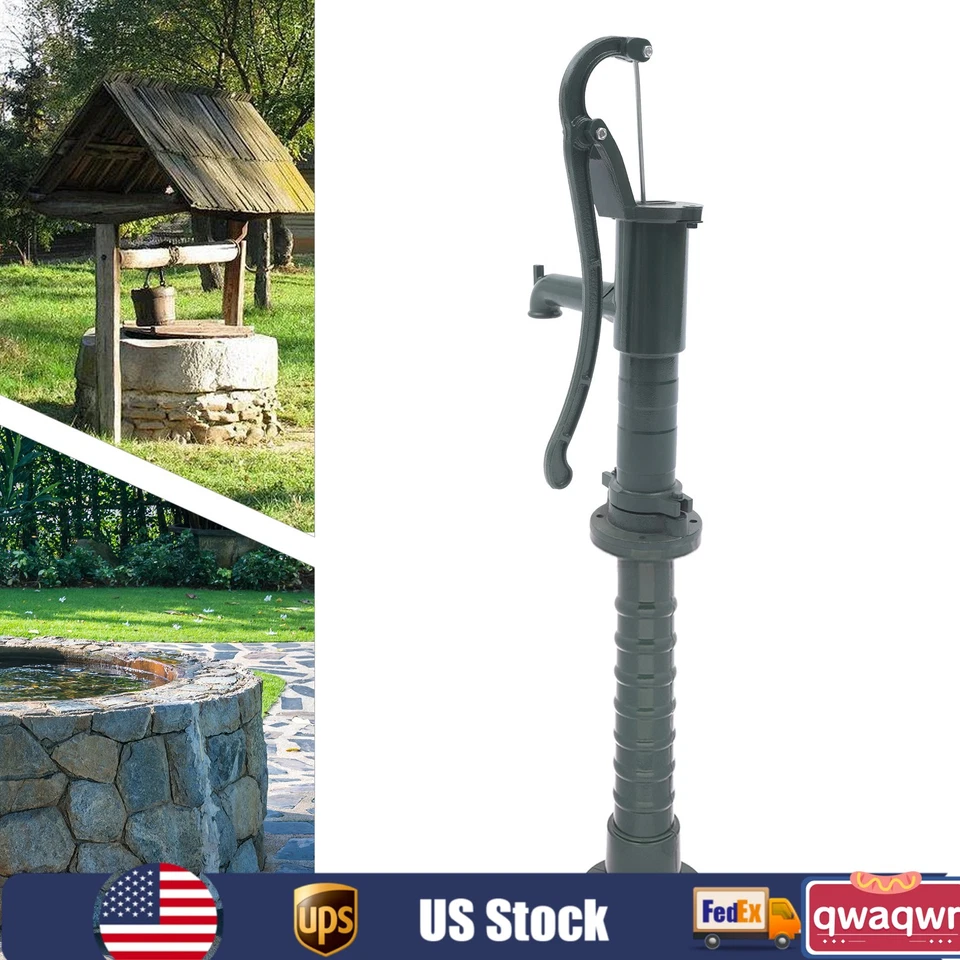
A deep-well lift pump has a cylinder installed below the water level. This is the standard design for manual pumping from a drilled well with a deeper water table. The pump may be mounted on the well casing, on a dedicated standpipe arrangement, or as part of a purpose-built well cap assembly.
Lift pumps are commonly chosen for emergency water access because they can work independently of the electric pump, provided the well layout allows both systems to coexist.
Force pumps
A force pump can both lift water and discharge it under some pressure. These pumps may be useful for filling an elevated storage tank, supplying a hose for limited use, or serving an off-grid plumbing arrangement. However, pressure increases the physical effort required to operate the handle.
If a pump will connect to any plumbing, confirm that the manufacturer specifically permits that use. The design should include appropriate backflow protection and should not create a cross-connection that could contaminate the home’s potable water system.
Dedicated emergency hand pumps
Some modern systems are designed to fit beside an existing submersible pump in a drilled well. They may use narrower drop pipe and rods so the electric pump can remain in place. Compatibility depends on the casing diameter, existing pump location, wiring, pitless adapter arrangement, and available space inside the well.
Not every well has room for both systems. A contractor familiar with private wells can assess whether a second pump can be installed without interfering with the existing pump, wiring, or water line.
How to Choose the Right Pump for Your Well
The best deep well hand water pump is not necessarily the one advertised for the greatest depth. It is the one that fits the well, the expected water level, the intended use, and the physical ability of the people who may need to operate it.
Start with the pumping water level
Ask for the static water level and, if available, pumping-level information from the well log or a well professional. Choose a pump rated for conditions beyond the expected pumping level rather than sizing it tightly to a single water-level reading.
Water levels can change with drought, seasonal recharge, nearby pumping, and long-term groundwater conditions. The cylinder needs to remain submerged under expected operating conditions.
Check casing diameter and well configuration
Most modern drilled residential wells use steel or PVC casing, but casing diameters vary. The hand-pump assembly must fit without obstructing the existing submersible pump, electrical cable, safety rope where present, or well access components.
Important compatibility questions include:
- What is the inside diameter of the well casing?
- Is an electric submersible pump already installed?
- At what depth is the existing pump set?
- Where does the existing water line exit the casing?
- Is there a pitless adapter or other below-grade connection?
- Can the existing well cap be replaced with a sanitary, properly sealed compatible cap?
Do not assume that a pump can be added by drilling an extra hole through a standard well cap. A well cap is part of the sanitary protection for the well. Improper openings can admit insects, surface runoff, dirt, and contaminated water.
Match output to the intended use
Manual pumping is usually slower and more labor-intensive than electric pumping. The realistic output depends on pumping depth, pump-cylinder diameter, handle length, operator strength, stroke length, and pump condition.
For emergency drinking, cooking, and basic sanitation needs, modest flow may be acceptable. For filling large livestock tanks, irrigating a garden, or serving a larger household during a prolonged outage, manual pumping can become demanding. In those cases, an elevated storage tank, rainwater system for non-potable uses, generator-supported electric pump, or other backup arrangement may be more practical.
Consider materials and drinking-water contact
If water from the hand pump may be used for drinking or food preparation, select components intended for potable-water contact. This includes the drop pipe, pump cylinder, seals, fittings, and any hose or storage container connected to the discharge.
A hand pump does not treat water. It simply provides access to the water already in the well. If the water quality is unknown, has changed, or may have been affected by flooding, well repairs, or a damaged cap, use a known safe water source until appropriate testing is completed.
Installation Considerations for Existing Electric Wells
Adding a hand pump to a well with an electric submersible pump is often more complicated than installing a manual pump on an unused well. The work may require pulling or modifying well components, verifying clearances, and restoring the sanitary seal.
Because the well contains electrical equipment and a sealed drinking-water source, this is usually a job for a qualified well contractor. Homeowners can gather useful information, but they should not work on energized wiring, enter a well pit, pull a deep-well pump, or alter a pitless adapter without proper equipment and experience.
Questions to ask before installation
- Can the manual pump fit alongside the existing submersible pump?
- Will installation require pulling the electric pump?
- What cylinder depth is appropriate for the expected pumping water level?
- Will the new well cap remain sanitary and weather resistant?
- Can the hand pump be winterized in this climate?
- Will local well-code requirements affect the installation?
Local and state rules for private wells vary. Requirements may address well caps, setbacks, plumbing connections, permits, or who may perform work on a well. Federal drinking-water rules for public systems do not automatically regulate private domestic wells, so homeowners should check with the local health department or well authority for applicable requirements.
Cold Weather and Freeze Protection
A hand pump installed above ground is exposed to freezing temperatures. Water remaining in the pump head, spout, or above-ground pipe can freeze, damage seals, crack components, or make the pump unusable when it is needed most.
Freeze protection depends on the pump design. Some pumps are made to drain after use, while others need manufacturer-approved winterizing steps. A pump should not be insulated or modified in a way that traps contaminated water, prevents drainage, or blocks access to the well cap.
Before winter, review the exact pump manual for draining, lubrication, seal inspection, and storage guidance. Do not use automotive antifreeze or other unsuitable chemicals in a potable-water pump system.
Credit: ebay.com
Maintenance That Keeps a Hand Pump Reliable
Deep well hand pumps are mechanically simple, but they need periodic attention. A pump that is only used during an emergency may fail because seals dried out, rods loosened, hardware corroded, or the pump head was damaged by weather.
A practical maintenance routine may include:
- Operating the pump periodically according to the manufacturer’s guidance.
- Checking visible bolts, handle hardware, and mounting points for corrosion or looseness.
- Inspecting the spout area for insects, debris, or damage.
- Keeping the ground around the casing graded so surface water drains away from the well.
- Confirming that the well cap, vent, and seals remain intact.
- Following manufacturer instructions for approved lubrication and replacement parts.
Do not assume a loss of output means the pump itself has failed. The water level may have fallen, the well may be recovering slowly, a valve or seal may be worn, or a connection may be leaking air or water. If the pump is installed alongside an electric system and both have problems, the issue may involve the well’s water level or yield rather than two independent pump failures.
Common Problems and What They May Mean
The handle moves, but no water comes out
Possible causes include a low water level, a cylinder set too high, worn internal seals or valves, a disconnected rod, a leaking drop pipe, or a pump that needs priming if it uses a shallow-well suction design. A deep-well pump with a submerged cylinder should not be treated like a surface suction pump; priming instructions are model-specific.
First, check whether the issue affects only the hand pump or whether the electric pump also has reduced output. Note recent drought conditions, unusually heavy water use, and any changes in water pressure. A qualified contractor can determine whether the cylinder, rod, pipe, or well conditions are responsible.
Water flow is weak or declines quickly
Weak flow may result from increased pumping depth, wear in the cylinder, partial restrictions, a damaged valve, or limited well yield. If flow begins normally but slows after continued pumping, the water level may be drawing down faster than the well can recover.
Slower pumping and allowing recovery time may help with a low-yield well, but it does not increase the well’s sustainable output. Avoid assuming that installing a larger hand pump will solve a yield problem.
The pump works only after long periods of pumping
This can occur after a pump has been unused, especially if seals have dried, air has entered a suction line, or water has drained from parts of the system. It can also indicate worn components. Follow the manufacturer’s maintenance guidance rather than forcing the handle or repeatedly disassembling the pump head.
Water looks, smells, or tastes different
A change in water appearance or odor can be caused by sediment disturbance, iron, sulfur-related odors, plumbing changes, surface contamination, or other conditions. It cannot identify a contaminant or establish whether water is safe to drink.
If there is a sudden change after flooding, well work, a damaged cap, or a known contamination event, use a known safe water source and contact the local health department or a certified drinking-water laboratory. Testing should be selected for the concern, such as total coliform and E. coli, nitrate, arsenic, or other locally relevant contaminants.
When a Hand Pump Is a Good Backup Option
A manual pump can be a valuable resilience tool when a household needs limited water during a power outage and the well can accommodate the equipment. It is especially useful where outages are occasional but potentially long, where fuel for a generator may be limited, or where a separate non-pressurized water source is desirable.
It is less suitable when the household expects normal showers, appliance operation, irrigation, or high-volume water use without electricity. A hand pump provides access to water; it does not recreate the pressure, storage, automatic controls, or flow rate of a conventional electric well system.
Before buying, obtain accurate well information, decide whether the water is for emergency drinking, sanitation, livestock, or another purpose, and have a professional assess physical compatibility with the existing well. That preparation is more important than choosing a pump based on advertised depth alone.
Credit: ebay.com
Authoritative References & Safety Note
Well-system note: Pump, pressure-tank, pressure-switch, wiring, and controller settings are equipment-specific. Use the exact manufacturer manual and a qualified well/pump professional for electrical work, pressure-vessel work, pump removal, or settings that affect system safety. After well repair, flooding, or a noticeable change in water quality, private-well owners should consider appropriate water testing rather than assuming restored flow means the water is safe.
Frequently Asked Questions
Can a hand pump be installed on a 300-foot well?
Possibly. A 300-foot total well depth does not determine whether a hand pump will work. The important factors are the pumping water level, the depth at which the cylinder can be installed, the well’s yield, and whether the casing has room for the equipment. A well that is 300 feet deep may have water much closer to the surface, or much farther down.
Will a deep well hand pump work during a power outage?
Yes, a properly installed manual pump can operate without household electricity. It does not depend on the pressure tank, pressure switch, or electric submersible pump. However, it must be maintained, protected from freezing where relevant, and installed at a depth that keeps its cylinder below the pumping water level.
Can I connect a hand pump directly to my home plumbing?
Usually, this should not be done without a properly designed system. A typical hand pump may not provide enough pressure or flow for household plumbing, and an improper connection can create a cross-connection risk. If the goal is to supply a tank or plumbing line, use a pump specifically designed for that purpose and consult a qualified well or plumbing professional.
How much effort does it take to operate a deep hand pump?
Effort increases as the pumping depth and required discharge pressure increase. Cylinder size, handle leverage, pump condition, and the operator’s strength also matter. A pump that is manageable for filling drinking-water containers may be tiring for large daily water demands, so consider the intended volume before installation.
Does hand-pumped well water need to be tested?
Yes. A hand pump does not make well water safer or remove contaminants. Private well owners should test based on local risks and whenever water quality changes or the well has been affected by flooding, repairs, or damage. A certified laboratory can help select appropriate tests and provide sample instructions for the specific analytes being checked.