
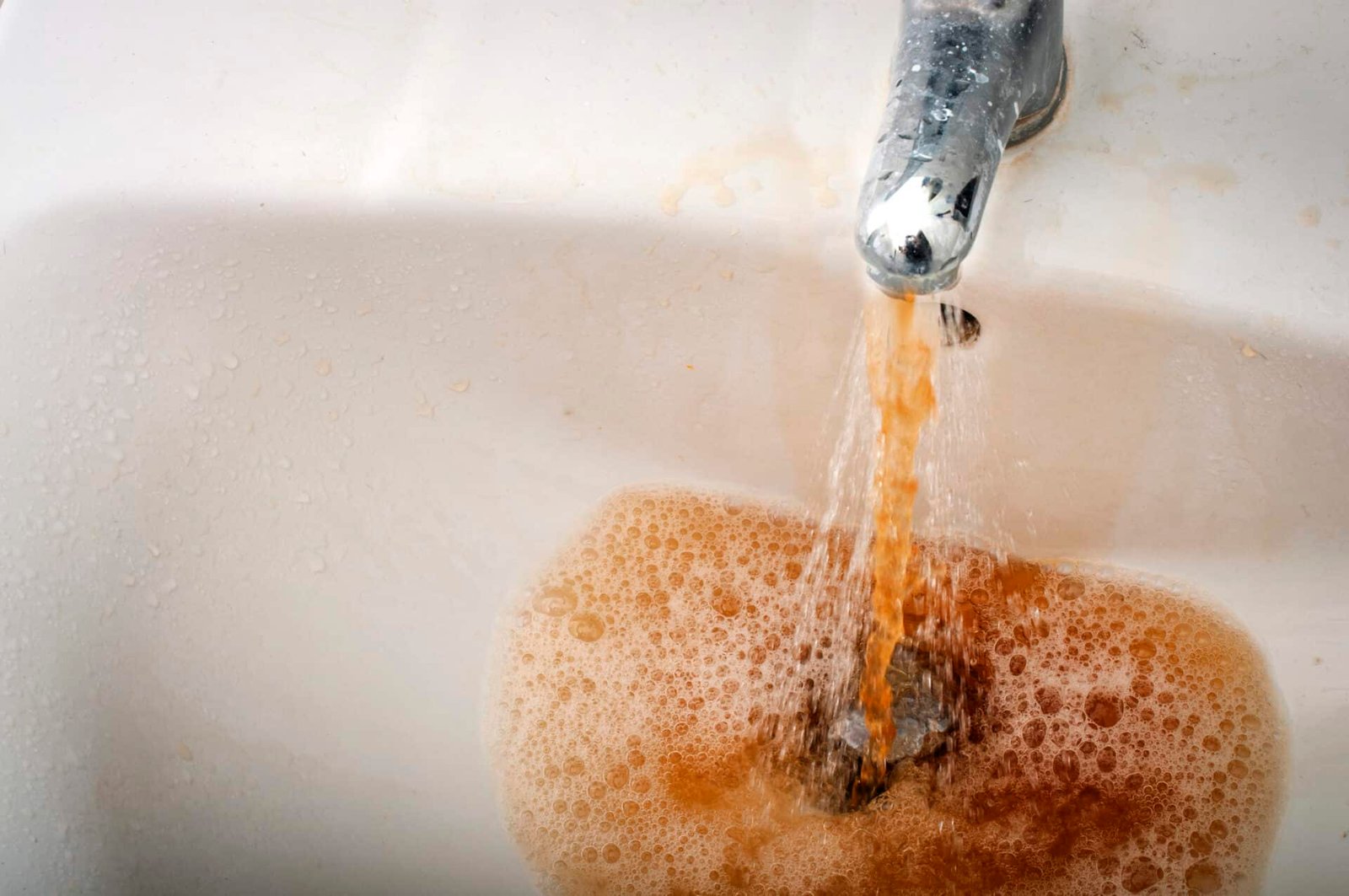
Rust in well water usually means iron is present in the water, the plumbing, or both. It can leave orange, red-brown, or yellow stains on sinks and laundry, make water look cloudy after it sits, and sometimes create a metallic taste. Although homeowners often call all of these symptoms “rust,” the cause is not always visible rust flakes.
The right fix depends on where the iron is coming from and what form it takes. Iron dissolved naturally in groundwater needs a different approach than corrosion from old steel pipes, a deteriorating well component, or sediment stirred up after a plumbing change.
Rust-colored water is often an aesthetic and maintenance problem, but appearance alone cannot confirm whether water is safe to drink. Testing is the practical starting point before choosing a filter or assuming that a rusty-looking fixture is the entire problem.
What Rust in Well Water Usually Means
In most private wells, “rust in well water” refers to iron. Iron is a common naturally occurring mineral in soil and rock. Groundwater can dissolve iron as it moves through underground formations, then carry it into the home through the well system.
When iron-containing water reaches air, it can oxidize. The dissolved iron changes into reddish-brown particles that resemble rust. This is why water may look clear when first drawn but become yellow, orange, or brown after standing in a glass, toilet bowl, or sink.
Rust-colored water can also originate from the well system or household plumbing. Steel components may corrode, and loose corrosion particles can enter the water stream. In that case, the problem may be more noticeable at one faucet, after water has been sitting unused, or only on the hot-water side.
Iron is not always visible as particles
Iron can appear in more than one form, and the form affects treatment choices:
- Clear-water iron: Water comes out clear but turns orange, yellow, or brown after exposure to air.
- Red-water iron: Rust-colored particles are already visible when water comes out of the tap.
- Iron bacteria: Certain bacteria can use iron in groundwater and create slimy orange, brown, or reddish deposits. This is different from a confirmed disease-causing bacterial contamination.
- Corrosion particles: Flakes or grit may come from aging steel pipes, fittings, a pressure tank component, or other metal equipment.
Manganese can sometimes accompany iron and create dark brown or black staining. Tannins, sediment, and other water-quality issues may also discolor water, so color alone is not a reliable diagnosis.
Common Causes of Rust-Colored Well Water
Naturally occurring iron in groundwater
Natural iron is one of the most common reasons for rust stains in homes served by private wells. It may be present year-round or become more noticeable as groundwater conditions change. A well can produce clear water at first and still have enough dissolved iron to stain fixtures after oxidation.
This issue often affects the entire home. Homeowners may notice orange rings in toilets, staining on white sinks or tubs, discolored dishwasher residue, and laundry that gradually looks dingy.
Corroding pipes or well-system components
Older galvanized steel plumbing can corrode internally over time. As corrosion accumulates, it may reduce flow and release rust-colored particles. A corroded steel fitting, connector, or other component near the pressure tank may create a more localized problem.
Clues that point toward plumbing corrosion rather than iron in the source water include:
- Discoloration at only one fixture or one section of the home.
- Water that is rusty mainly after a faucet has not been used for several hours.
- Cold water that runs clear while hot water remains discolored.
- Visible corrosion, leaks, or old galvanized piping near accessible plumbing.
- Reduced flow at fixtures served by older pipes.
A plumbing inspection can help identify the source. Do not assume a rusty appearance means the well pump needs replacement.
Water-heater corrosion or sediment
If rusty water appears only when using hot water, start with the water heater and hot-water plumbing. Sediment, corrosion, or a deteriorating component inside the heater can discolor hot water even when cold water is clear.
Because water heaters contain pressurized hot water and may have electrical or gas connections, service beyond normal manufacturer-approved maintenance should be handled by a qualified plumber or water-heater technician. Do not open or alter safety components to investigate discoloration.
Iron bacteria and biofilm
Iron bacteria are naturally occurring organisms that can create slimy deposits in wells, plumbing, toilet tanks, and treatment equipment. They may contribute to orange or brown buildup, clogged screens, reduced flow, and musty or swampy odors.
Iron bacteria are not identified by color alone. A laboratory result, inspection findings, and the condition of the well system can help determine whether they are involved. When a bacterial issue is suspected, a qualified well professional can evaluate the well and recommend an appropriate cleaning or disinfection approach based on the well construction and local guidance.
Disturbed sediment after changes or storms
Rust-colored water can appear temporarily after heavy rain, flooding, nearby construction, well repairs, pump work, plumbing repairs, or a long period of low water use. These events can disturb sediment or reveal a problem with the well cap, casing, screen, or plumbing.
If flooding has affected the well area, if the well cap is damaged, or if the water quality changes suddenly and persists, use a known safe water source for drinking and food preparation until appropriate testing and professional evaluation are complete. Discoloration does not identify all possible contaminants.
How to Narrow Down the Source
A few safe observations can help distinguish a whole-house water-quality problem from a fixture or plumbing issue. They do not replace testing, but they can make conversations with a laboratory, plumber, or well contractor more productive.

Credit: aquaprofessor.com
Compare cold water and hot water
Fill a clean, clear glass from a cold-water faucet and another from a hot-water faucet. If only the hot-water sample is discolored, the water heater or hot-water plumbing deserves attention. If both samples are affected, the source may be untreated well water, shared plumbing, or a whole-house treatment system.
Check more than one fixture
Compare fixtures on different levels of the house, including a cold-water tap near where water enters the home if one is available. A problem throughout the home suggests the well water or a central component. A problem limited to one bathroom or faucet is more consistent with a local plumbing issue.
Notice when discoloration occurs
The timing can be useful:
- Clear water that changes color while standing: often consistent with dissolved iron oxidizing.
- Particles from the first draw after inactivity: may suggest corrosion or sediment in nearby plumbing.
- Discoloration after a treatment unit: may indicate that treatment media, filters, bypass settings, or maintenance need review.
- A sudden, ongoing change: warrants water testing and an inspection of the wellhead and accessible equipment.
Look at the toilet tank and filter housing
A toilet tank can reveal persistent mineral staining because water sits there for long periods. Orange deposits may support the possibility of iron, while black deposits may suggest manganese or other conditions. This is only a clue, not a water-quality result.
If the home has a sediment filter with a clear housing, a rapid buildup of brown or orange material may indicate particles entering the system. Replace filters according to the manufacturer’s instructions and do not operate a damaged housing. A filter that repeatedly plugs quickly indicates a problem worth investigating rather than simply increasing replacement frequency.
Test Before Choosing a Treatment System
A certified water laboratory can measure iron and identify related conditions that affect treatment. Testing is especially important before buying an iron filter, water softener, or reverse osmosis system. The same rusty appearance can have different causes, and a system sized for the wrong condition may clog, fail to improve staining, or create unnecessary maintenance.
For a rust or iron complaint, a useful discussion with a certified laboratory or water-treatment professional may include testing for iron, manganese, pH, hardness, alkalinity, turbidity, and total dissolved solids where relevant. Bacterial testing may also be appropriate when there is a change in odor, slime, flooding, well repairs, or concern about sanitary well conditions.
Ask the laboratory what to test based on your location, well history, and symptoms. Follow its sample container, preservation, timing, and delivery instructions exactly. Some tests require specific handling, and a poorly collected sample may not represent the water you use.
Why a TDS meter or home strip is not enough
A TDS meter measures electrical conductivity and estimates dissolved material; it does not identify iron, bacteria, arsenic, nitrate, or other specific contaminants. Basic screening strips can be useful for general observations, but they do not replace laboratory testing when selecting treatment or evaluating drinking-water concerns.
Private wells are not regulated like public water systems under federal drinking-water rules. That makes regular owner-directed testing important. The U.S. Environmental Protection Agency provides general private-well guidance at https://www.epa.gov/privatewells/protect-your-homes-water.
Fixes for Rust in Well Water
The best solution addresses the confirmed source. In some homes, repairing a corroded pipe solves the problem. In others, the well produces dissolved iron and needs properly matched whole-house treatment. It is also possible to have both source-water iron and old plumbing corrosion at the same time.
Repair or replace corroded plumbing components
When the issue is isolated to aging pipes, fittings, or the water heater, plumbing repair may be more effective than adding filtration. A licensed plumber can assess the condition of accessible piping, determine whether corrosion is local or widespread, and recommend compatible replacement materials.
Replacing one visibly rusty fitting may not solve a broader issue in old galvanized plumbing. Conversely, replacing the entire well pump or installing a large treatment system is not justified without evidence that the source water or system component is responsible.
Use sediment filtration for suspended particles
A sediment filter can capture rust flakes, sand, silt, and other particles. It is useful as protection for plumbing and downstream treatment equipment when water already contains visible debris.
However, sediment filtration alone may not remove dissolved clear-water iron. If water turns orange only after it sits, an ordinary sediment cartridge may have limited benefit unless the iron is first oxidized into filterable particles.
Filter selection must account for flow demand, pressure loss, particle loading, and maintenance access. A small cartridge that works for a low-use cabin may not provide enough flow or service life for a busy household. Micron ratings also describe particle capture, not a guarantee of removal of every contaminant.
Install iron treatment matched to the water chemistry
Whole-house iron treatment commonly works by changing dissolved iron into particles and filtering those particles, or by using media designed for iron reduction under suitable water conditions. Some systems use air, others use an oxidizing process, and some combine multiple treatment stages.
The proper design depends on more than the iron result. Important factors include:
- The measured concentration and form of iron.
- Whether manganese, sulfur odor, sediment, or iron bacteria are also present.
- Water pH and other chemistry that affects oxidation and media performance.
- Household peak flow requirements in gallons per minute.
- Well yield and the pressure system’s ability to supply backwash flow where required.
- Drainage availability for systems that need a cleaning or regeneration cycle.
A treatment system that is too small may cause pressure loss or allow staining to continue during high-demand periods. A system with backwash requirements that exceed the well’s available flow can perform poorly and may create other water-supply problems. Ask the installer to explain the treatment objective, required maintenance, expected wastewater or backwash needs, and the test results used for sizing.
Consider a water softener only when it fits the test results
A conventional ion-exchange water softener removes hardness minerals and can reduce limited amounts of dissolved iron under appropriate conditions. It may be part of a solution when testing shows both hard water and manageable iron levels.
But a softener is not automatically the best iron filter. Higher iron levels, iron bacteria, sediment, or manganese can foul softener resin and increase maintenance. A water-treatment professional may recommend dedicated iron treatment ahead of the softener, a different media system, or a combined approach based on the complete water analysis.
Salt-free conditioners do not remove hardness minerals through ion exchange and should not be treated as an iron-removal solution unless the specific system has a documented, applicable treatment claim.
Address iron bacteria at the well and treatment equipment
If iron bacteria are confirmed or strongly suspected, simply adding a cartridge filter may not address the buildup inside the well or plumbing. A well professional may recommend cleaning, disinfection, rehabilitation, or treatment changes appropriate to the well’s construction and condition.
Do not invent a chemical recipe or pour household chemicals into a well without a well-specific procedure. Incorrect disinfection can damage equipment, create unsafe conditions, or fail to solve the underlying issue. Any disinfection process should be followed by appropriate flushing and confirmation testing as recommended by local health authorities or qualified professionals.
What Will Not Reliably Solve the Problem
Rust in well water is often treated as a simple filter problem, but several common responses miss the cause.
- Replacing filters repeatedly without testing: This may temporarily improve appearance while leaving dissolved iron, pipe corrosion, or a well problem unaddressed.
- Using a drinking-water pitcher for whole-house staining: Point-of-use filters may improve water at one tap, but they do not protect toilets, water heaters, washing machines, or plumbing throughout the home.
- Choosing equipment by horsepower or tank size alone: Treatment performance depends on water chemistry, peak flow, pressure, and maintenance requirements.
- Assuming clear water is safe: Some contaminants have no color, odor, or taste. Iron removal does not establish drinking-water safety.
- Boiling rusty or suspect water to remove chemical contaminants: Boiling does not remove dissolved metals or many chemicals and can concentrate some dissolved substances.

Credit: pumpserviceidaho.com
Preventing Rust Stains and Recurring Iron Problems
Natural iron cannot always be prevented because it comes from the aquifer, but a well-maintained system can reduce avoidable corrosion, protect treatment equipment, and make changes easier to catch early.
Maintain treatment equipment on schedule
Follow the manufacturer’s maintenance instructions for filters, media systems, softeners, and any oxidation equipment. Delayed filter changes can reduce water pressure and allow trapped material to break through. Improperly maintained media can lose effectiveness or become a site for buildup.
Keep records of filter changes, service visits, water-test results, repairs, and changes in staining or odor. A simple record helps reveal whether a new problem began after a pump repair, plumbing update, flood event, or treatment-system change.
Protect the wellhead
Keep the well cap secure, protect the area around the casing from damage, and direct surface drainage away from the well. Avoid storing fuels, pesticides, fertilizers, or other potential contaminants near the wellhead. These measures will not remove natural iron from groundwater, but they help reduce preventable risks to private-well water quality.
Test when conditions change
In addition to periodic routine testing, arrange testing after flooding, well repairs, installation of a new pump, damage to the well cap, a persistent change in color or odor, or a noticeable change in water taste. Use the same laboratory when practical so results are easier to compare over time.
If a household member is pregnant, an infant will use the water, or there is concern about contamination from nearby land use, ask the local health department or a certified laboratory about tests relevant to the area. Iron staining is not a substitute indicator for nitrate, bacteria, arsenic, or other health-related contaminants.
When to Call a Professional
Contact a qualified well contractor, plumber, or water-treatment professional when rusty water begins suddenly, affects the entire home, follows a well repair, appears with reduced water pressure, or comes with persistent odor, slime, or sediment. A professional can inspect accessible system components and help determine whether the issue is in the well, pressure system, plumbing, water heater, or treatment equipment.
Seek prompt guidance from the local health department if flooding, a damaged well cap, sewage exposure, fuel or chemical spill, or suspected contamination is involved. Use a known safe water source for drinking, cooking, and preparing infant formula until testing identifies the concern and appropriate corrective action is completed.
Credit: aquaclearws.com
Frequently Asked Questions
Can rusty well water damage appliances?
Yes. Iron deposits can stain appliance interiors, clog small screens and valves, reduce efficiency in water-using equipment, and leave residue on dishes and laundry. The risk depends on the amount and form of iron, sediment levels, and whether the home has effective pretreatment.
Why does my well water look clear in the glass but turn orange later?
This often happens when dissolved iron reacts with oxygen after the water is drawn. The iron oxidizes and forms visible orange or brown particles. A laboratory test can confirm whether iron is present and help identify treatment options.
Is rust in well water harmful to skin?
Iron commonly causes aesthetic issues such as staining and metallic taste, but water appearance cannot determine whether other contaminants are present. If the water has changed suddenly, has an unusual odor, or may have been affected by flooding or chemicals, avoid assuming bathing or other use is safe and seek local health guidance.
Can a reverse osmosis system remove iron?
Reverse osmosis is generally a point-of-use drinking-water treatment option and is not usually the first choice for untreated iron-rich well water. Iron and sediment can foul membranes, so appropriate pretreatment is often needed. Whole-house iron treatment is typically considered for staining throughout the home.
How often should a well be tested after an iron treatment system is installed?
Test according to the installer’s recommendations, the treatment manufacturer’s guidance, and local health advice. Testing after installation or major service can help confirm whether the system is addressing the intended issue. Continue routine private-well testing because a system designed for iron may not address every possible contaminant.