
How long should a water softener last? A properly sized, maintained ion-exchange water softener often provides about 10 to 15 years of reliable service, although individual parts may last longer or need replacement sooner. Water chemistry, household water use, installation quality, and maintenance habits all affect the real lifespan.
The resin tank, control valve, brine tank, resin media, seals, and internal valve parts do not necessarily wear out at the same time. A softener that stops working well does not always need complete replacement; in some cases, a repair, resin replacement, or cleaning of the brine system may restore performance.
For private well owners, untreated iron, manganese, sediment, low pH, bacteria, or unusually high hardness can shorten a system’s useful life. The best decision starts with identifying which component is failing and whether the source water is being treated appropriately before it reaches the softener.
Typical Water Softener Lifespan by Component
When people ask how long does a water softener last, they are usually asking about the complete system. However, a water softener is a collection of components with different expected service lives.
| Component | Typical Service Life | What Can Shorten Its Life |
|---|---|---|
| Complete water softener system | Often 10 to 15 years | Poor water quality, undersizing, neglected maintenance, frequent regeneration |
| Control valve and internal seals | Often 10 years or more, depending on design and service | High sediment, mineral buildup, worn seals, improper programming |
| Ion-exchange resin | Often 10 to 15 years | Iron fouling, manganese, oxidants, sediment, organic matter, improper regeneration |
| Resin tank | Often 15 to 20 years or longer | Sun exposure, freezing, physical damage, excess pressure, age-related material wear |
| Brine tank | Often 15 years or more | Cracking, ultraviolet exposure, poor support, physical damage, salt buildup |
| Brine line, float, injector, screens, and small fittings | Varies widely | Salt deposits, debris, iron buildup, clogging, brittle tubing, worn moving parts |
These are broad planning ranges, not guarantees. A lightly used softener treating moderately hard, clean water may last beyond the usual range. A unit serving a large household with hard well water and iron may wear out much earlier.
What Determines How Long a Water Softener Will Last?
Water hardness and household demand
Hardness is usually caused by dissolved calcium and magnesium. A softener removes these minerals through ion exchange, then regenerates its resin with a salt solution. The harder the water and the more water a household uses, the more frequently the system must regenerate.
Frequent regeneration means more cycles for the control valve, more salt use, more brine draw activity, and more wear on moving parts. A softener should be sized using measured hardness, household water demand, usable resin capacity, and any applicable iron or manganese loading. A unit selected only by the number of bathrooms or its advertised grain rating may not be a good match.
Iron, manganese, sediment, and other well-water issues
Many private well systems have water quality concerns beyond hardness. Iron and manganese can foul softening resin, clog the injector or brine components, and leave deposits in the valve. Sediment can wear internal seals and restrict small passages. Low-pH water may be corrosive to plumbing and equipment, while certain organic matter or microbial conditions can also interfere with treatment performance.
A softener can sometimes handle limited iron under conditions specified by its manufacturer, but it is not automatically the right primary treatment for significant iron or manganese. In many homes, an appropriately selected sediment filter, oxidation or iron-removal system, or other pretreatment should be installed ahead of the softener.
If soft water performance declines repeatedly, do not assume the resin is simply old. A laboratory water test can help identify hardness, pH, iron, manganese, and other relevant conditions that may be affecting the system.
Oxidant exposure
Ion-exchange resin can be damaged by strong oxidants over time. This issue is most often discussed for chlorinated water supplies, but it can also matter in a well-water treatment setup that uses oxidation or disinfection upstream of the softener. Compatibility depends on the treatment method, the amount of residual oxidant, contact time, and the resin type.
If your well system uses chlorine injection, ozone, or another oxidation process, follow the equipment manufacturer’s treatment sequence and media recommendations. Do not assume every softener resin has the same resistance to oxidants.
Correct installation and operating conditions
A softener needs adequate flow, drainage, electrical power, and protection from freezing and direct sunlight. It should also be installed in the correct direction, with a bypass valve that works properly. Poor drainage can prevent complete regeneration, while freezing conditions can crack tanks, fittings, and valves.
Pressure also matters. Operating outside the manufacturer’s approved pressure range can damage equipment. If you have a private well pressure system with short cycling, unusually high pressure, or major pressure swings, resolve that issue rather than expecting the softener to tolerate it indefinitely.
Maintenance and programming
Modern demand-initiated softeners can regenerate according to actual water use, which may reduce unnecessary cycles compared with an older timer-based unit. Still, the programming needs to match the household’s measured water hardness and system capacity.
An incorrectly programmed softener may regenerate too often, wasting salt and water, or too rarely, allowing hard water to pass through before the resin is recharged. Either pattern can contribute to poor long-term performance.
Signs Your Water Softener May Be Near the End of Its Life
A water softener does not always fail suddenly. Gradual changes are common, and several symptoms may point to maintenance needs rather than a complete system replacement.
- Hard-water spots return on dishes, fixtures, or shower doors.
- Soap no longer lathers as easily, or laundry feels stiff after washing.
- The softener uses noticeably more salt than usual.
- Regeneration cycles occur at unusual times or seem excessively frequent.
- The brine tank remains unusually full of water after a regeneration cycle.
- The system fails to draw brine or does not refill the brine tank correctly.
- Water pressure drops only after the softener, suggesting a restriction in the unit or its plumbing.
- The valve leaks, makes persistent abnormal noises, or displays recurring faults.
- The resin tank, brine tank, fittings, or bypass valve are cracked or leaking.
These signs are not a diagnosis by themselves. Hardness breakthrough can occur because the system is out of salt, a salt bridge has formed, the hardness setting is wrong, the resin is fouled, or the valve is malfunctioning. A pressure drop could also come from a clogged sediment prefilter, plumbing restriction, pressure tank issue, or well pump problem.
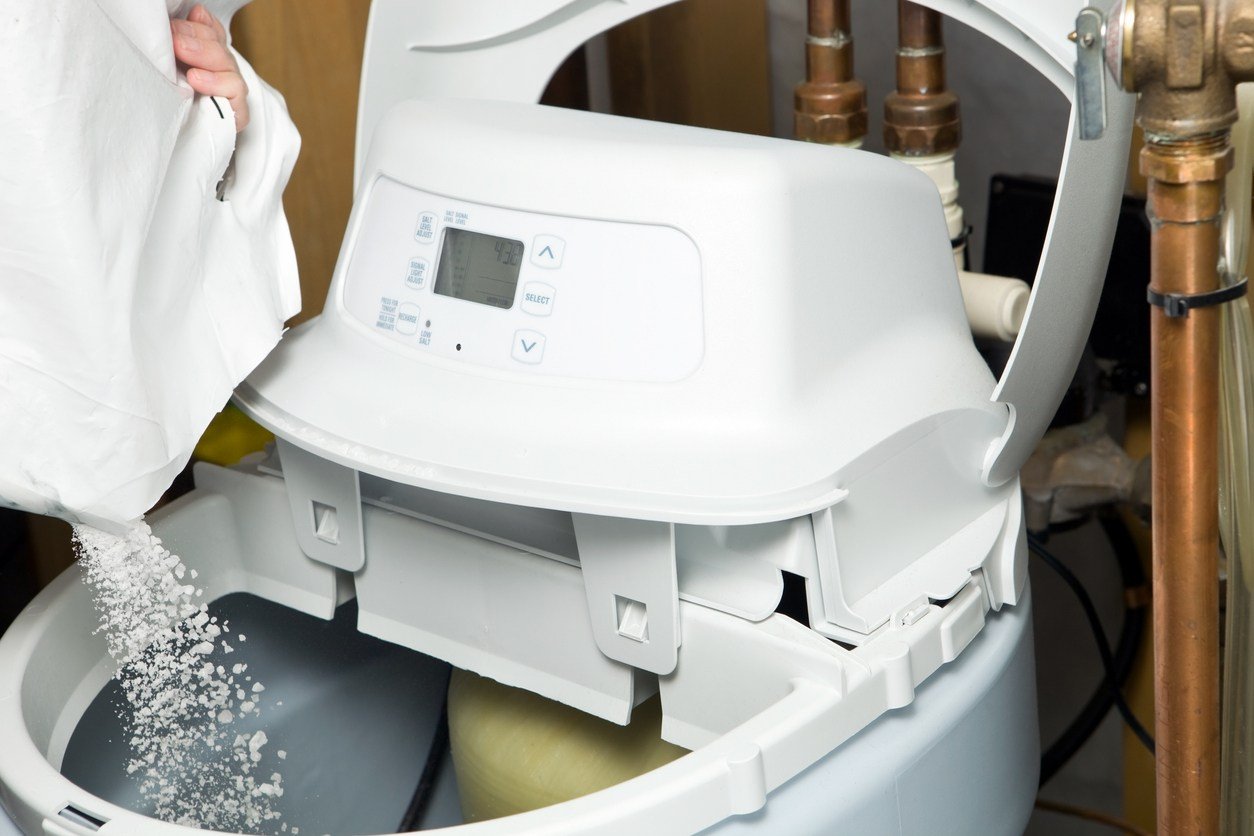
Credit: bobvila.com
Confirm whether the water is actually hard
Before replacing equipment, test treated water and untreated water if accessible. A hardness test can show whether the softener is reducing hardness as intended. Testing both locations helps distinguish between a system performance problem and a change in source-water hardness.
For well water, consider testing for iron, manganese, pH, and other concerns relevant to your location and history. Appearance, staining, taste, or a TDS meter reading cannot identify every water-quality problem or confirm drinking-water safety.
When a Water Softener Can Be Repaired
Many softener problems are repairable, especially when the resin tank and brine tank are structurally sound. Repair is often worth considering when the unit is otherwise appropriately sized and the underlying water chemistry has not changed significantly.
Common repairable problems
- Salt bridge: A hardened layer of salt creates an empty space beneath it, preventing salt from reaching the water at the bottom of the brine tank.
- Salt mushing: Fine salt compacts into sludge near the bottom of the brine tank and can interfere with brine production.
- Dirty injector or venturi: Mineral deposits or debris may prevent proper brine draw.
- Blocked screens or brine line: Iron, sediment, or salt deposits can restrict flow.
- Worn seals, spacers, pistons, or valves: Serviceable valve components may cause leaks, poor regeneration, or bypassing.
- Incorrect settings: An inaccurate hardness setting, clock, regeneration schedule, or meter configuration can cause poor results.
- Fouled resin: In some cases, manufacturer-approved cleaning procedures may help if the resin is affected by iron or mineral deposits.
Use only maintenance steps approved for your exact model. Before opening equipment or disconnecting plumbing, place the system in bypass if appropriate, shut off water as needed, and follow the manufacturer’s instructions. Avoid mixing chemicals or using unapproved cleaners. If there is a leak, damaged pressure vessel, electrical issue, or uncertainty about the valve assembly, contact a qualified water-treatment professional.
Resin replacement can extend system life
Resin replacement may make sense when the tank and valve remain in good condition but the media has lost capacity or is heavily fouled. This can be less expensive than replacing the whole system, but it is not always the best value.
Consider the age of the control valve, availability of replacement parts, tank condition, current household water use, and any changes in well-water chemistry. Replacing resin in a very old system with a worn valve may only delay a larger replacement decision.
When Replacement Is Usually the Better Choice
Replacement becomes more practical when several major components are aging at once or when the softener was never properly matched to the home and water supply.
A new water softener may be the better investment when:
- The resin tank is cracked, damaged, badly weathered, or leaking.
- The control valve has repeated failures and parts are unavailable or difficult to source.
- The unit is substantially undersized and regenerates excessively.
- The household has grown, water use has changed, or water hardness has increased.
- Iron, manganese, sediment, or other untreated well-water conditions are repeatedly damaging the system.
- Repair costs are approaching a meaningful share of the cost of a properly sized replacement.
- The system cannot be configured efficiently for your current water conditions and demand.
Do not choose a replacement by lifespan claims alone. The important question is whether the new system can reliably handle the measured hardness, peak household flow needs, regeneration frequency, drainage arrangement, and any required pretreatment.

Credit: softprowatersystems.com
How to Help a Water Softener Last Longer
A water softener cannot last forever, but routine attention can reduce avoidable wear and help you catch small problems before they become expensive failures.
- Test your well water periodically. Test after a noticeable change in color, odor, staining, taste, flooding, well repairs, or other changes that could affect water quality. Include hardness and relevant nuisance minerals when evaluating softener performance.
- Keep the brine tank supplied with suitable salt. Follow the manufacturer’s guidance on salt type and fill level. Avoid letting the tank remain empty if the system needs to regenerate.
- Check for salt bridges and salt buildup. If salt remains at the same level for an unusually long time, inspect the tank according to the manufacturer’s instructions.
- Maintain upstream filtration. Replace sediment filter cartridges or service pretreatment equipment on schedule. A clogged or neglected prefilter can cause pressure loss and allow debris to reach the softener.
- Review settings after water-quality changes. A new well pump, well rehabilitation, treatment upgrade, or change in household size may require an updated hardness setting or system configuration.
- Protect the equipment. Keep the softener out of freezing conditions, shield it from direct weather exposure when required, and avoid storing heavy items against tanks or tubing.
- Watch salt and water use. A sudden increase can be an early warning of a valve problem, leak, or unnecessary regeneration cycle.
Water Softener Lifespan Versus Water Conditioner Lifespan
It is important to know what type of equipment you own. A conventional water softener uses ion-exchange resin and salt to remove hardness minerals from water. A salt-free water conditioner generally changes how minerals behave to reduce scale formation under certain conditions, but it does not remove calcium and magnesium hardness in the same way.
Because these systems use different media and operating methods, their maintenance needs and useful lives are not directly comparable. Some salt-free systems use cartridges or media that require scheduled replacement. If your goal is to reduce measured hardness, verify that you are evaluating an ion-exchange softener rather than a scale-control device.
How to Plan for a Replacement Softener
If your current unit is aging, gather useful information before requesting quotes or comparing systems. This helps avoid buying another softener that is too small, poorly configured, or unable to handle your well water.
- A recent laboratory water test showing hardness, iron, manganese, pH, and other relevant results
- The number of people in the household and typical water-use patterns
- The model and age of the existing softener, if known
- Whether the current unit uses excessive salt or regenerates unusually often
- The available drain location and whether it can handle regeneration discharge
- Any existing filters, iron-removal equipment, UV systems, or other treatment devices
- Observed flow or pressure concerns, especially if multiple fixtures run at once
For a private well, also distinguish between low water pressure and low flow. A softener may contribute to a restriction, but a weak flow problem can also originate with a clogged filter, pressure tank issue, pump problem, plumbing restriction, or limited well yield. Replacing the softener alone may not solve a whole-house water-delivery issue.

Credit: justplumbingaz.com
Frequently Asked Questions
Can a water softener last 20 years?
Some individual components, especially a well-protected resin tank or brine tank, can last 20 years or longer. A complete softening system is less likely to operate without repairs for that entire period because valves, seals, injectors, resin, and electronic controls experience regular wear. An older system may still be serviceable if it is working efficiently and replacement parts remain available.
How often should water softener resin be replaced?
There is no fixed replacement schedule for resin. It is commonly evaluated when the softener no longer removes hardness effectively despite correct salt levels, proper settings, successful regeneration, and repair of any valve or brine-system problems. Source-water testing is useful because iron, manganese, sediment, and oxidant exposure can make resin fail sooner.
Does running out of salt damage a water softener?
Running out of salt does not usually cause immediate permanent damage, but the resin cannot regenerate correctly. Hard water may then pass through the system, allowing scale and spotting to return. Repeated operation without adequate salt can also make it harder to identify whether poor performance is caused by depleted resin, incorrect programming, or a brine-system issue.
Why is my water softener using more salt than before?
Higher salt use can result from increased household water demand, a change in water hardness, an incorrect setting, a control-valve issue, a leaking toilet or plumbing fixture, or regeneration that is occurring more often than necessary. Check for visible leaks and compare current water use with past use, then test hardness and review the system settings before assuming the softener needs replacement.
Should I replace my softener if my well water starts staining fixtures?
Not necessarily. New orange, brown, black, or other staining can indicate a change in iron, manganese, sediment, plumbing corrosion, or treatment performance. Test the water and determine whether the staining occurs before or after existing treatment. The proper solution may be softener service, pretreatment for iron or manganese, filter maintenance, or a broader well-water evaluation rather than immediate softener replacement.