
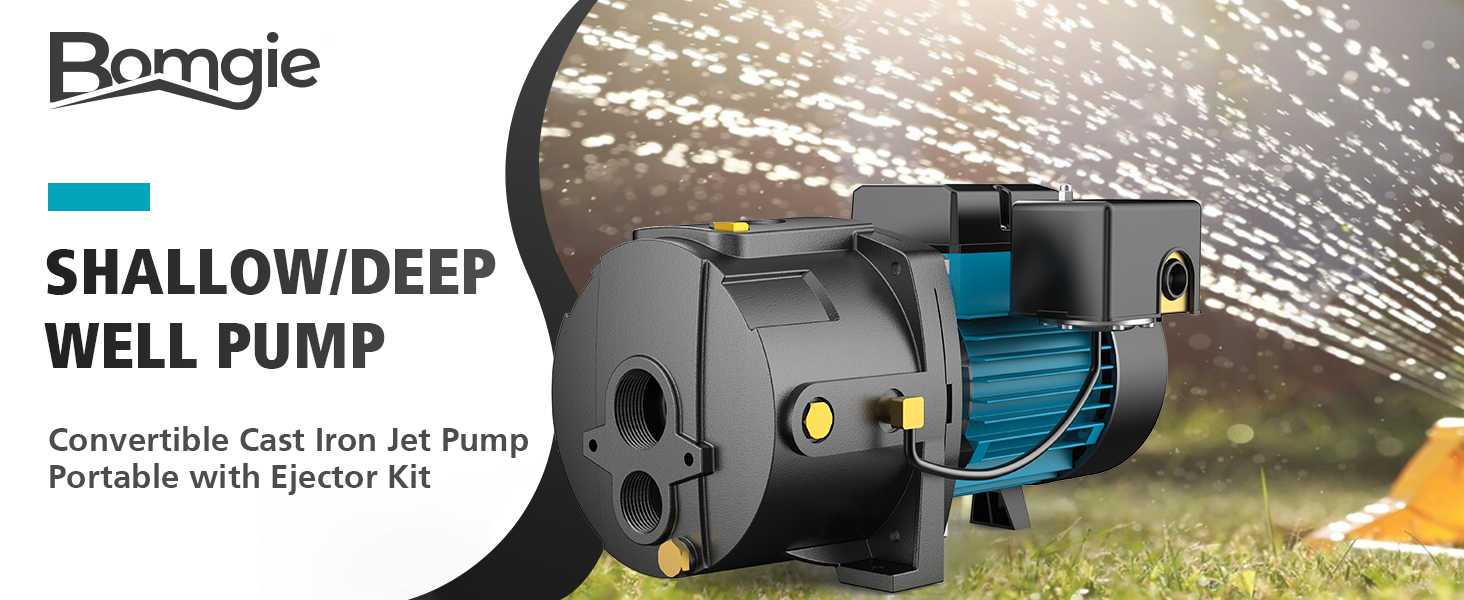
A deep well jet pump is a surface-mounted well pump that uses a down-well jet assembly, often called an ejector, to lift water from a pumping level deeper than an ordinary shallow-well pump can handle. It is commonly used with older drilled wells and some driven wells where the pump is installed in a basement, utility room, or well house rather than at the bottom of the well.
Deep well jet pumps can provide reliable household water pressure when they are properly matched to the well, piping, pressure tank, and household demand. However, they are less forgiving of air leaks, worn components, incorrect piping, and low well yield than many modern submersible pump systems.
This guide explains how deep well jet pumps work, where they fit, how to choose one, and what common symptoms may mean before deciding whether repair or replacement is appropriate.
How a Deep Well Jet Pump Works
A deep well jet pump sits above ground, but part of its pumping system is installed inside the well. Instead of relying only on suction at the pump inlet, it sends a portion of pressurized water down the well to a jet assembly. The jet creates a pressure difference that helps lift well water back toward the surface.
The key difference is the location of the jet. A shallow-well jet pump has its jet mechanism built into the pump housing. A deep well jet pump uses a separate ejector installed below the pumping water level in the well.
The main components
- Pump and motor: Located above ground. The motor drives an impeller that moves water and builds pressure.
- Jet or ejector assembly: Installed down the well. It contains a nozzle and venturi that create the jet action.
- Drive pipe: Carries pressurized water from the pump down to the ejector.
- Suction pipe: Carries the combined water flow from the ejector back to the pump.
- Foot valve: A check valve near the bottom of the piping that helps keep the system primed when the pump stops.
- Pressure tank: Stores a usable amount of pressurized water and reduces how often the pump starts.
- Pressure switch or controller: Starts and stops the pump based on system pressure.
Because water must travel down one pipe and back up another, deep well jet pumps are usually less energy-efficient than submersible pumps. Still, the above-ground motor can be easier to access for some maintenance and repair work.
Deep Well Jet Pump vs. Shallow Well Jet Pump
The terms “deep well” and “shallow well” refer primarily to the pumping water level, not necessarily the total depth of the drilled well. The pumping water level is the level water reaches while the pump is actively drawing water. A well may be hundreds of feet deep but still have a relatively shallow pumping water level.
| Feature | Shallow Well Jet Pump | Deep Well Jet Pump |
|---|---|---|
| Jet location | Built into the pump housing | Installed in the well |
| Typical pipe arrangement | Usually one suction pipe | Usually two pipes to the down-well ejector |
| Water level served | Relatively shallow pumping water level | Deeper pumping water level beyond normal surface suction limits |
| Priming sensitivity | Needs a sealed, primed suction line | Needs a sealed, fully primed pump and well-pipe system |
| Common alternative | Submersible pump for deeper wells | Submersible pump, especially where efficiency or deeper lift is needed |
A surface pump cannot simply “suck” water from any depth. Atmospheric pressure limits practical suction lift, and real-world conditions such as elevation, pipe friction, fittings, and small air leaks reduce that limit further. A deep well jet system solves this problem by placing the ejector below the water level, but it does not eliminate the need for accurate sizing.
When a Deep Well Jet Pump Is a Good Fit
Deep well jet pumps remain useful in certain residential well systems. They are most often found in existing homes with two-pipe well plumbing, older pressure systems, or wells where homeowners prefer an accessible above-ground pump.
A deep well jet pump may be a practical option when:
- The pumping water level is too deep for a shallow-well jet pump.
- The well already has compatible two-pipe jet hardware.
- The well casing and plumbing arrangement make a surface-mounted pump practical.
- The household has moderate water demand and the well can supply the needed flow.
- Access to an above-ground motor is more important than the efficiency advantages of a submersible pump.
It may be less suitable when the pumping water level is very deep, the well yield is limited, long pipe runs create substantial friction loss, or the household needs strong flow at several fixtures at once. In those cases, a properly sized submersible pump may be the better long-term system, but that decision should be based on well data and pump performance information rather than horsepower alone.
What to Know Before Choosing a Pump
Choosing a deep well jet pump is not as simple as selecting the largest horsepower rating. A pump must work with the well’s water level, ejector, pipe sizes, pressure settings, and actual household demand. An oversized or mismatched pump can cause poor pressure, excessive cycling, wasted energy, or rapid wear.
Measure pumping water level, not just well depth
The static water level is the level in the well when no water is being used. The pumping water level, sometimes called drawdown level, is where water stabilizes while the pump is running. This second measurement is more important for pump selection because it represents the lift the system must handle during actual use.
A well log, pump service record, or well contractor may have useful information. If records are unavailable, a qualified well professional can evaluate the water level and well performance. Do not lower tools, electrical equipment, or makeshift measuring devices into a well unless you understand the well construction and can do so safely.
Consider household flow demand
Water pressure and water flow are related, but they are not the same thing. Pressure is measured in psi, while flow is measured in gallons per minute (GPM). A system can show acceptable pressure on a gauge yet provide disappointing flow when multiple fixtures run because of pump limits, restricted piping, clogged treatment equipment, or low well yield.
Think about how water is used in the home at peak times. A household may need to supply a shower, toilet refill, laundry cycle, and kitchen use in close succession. The goal is not necessarily to size for every possible fixture running at once, but to choose a system that meets realistic peak demand without exceeding what the well can sustainably produce.
Account for total dynamic head
Total dynamic head describes the total resistance the pump must overcome. It includes more than vertical lift. It also includes the pressure needed at the tank, friction through pipes and fittings, elevation changes between the pump and fixtures, and restrictions from filters, softeners, or other treatment equipment.
This is why two homes with wells of similar depth may need different pump configurations. A long run to a house on higher ground, undersized pipe, or a high-pressure treatment system can materially change pump performance.
Match the pump to the ejector and pipe system
Deep well jet pumps depend on matched components. The nozzle, venturi, drive pipe, suction pipe, pipe diameter, and pump curve work together. Replacing only the motor or pump body without confirming compatibility with the existing ejector can lead to poor output or failure to build pressure.
If a pump label is unreadable, gather as much information as possible before ordering parts:
- Existing pump make and model, if available
- Motor voltage and horsepower shown on the nameplate
- Pressure switch cut-in and cut-out settings
- Number and approximate size of pipes entering the well
- Well casing diameter and known well depth
- Static and pumping water levels, if documented
- Pressure tank type and condition
- Any filters, softeners, or treatment units installed after the pump
Understanding the Two-Pipe Well Setup
Most traditional deep well jet pumps use two pipes between the pump and the ejector. One pipe sends pressurized water down to power the jet. The other returns water from the ejector to the pump.
The ejector itself is usually positioned below the pumping water level. Water forced through its nozzle moves through a venturi, creating lower pressure that draws additional well water into the stream. The combined water rises through the return pipe. Some of that water reaches the home’s pressure system, while some is recirculated to keep the jet operating.
This recirculation is the reason a deep well jet pump may deliver less water to the home than its internal flow might suggest. It also explains why pipe size, ejector selection, and installation depth are critical.
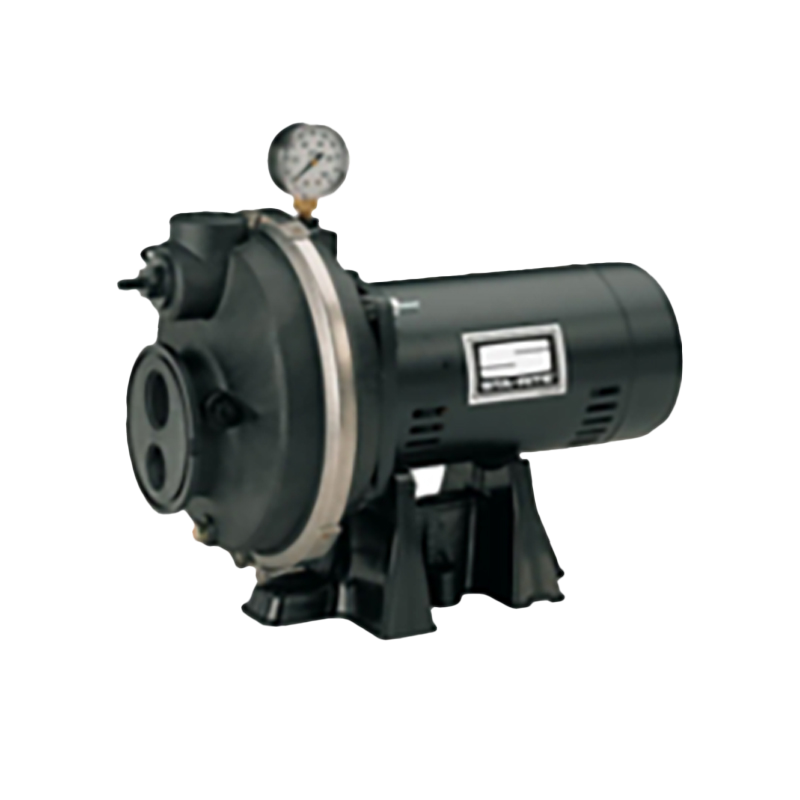
Credit: mitchellewis.com
Single-pipe “deep well” systems
Some installations use a packer-style jet arrangement inside the well casing rather than two separate pipes visible at the wellhead. These systems still use a down-well ejector, but their plumbing and service requirements differ. A packer system can be more difficult to diagnose because casing condition, seals, and internal components affect performance.
Do not assume that a two-pipe pump can be swapped directly with a packer-style setup. The existing well configuration should be identified before purchasing replacement equipment.
Priming a Deep Well Jet Pump
A deep well jet pump must be primed before it can move water correctly. Priming means filling the pump housing and associated piping with water so the impeller and jet system can create the pressure needed for operation. If air remains in the system, the pump may run without delivering water and can overheat.
Always follow the pump manufacturer’s instructions for the exact model. Priming procedures vary with the pump design, piping arrangement, and check-valve location.
Conditions required for successful priming
- The pump housing and required piping sections are filled as directed by the manufacturer.
- The foot valve or other check valve holds water in the well piping.
- Threaded fittings, unions, seals, and suction-side connections do not admit air.
- The ejector and pipes are intact and correctly connected.
- The well water level is within the operating range of the pump and ejector.
If a pump repeatedly loses prime, adding water again may temporarily restore service but does not solve the cause. Common reasons include a leaking foot valve, a cracked underground pipe, a loose fitting, a failed seal, or a water level that has dropped below the system’s capability.
Safety note: Do not work on live electrical connections, repeatedly reset a tripped breaker, or run a dry pump for extended periods. Turn off power before inspecting accessible plumbing, and contact a qualified pump professional for electrical faults, down-well pipe work, or pump removal.
Pressure Tank and Pressure Switch Compatibility
The pump is only one part of a residential water system. A properly operating pressure tank stores pressurized water between pump cycles. This reduces motor starts, helps maintain steadier pressure, and can extend pump life.
Tank volume is not the same as usable water volume. In a conventional bladder or diaphragm pressure tank, only part of the tank’s physical volume is available as drawdown between the pump’s cut-in and cut-out pressures. The actual drawdown depends on the tank design, air charge, and pressure settings.
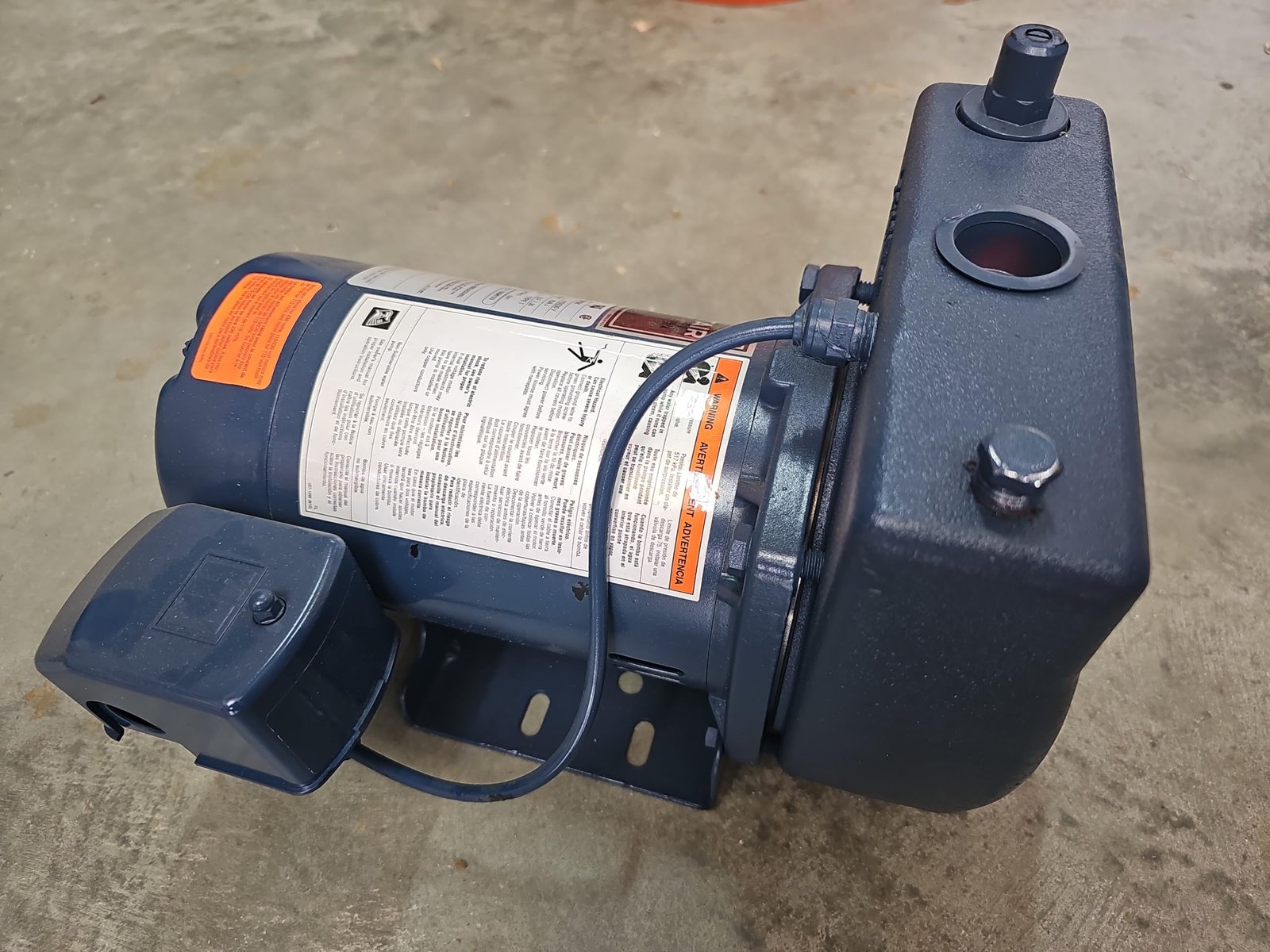
Credit: amazon.com
Why short cycling matters
Short cycling occurs when the pump starts and stops too frequently. It can be caused by a waterlogged pressure tank, damaged bladder or diaphragm, incorrect air precharge, a leaking check valve, a plumbing leak, a blocked pressure-sensing connection, or an undersized tank. It does not automatically mean the deep well jet pump has failed.
Before assuming a pump replacement is needed, observe whether the pressure gauge rises and falls unusually quickly when water is used. Note whether the system pressure drops while all fixtures are off. These observations can help a contractor separate a tank or plumbing issue from a pump-capacity problem.
Pressure tank air checks should only be done with power isolated and all water-side pressure fully relieved, following the tank manufacturer’s instructions. Precharge settings are system-specific, especially where constant-pressure controls are installed. Electrical switch adjustments and pressure-vessel repairs are best left to qualified professionals.
Common Deep Well Jet Pump Problems
Symptoms can point toward a likely category of problem, but they do not confirm a specific failed component. Start with simple observations: Does the problem affect every fixture? Did it begin after a power outage, plumbing repair, filter replacement, drought period, or unusually heavy water use? Does the pressure gauge behave differently than usual?
| Symptom | Possible Causes | Useful Next Step |
|---|---|---|
| Pump runs but no water reaches fixtures | Lost prime, air leak, failed foot valve, low water level, damaged pipe, blocked ejector | Confirm whether the pump is primed and inspect accessible leaks; arrange service if prime will not hold. |
| Weak flow throughout the home | Restricted filter, partially closed valve, worn pump parts, clogged ejector, low well yield, pressure tank issue | Compare pressure before and after accessible treatment equipment and note gauge behavior during use. |
| Pressure falls while pump runs | Demand exceeds pump output, falling water level, worn jet components, plumbing leak, restriction | Reduce water use and document the pressure pattern for a pump technician. |
| Pump starts and stops rapidly | Pressure tank problem, leak, check-valve problem, clogged pressure connection, control issue | Check for visible leaks and have the tank and controls evaluated. |
| Air sputters from faucets | Air leak on suction side, low well water level, pump losing prime, gas in water | Determine whether it occurs at all fixtures and whether it is tied to pump operation. |
| Higher electric use or longer run times | Declining pump efficiency, low well yield, leaks, clogged treatment equipment, changing demand | Compare current run behavior with past operation and inspect for water loss or restrictions. |
Low well yield versus pump failure
A well with limited yield may recover slowly after heavy use. The pump may initially provide normal water, then pressure and flow decline after irrigation, laundry, multiple showers, or other sustained demand. This can resemble pump failure, but the underlying problem may be that the well is being pumped faster than it recharges.
A qualified well contractor can perform a yield or drawdown evaluation and determine whether the solution involves changing water-use habits, adding storage, revising pump controls, rehabilitating the well, or selecting different equipment. Installing a larger pump without understanding well yield can make the problem worse.
Maintenance That Helps Protect the System
Deep well jet pumps benefit from periodic observation rather than frequent disassembly. A small issue such as a slowly leaking fitting or clogged sediment filter can increase pump run time and place unnecessary stress on the motor and pressure system.
- Check the pressure gauge occasionally for normal cut-in and cut-out behavior.
- Look for visible leaks around the pump, tank, fittings, valves, and treatment equipment.
- Replace sediment filters according to the filter manufacturer’s service guidance and earlier if pressure loss becomes noticeable.
- Keep the pump area dry, protected from freezing, and accessible for service.
- Listen for new cycling patterns, persistent humming, or unusually long pump run times.
- Keep records of repairs, pressure settings, pump model information, and any well-water test results.
Water chemistry can also affect pump-system reliability. Sediment, iron bacteria, mineral scale, corrosive water, and abrasive sand can damage components or clog ejectors over time. If water appearance, odor, staining, or taste changes, use appropriate laboratory testing before choosing treatment. A symptom alone cannot identify every contaminant or establish whether water is safe to drink.
Repair or Replace: Making the Practical Decision
Repair is often reasonable when the problem is limited to an accessible pressure switch, tank issue, seal, fitting, filter restriction, or surface motor component. Replacement may make more sense when the pump has repeated failures, the ejector or well piping is badly deteriorated, output no longer matches household needs, or a submersible pump would better fit the well conditions.
The cost decision should include more than the price of a new pump. Consider the condition of the down-well pipes, ejector, check valves, pressure tank, electrical supply, well yield, and existing water treatment equipment. A new deep well jet pump cannot correct a failing foot valve, inadequate well recovery rate, undersized plumbing, or a severely restricted filter system.
When requesting service, provide the symptom timeline, pressure readings if available, whether water is available at any fixture, recent power or weather events, and details about prior repairs. This gives the technician a better starting point and can reduce unnecessary part replacement.
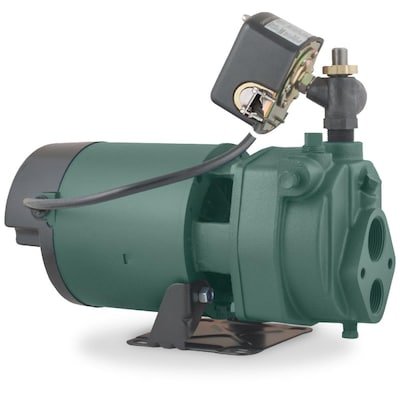
Credit: lowes.com
Frequently Asked Questions
Can a deep well jet pump be installed indoors?
Yes, many are installed in basements, utility rooms, pump houses, or protected outbuildings. The location must remain dry, protected from freezing, properly ventilated where required, and accessible for service. The pump also needs correctly sized piping to the well and an electrical installation that meets applicable local requirements.
How can I tell whether I have a jet pump or a submersible pump?
A jet pump is usually visible above ground near the pressure tank and has water pipes connected directly to it. A submersible pump is installed inside the well, so you may only see electrical wiring and a water line at the wellhead or pressure system. Two pipes running from a surface pump toward the well are a strong sign of a traditional deep well jet system.
Why does my pump lose pressure only when more than one fixture is running?
This usually indicates that water demand is approaching or exceeding available system flow. Possible contributors include a limited pump curve, clogged filters, restrictive plumbing, declining well yield, or a pressure-control issue. Note the pressure gauge reading during the event and whether flow improves after water use stops.
Will a larger pressure tank increase water flow?
A larger pressure tank usually provides more drawdown and reduces pump starts, but it does not increase the pump’s GPM capacity or the well’s yield. It can make short periods of high demand feel smoother, yet persistent low flow requires evaluation of the pump, piping, restrictions, and well performance.
How long should a deep well jet pump last?
Service life varies widely with water quality, run time, pump sizing, electrical conditions, maintenance, well yield, and the condition of the jet and piping. Rather than relying on an expected number of years, watch for declining pressure, repeated loss of prime, longer run times, frequent cycling, or rising repair needs as signs that a professional evaluation is worthwhile.