
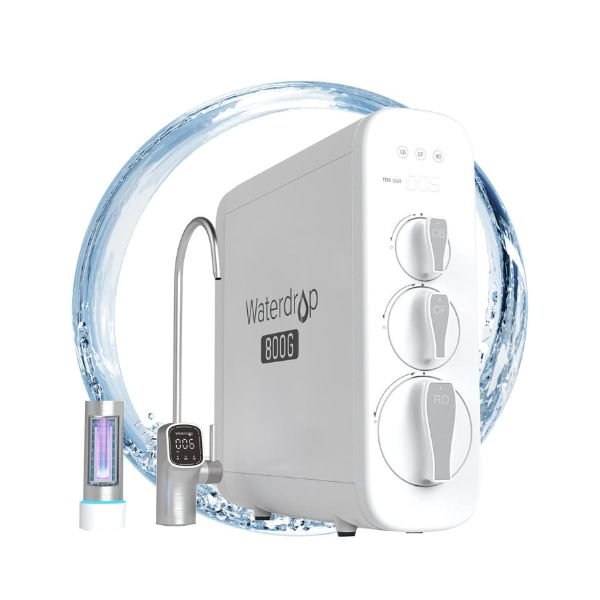
A reverse osmosis system for well water can reduce many dissolved contaminants that ordinary sediment filters and water softeners do not address. It is most often installed at a kitchen sink or another drinking-water point, where it produces a smaller volume of highly treated water for drinking and cooking.
Reverse osmosis is not automatically the right first treatment step for every private well. Well water may contain sediment, hardness, iron, manganese, hydrogen sulfide, bacteria, or other concerns that can quickly foul an RO membrane or require a different treatment method. A current laboratory water test is the starting point for choosing and sizing the system.
This guide explains what RO does, when it makes sense for a well, the pretreatment it may need, and how to avoid common installation and maintenance mistakes.
How Reverse Osmosis Works on Well Water
Reverse osmosis, usually called RO, uses household water pressure to push water through a semipermeable membrane. The membrane allows water molecules to pass while rejecting many dissolved substances. The treated water moves to a storage tank or tankless delivery system, while a separate stream carries away concentrated contaminants.
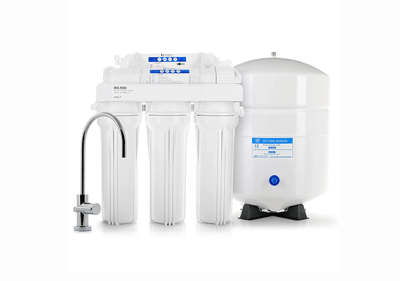
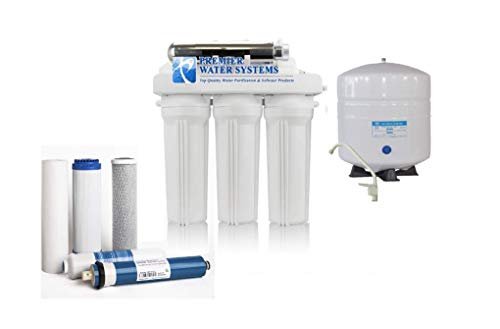
A typical under-sink reverse osmosis system for well water includes several stages:
- Sediment prefilter: Captures sand, silt, rust particles, and other suspended matter that could block later stages.
- Carbon prefilter: Commonly improves taste and protects some membrane types from chlorine. Chlorine is usually not present in untreated well water, but it may be present if the water has been disinfected or comes from a chlorinated storage system.
- RO membrane: Provides the primary reduction of many dissolved contaminants.
- Storage tank or internal reservoir: Holds treated water because membrane production is slower than faucet flow.
- Post-filter: Often provides final taste improvement before water reaches the dedicated faucet.
Not every model has the same stages, membrane capacity, tank design, or contaminant claims. The performance of a system depends on the exact model, the source water, incoming pressure, membrane condition, temperature, and maintenance.
What an RO System Can and Cannot Address
RO can be a useful barrier for dissolved contaminants that may occur in private wells, including certain salts, metals, nitrate, and some naturally occurring minerals. However, a reverse osmosis system should be selected based on the contaminants identified in a laboratory report and the manufacturer’s specific performance data.
| Water concern | How RO may help | Important limitation |
|---|---|---|
| Dissolved salts and high total dissolved solids | RO may substantially reduce many dissolved ions. | Actual reduction varies by ion, membrane, pressure, and water chemistry. |
| Nitrate | An appropriately certified RO unit may be an option for point-of-use nitrate reduction. | Testing is needed to identify nitrate and confirm whether levels change after installation. |
| Arsenic | Some systems are designed and certified for arsenic reduction under specified conditions. | Arsenic form, source-water chemistry, and exact certified claim matter. |
| Lead at a drinking-water tap | Some point-of-use systems are certified to reduce lead. | RO does not replace finding and correcting the plumbing source where practical. |
| Hardness minerals | RO can reduce minerals in the water it produces. | It is not a practical whole-house substitute for a properly sized water softener. |
| Bacteria and viruses | Some systems may have microbial reduction claims. | Do not assume a standard RO unit disinfects unsafe well water. Address the well and use treatment designed for the confirmed hazard. |
| Iron, manganese, or sulfur odor | RO is generally not the first treatment choice. | These problems can foul membranes and should normally be treated ahead of the RO unit. |
Certification is especially important when the goal is reduction of a health-related contaminant. Look beyond a brand logo or a general reference to NSF standards. Review the exact model’s listing and the specific contaminant reduction claim. A system certified for one contaminant is not necessarily certified for another.
RO also does not prove that all water in the house is safe. An under-sink unit treats only the water delivered through its dedicated faucet. Water used at bathroom sinks, showers, appliances, and outdoor taps remains untreated unless the home has separate whole-house treatment.
Start With a Well Water Test
Appearance, odor, taste, and a handheld TDS meter cannot tell you whether an RO system is needed or which contaminant it should target. A TDS reading measures the electrical conductivity of dissolved material; it does not identify what those dissolved substances are or establish drinking-water safety.
For a well being evaluated for drinking-water treatment, a certified laboratory can help identify the right panel. The exact tests depend on local geology, nearby land use, well history, and known water issues. Commonly relevant tests include:
- Total coliform bacteria and E. coli
- Nitrate and nitrite
- Arsenic where it is a local concern
- pH, hardness, alkalinity, and total dissolved solids
- Iron and manganese
- Lead, particularly where household plumbing may contribute it
- Sulfate, chloride, or other analytes suggested by local conditions
Follow the laboratory’s instructions for sampling containers, preservation, timing, and delivery. Microbiological samples and chemical samples may require different handling. A negative result applies only to the sampled water, the tested analytes, the method used, and the detection limits reported by the lab.
If the water has flooded, the well has been repaired, or its color, odor, or taste has changed unexpectedly, additional testing may be appropriate. If harmful contamination is suspected, use a known safe water source and contact the local health department for guidance. Boiling water does not remove harmful chemical contaminants such as nitrate or arsenic.
Why Pretreatment Matters for Well Water
The RO membrane is the most valuable and sensitive part of the system. It works best when feed water is relatively clear and free of membrane-fouling contaminants. For many wells, the treatment sequence matters more than adding extra filters beneath the sink.

Credit: aquahomesupply.com
Sediment filtration protects flow and membrane life
Fine sediment can plug cartridges, reduce pressure, and coat the membrane surface. A whole-house sediment filter may be necessary when the well produces visible sand, silt, clay, or oxidized iron particles. The appropriate filter style and micron rating depend on the particle size and flow needs.
A micron rating alone does not guarantee microbial protection. Filter ratings may be nominal or absolute, and sediment filtration does not reliably disinfect water. Its primary role in this setting is particle removal and equipment protection.
Hard water can create scale
Hard water contains dissolved calcium and magnesium. As an RO system concentrates water on one side of its membrane, these minerals can form scale. Moderate to high hardness often calls for pretreatment, commonly with a properly sized ion-exchange water softener.
A salt-free conditioner may reduce scale formation in some applications, but it does not remove hardness minerals in the way an ion-exchange softener does. Whether it is suitable ahead of an RO membrane depends on the water chemistry and the RO manufacturer’s requirements.
Iron, manganese, and sulfur need separate solutions
Iron and manganese may cause orange, brown, or black staining. Hydrogen sulfide may create a rotten-egg odor. These symptoms can have more than one cause, and hot-water-only odor may point to a different issue than odor at both hot and cold fixtures.
RO is usually a poor first response to these well-water problems. Dissolved iron, manganese, sulfur-related compounds, and the particles created during oxidation can shorten membrane life and clog filters. Depending on the test results, a homeowner may need oxidation, media filtration, a softener within its iron limits, disinfection, or another targeted approach before RO.
Low pH may need correction first
Acidic water can corrode plumbing and release metals from some plumbing materials. It may also affect treatment performance. If a lab report shows low pH or the home has corrosion symptoms, discuss neutralization or other pH correction with a qualified water-treatment professional before finalizing the RO design.
Point-of-Use Versus Whole-House Reverse Osmosis
For most homes with private wells, point-of-use RO is the sensible arrangement. It treats drinking and cooking water at one location, usually the kitchen sink, while more economical whole-house equipment handles issues such as sediment, hardness, or iron.
| System type | Typical use | Main considerations |
|---|---|---|
| Under-sink point-of-use RO | Drinking, cooking, coffee, ice maker, and pet water. | Lower treatment volume, dedicated faucet, drain connection, cartridge changes, and limited treated-water supply. |
| Countertop RO | Renters or homes where permanent plumbing changes are not practical. | Capacity, connection method, wastewater handling, and certification vary by model. |
| Whole-house RO | Unusual cases where all household water needs dissolved-contaminant reduction. | Requires careful engineering for flow, storage, pretreatment, wastewater, pressure, controls, and maintenance. |
Whole-house RO is not simply a larger under-sink system. It must meet peak household flow, not just daily consumption. It may need large storage tanks, repressurization equipment, significant pretreatment, and a plan for concentrate disposal. A professional design is generally appropriate, particularly where the treatment goal involves a health-related contaminant.
Choosing the Right Reverse Osmosis System for Well Water
Start with the treatment objective. For example, a household may want lower dissolved solids for better-tasting coffee, while another needs a system with a verified contaminant-reduction claim after a lab result. Those are different buying decisions.
Match certified claims to the lab report
Choose a system based on the contaminants you need to reduce, not on broad phrases such as “purifies water.” Check the documentation for the exact unit, replacement filters, operating conditions, and claimed reduction. If the source water has a health concern, use the manufacturer’s stated limits and seek professional help when water chemistry falls outside those limits.
Check feed-water pressure and flow
RO needs adequate and reasonably stable incoming water pressure. A private well system with low pressure, a clogged prefilter, a failing pressure tank, a restricted line, or a weak pump may not provide the conditions the unit needs.
Pressure and flow rate are related but different. Pressure is measured in psi; flow is measured in gallons per minute (GPM). A system can show acceptable pressure with little usable flow, or it can have good flow at one fixture but a pressure problem elsewhere. Consult the RO manufacturer’s specified operating range rather than assuming any well pressure system will work.
If your pressure drops throughout the house, troubleshoot the well pressure system before blaming the RO unit. Check safe, visible items first: whether the issue affects the whole home, whether filters are overdue for replacement, whether there are visible leaks, and what existing pressure gauges show. Electrical diagnosis and pressure-switch adjustment should be left to qualified professionals.
Understand production rate, storage, and recovery
An RO membrane produces water gradually. Tank-based systems store treated water for short periods of higher demand, while tankless models may produce water more quickly but may depend more heavily on incoming pressure and power.
Recovery describes how much incoming water becomes treated product water versus concentrate sent to a drain. The ratio varies widely with the membrane, feed-water pressure, temperature, system design, and water chemistry. Do not assume every system has the same wastewater rate or try to alter a flow restrictor outside manufacturer instructions; doing so can damage the membrane or reduce contaminant rejection.
Plan for the drain connection
Most residential RO systems require a code-compliant drain connection for concentrate water. A professional installer can verify local plumbing requirements, avoid cross-connections, and make sure the drain arrangement is compatible with the system instructions. Homes with septic systems should also consider the added water load, especially if they are considering high-volume or whole-house RO.
Installation Considerations
Under-sink RO installation commonly requires space for filters and a tank or tankless unit, a cold-water feed connection, a dedicated drinking-water faucet or compatible faucet configuration, and a drain connection. Some homeowners can complete manufacturer-approved installation, but it is not a good project when plumbing is damaged, space is cramped, water pressure is unstable, or the system serves an ice maker or multiple fixtures.
Before installation, confirm these practical details:
- The source water has been tested and pretreatment needs are addressed.
- The system is rated for the available feed-water pressure and local water conditions.
- There is access to shutoff valves, replacement cartridges, and the membrane housing.
- The concentrate drain connection meets the manufacturer’s instructions and applicable plumbing requirements.
- The unit will not be exposed to freezing temperatures or excessive heat.
- Any connected refrigerator or ice maker has enough pressure and compatible tubing.
After installation, follow the manufacturer’s flushing and startup instructions exactly. New filters and membranes may require flushing before use. If a system is installed to reduce a health-related contaminant, arrange follow-up testing as appropriate rather than relying only on a change in taste or a TDS meter reading.
Credit: newater.net
Maintenance That Keeps an RO System Working
RO systems are not maintenance-free. The prefilters protect the membrane, and delayed cartridge changes can reduce water production, lower faucet flow, and shorten membrane life. Replacement timing should follow the system manual and be adjusted when source water is unusually dirty or heavily mineralized.
Typical maintenance tasks include:
- Replacing sediment and carbon prefilters on the schedule recommended for the specific system.
- Replacing the post-filter when required for taste and performance.
- Replacing the RO membrane when its performance declines or the manufacturer’s service interval is reached.
- Inspecting tubing, fittings, shutoff valves, and the storage tank area for leaks.
- Sanitizing or servicing the unit only according to the manufacturer’s procedure.
- Maintaining whole-house pretreatment equipment, including softeners, sediment filters, and iron or sulfur systems.
A noticeable drop in treated-water flow does not automatically mean the membrane has failed. Common possibilities include an empty or underpressurized storage tank, a closed valve, clogged prefilters, low feed pressure, a blocked drain path, or a worn membrane. Start with the manufacturer’s troubleshooting guide and safe visual checks. Avoid disassembling pressurized components or changing factory settings without the proper instructions.
Common Mistakes to Avoid
Credit: amazon.com
Installing RO before solving a whole-house water problem
An RO faucet may improve drinking water at one sink, but it will not stop iron stains in showers, sulfur odor at laundry taps, or sediment damage to fixtures. Treat the well water issue at the appropriate point in the plumbing system.
Using RO as a substitute for contamination testing
RO can be part of a treatment plan, but it is not a diagnosis. Test first, select treatment based on the result, and confirm performance when the contaminant presents a health concern.
Ignoring pretreatment requirements
Hardness, sediment, iron, manganese, and unstable pH can increase maintenance and shorten membrane life. Addressing them first often makes the RO system more reliable and economical.
Choosing by gallon-per-day marketing alone
Membrane output ratings are measured under defined test conditions. Real production can be lower when well-water temperature is cold, pressure is low, or dissolved solids are high. Consider storage capacity, family use, pressure, and recovery—not just the largest number on the box.
Assuming better taste means verified safety
Water can taste and smell normal while containing contaminants that need laboratory testing to identify. Conversely, water with an unpleasant taste may have an aesthetic issue rather than a health-based concern. Treat these as separate questions.
FAQs
Can reverse osmosis remove the rotten-egg smell from well water?
It may improve the water delivered from the RO faucet, but RO is usually not the best primary treatment for rotten-egg odor. Hydrogen sulfide and related well-water problems should be identified and treated before the RO unit so they do not foul the membrane and so odor is addressed throughout the home if needed.
Does a water softener need to be installed before an RO system?
Not always, but a softener is often helpful when testing shows enough hardness to create scaling risk. The decision should be based on measured hardness, pH, alkalinity, iron and manganese levels, and the RO manufacturer’s feed-water requirements. A salt-free conditioner is not equivalent to hardness removal by ion exchange.
Can I connect an RO system to my refrigerator ice maker?
Many systems can supply an ice maker, but the arrangement must match the RO unit’s production capacity, storage, pressure, tubing requirements, and manufacturer instructions. Long tubing runs or high ice demand can reduce flow. A plumber or qualified installer can help determine whether an additional storage solution is appropriate.
How do I know when an RO membrane needs replacement?
Use the manufacturer’s maintenance guidance first. Declining production, reduced treated-water quality, or a worsening comparison between feed water and product water can indicate membrane wear, but clogged prefilters and low incoming pressure can cause similar symptoms. Replace prefilters and rule out basic supply issues before assuming the membrane is the problem.
Is reverse osmosis water safe for everyone to drink?
Safety depends on the source water, the contaminants of concern, the system’s verified capability, correct installation, and maintenance. RO water is not a guarantee that every possible contaminant has been removed. When treating a known health-related contaminant, use an appropriately certified system and confirm the result with follow-up laboratory testing when recommended.