
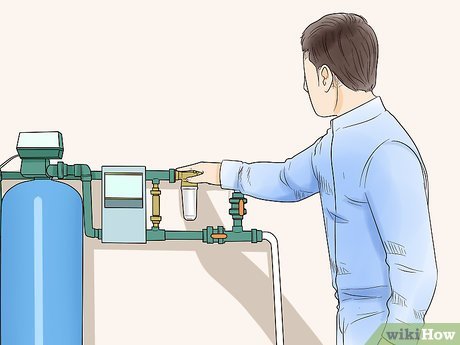
Knowing how to remove iron from well water starts with identifying the type of iron present. Iron is one of the most common private-well water problems, and it can leave orange stains, metallic tastes, cloudy water, clogged fixtures, and rusty deposits in toilets and appliances.
The right treatment depends on more than a visible stain. Iron may be dissolved in clear water, present as rust-colored particles, combined with iron bacteria, or mixed with manganese, hydrogen sulfide odor, low pH, or sediment. A filter that works well for one condition may fail quickly with another.
Use a water test to guide the decision before buying equipment. Once you know the iron level and related water chemistry, you can choose a system that removes iron reliably without creating unnecessary maintenance or pressure-loss problems.
Step 1: Confirm That Iron Is Causing the Problem
Iron in well water is often an aesthetic and plumbing concern rather than proof of a health emergency. However, water that looks or smells unusual should not be assumed safe for drinking based on appearance alone. A stain or metallic taste cannot identify every contaminant that may be present.
Common signs of iron include:
- Orange, red, brown, or yellow stains in sinks, tubs, toilets, and laundry.
- Rust-colored sediment in toilet tanks or appliance screens.
- Clear water that turns yellow, orange, or brown after standing.
- A metallic taste or odor.
- Reduced flow from clogged faucet aerators, showerheads, filters, or water-using appliances.
- Orange or brown particles released when water is first turned on.
These symptoms can also come from corroding household plumbing, sediment, manganese, or disturbances in the well. A useful first observation is whether the problem occurs at every cold-water fixture. If discoloration appears only at one faucet, only on hot water, or only after a plumbing repair, the source may be inside the home rather than the untreated well supply.
Step 2: Test the Well Water Before Selecting Treatment
A laboratory water test is the most dependable way to determine how to remove iron from well water. It identifies the amount of iron and shows which conditions may affect treatment performance.
For an iron-treatment decision, ask a certified laboratory or qualified water professional about testing for:
- Total iron and, when available, dissolved iron.
- Manganese.
- pH.
- Hardness.
- Alkalinity.
- Hydrogen sulfide if there is a rotten-egg odor.
- Turbidity or sediment, where relevant.
- Total coliform and E. coli when bacterial contamination is a concern.
Iron results are commonly reported in milligrams per liter (mg/L), which is generally equivalent to parts per million (ppm) in water. The laboratory report should be reviewed alongside the water’s pH, manganese level, hardness, odor, and household flow needs. Those factors influence which treatment media, filter size, and regeneration or backwash method may be appropriate.
Follow the laboratory’s instructions for sample containers, timing, preservation, and delivery. Sampling procedures vary by analyte, and an improperly collected sample may not represent the water coming from the well.
Why pH matters when removing iron
Many iron-removal systems work by converting dissolved iron into particles and then filtering those particles out. Water chemistry affects that process. Low-pH water can make some oxidation and filtration methods less effective, while higher pH may allow iron to oxidize more readily.
If a test shows acidic water, pH correction may be needed before or alongside iron treatment. The correct sequence depends on the equipment and source-water chemistry. Avoid assuming that a single iron filter will solve staining, corrosion, and low pH at the same time.
Watch for manganese and sulfur odor
Manganese can cause dark brown or black staining and may occur with iron. It is often harder to remove than iron, especially at a higher concentration or lower pH. A system sized only for iron may not adequately handle manganese.
A rotten-egg odor can indicate hydrogen sulfide, sulfur bacteria, or another source. Iron and sulfur frequently occur together in private wells, but treatment must be matched to the test results and the source of the odor. Removing a smell does not prove the water is safe to drink.
Step 3: Identify the Form of Iron in the Water
Iron treatment works best when the equipment matches the form of iron. The major categories below explain why one household may need a basic sediment filter while another needs oxidation, backwashing media, or professional well evaluation.
| Type of iron problem | Typical sign | Common treatment approach |
|---|---|---|
| Dissolved ferrous iron | Water runs clear, then turns yellow, orange, or brown after exposure to air | Oxidation followed by filtration; certain ion-exchange softeners may help in limited conditions |
| Oxidized ferric iron | Orange, brown, or red particles are visible immediately | Sediment filtration or a backwashing iron filter sized for the particle load |
| Iron bacteria | Slime, gelatinous deposits, recurring clogged filters, or oily-looking surface films | Well and plumbing assessment, appropriate disinfection procedures, then treatment for remaining iron |
| Iron with manganese or hydrogen sulfide | Dark staining, rotten-egg odor, or multiple water-quality symptoms | Specialized oxidation and filtration system based on complete water chemistry |
Dissolved iron
Dissolved ferrous iron is invisible while it remains in groundwater. When the water contacts oxygen, the iron oxidizes and forms rust-colored particles. This is why a glass of water may look clear from the tap but change color after sitting.
Because dissolved iron can pass through a basic sediment cartridge before it oxidizes, sediment filtration alone may not solve the problem. The water often needs oxidation before filtration.
Particulate iron
Particulate iron is already oxidized and suspended in the water. It may be visible as orange or brown particles at the faucet. A sediment filter may be useful if the amount is low and the particles are the primary issue.
However, cartridge filters can clog quickly in homes with significant iron loading. A properly sized backwashing filter is often more practical for whole-house treatment because it cleans its media by flushing trapped material to a suitable drain.
Iron bacteria
Iron bacteria are organisms that use iron in their environment and can create sticky deposits in well components, plumbing, toilets, and treatment equipment. They are not confirmed by a stain alone. Their presence may be suspected when there is recurring slime, unusual deposits, reduced flow, or persistent fouling after ordinary filter changes.
Iron bacteria can require a well-focused response rather than simply installing a filter. Contact a licensed well contractor, local health department, or qualified water-treatment professional for guidance on appropriate diagnosis and disinfection. Do not use an improvised chemical treatment or chlorine dose; the correct procedure depends on the well and plumbing system.
Step 4: Choose the Right Iron Removal Method
There is no universal best filter to remove iron from well water. The best option depends on the test result, the type of iron, the home’s peak flow rate, water pressure, available drain, and how much maintenance the household can manage.

Credit: uwaterservices.com
Sediment filters for visible particles
Sediment filters capture particulate matter, including already-oxidized iron particles. They are often installed as a prefilter to protect larger treatment equipment, fixtures, and appliances.
They are most useful when:
- Iron is already present as visible particles.
- The well produces sand, silt, or rust flakes.
- A larger treatment system needs protection from debris.
- Discoloration began after plumbing work or a disturbance in the well.
A sediment filter does not reliably remove dissolved iron. Its micron rating also does not establish that it can remove bacteria or dissolved contaminants. Select the filter type, housing size, and rating based on the actual particle load and required household flow, not the smallest micron number available.
Backwashing iron filters
Backwashing iron filters are commonly used for whole-house treatment where iron levels or flow demands would overwhelm cartridge filters. Many systems use a media bed that oxidizes, captures, or catalytically converts iron so it can be flushed away during a backwash cycle.
These systems may use air injection, oxidizing media, or other designs. Their performance depends on water chemistry, contact time, media condition, flow rate, backwash flow, and drain arrangement. A system must have enough backwash flow to clean the media properly; otherwise, it can lose effectiveness and create pressure problems.
Before choosing a backwashing unit, confirm:
- The water test supports the media and treatment method.
- The home’s well pump and pressure system can supply the required service and backwash flow.
- A suitable drain is available for discharge according to local requirements.
- The system can accommodate manganese, sulfur odor, sediment, or low pH if those are present.
Oxidation followed by filtration
Oxidation systems change dissolved iron into filterable particles. Depending on the design, oxidation may use air, an oxidizing treatment media, or a chemical feed system. The resulting particles are then removed through filtration.
This approach can be effective for dissolved iron and may be used when iron occurs with manganese or hydrogen sulfide. More complex systems need careful design and maintenance. For example, chemical-feed equipment requires correct chemical handling, storage, adjustment, and monitoring. It should be installed and serviced according to the manufacturer’s instructions and applicable local requirements.
Water softeners for low levels of clear-water iron
An ion-exchange water softener is designed primarily to remove hardness minerals such as calcium and magnesium. In some situations, it can also reduce small amounts of dissolved clear-water iron. This is usually practical only when iron is low, the water has no significant iron bacteria or sediment, and the softener is sized and maintained for the additional iron load.
Iron can foul resin and reduce a softener’s performance over time. A softener is generally not the best stand-alone solution for heavy iron staining, visible rust particles, iron bacteria, or iron combined with sulfur odor. If a softener is already installed, ask a treatment professional whether pretreatment is needed to protect it.
Reverse osmosis for drinking water only
Reverse osmosis systems are usually point-of-use devices installed at a kitchen sink or another drinking-water location. They are not normally the first choice for treating iron throughout an entire house. Iron can foul reverse osmosis membranes, so pretreatment is often needed when iron is present.
Use whole-house iron treatment to protect plumbing and appliances. Consider point-of-use treatment separately when a laboratory result identifies a specific drinking-water contaminant that requires reduction at a tap.
Step 5: Size the System for Your Home and Well
Proper sizing is one of the most overlooked parts of iron treatment. A system may remove iron in a small test sample but perform poorly when multiple showers, appliances, and faucets run at the same time.
When comparing equipment, collect the following information:
- Laboratory results for iron and related water conditions.
- The household’s expected peak flow demand in gallons per minute (GPM).
- Existing pressure range and any history of low pressure or short cycling.
- Well pump capacity and available backwash flow, if required.
- Space for tanks, bypass valves, plumbing access, and maintenance.
- Drain location and whether local discharge rules affect backwash water.
Do not size a whole-house iron filter by tank height or media volume alone. Service flow rate, backwash requirement, media type, water chemistry, and control settings all matter. A treatment system that creates excessive pressure loss can make an otherwise adequate well pump seem undersized.

Credit: peninsulawater.com
Step 6: Install Treatment in the Correct Order
The ideal equipment order depends on the water test and system design. A common arrangement may include a sediment prefilter, iron-treatment equipment, a water softener if needed for hardness, and point-of-use drinking-water treatment when a separate drinking-water concern exists.
However, this order is not universal. Some iron systems include their own sediment handling, some require a specific pretreatment stage, and some may need pH correction before filtration. Follow the manufacturer’s installation manual and the recommendations tied to your water analysis.
Whole-house systems are typically installed after the pressure tank and before the home’s distribution plumbing. This allows treated water to reach fixtures and appliances while keeping the well pump and pressure system separate from most treatment components.
Installation issues that deserve professional help
Iron-treatment installation can involve plumbing modifications, drainage, pressure settings, and electrical connections for control valves or pumps. A qualified installer is especially useful when the system requires a drain connection, chemical feed, oxidizing equipment, a new pressure tank arrangement, or changes to well plumbing.
Do not work on live electrical components, alter a well pump’s wiring, bypass safety controls, or adjust pressure equipment beyond approved instructions. If the home already has low pressure, cycling problems, or a tripping breaker, address those issues before assuming the iron filter is the cause.
Step 7: Maintain the System So Iron Does Not Return
Iron removal is not a one-time project. Filters, media beds, softeners, and oxidation equipment need routine attention to keep working. The exact schedule should come from the equipment manufacturer and be adjusted for the home’s water use and iron loading.
Typical maintenance tasks may include:
- Replacing sediment cartridges before they become heavily clogged.
- Checking pressure before and after filters to identify developing restriction.
- Confirming that automatic backwash or regeneration cycles occur as programmed.
- Keeping drains clear and watching for leaks around valves and bypass connections.
- Adding salt to an ion-exchange softener when applicable and checking for salt bridging.
- Servicing air injection, chemical-feed, or oxidation components according to the manual.
- Testing treated water periodically or after a noticeable change in staining, odor, taste, or flow.
A sudden return of orange staining does not always mean the media is exhausted. It may indicate a clogged prefilter, a bypass valve left open, a failed control valve, inadequate backwash flow, a power interruption, a change in well-water chemistry, or a plumbing issue. Check the simple, safe causes first before replacing major equipment.
Common Mistakes When Trying to Remove Iron from Well Water
- Buying a filter before testing. Visible staining does not reveal the iron concentration, pH, manganese level, or bacterial condition.
- Using a basic sediment cartridge for dissolved iron. Clear-water iron may pass through before it oxidizes.
- Assuming a water softener solves every iron problem. Softeners may be limited to certain low-iron conditions and can foul when iron is excessive.
- Ignoring low pH or manganese. These conditions can reduce iron-filter performance and require a different treatment plan.
- Overlooking flow and backwash needs. A system that is too small or cannot backwash correctly may clog, lose pressure, or allow staining to return.
- Treating odor or color as proof of water safety. Iron removal improves appearance and plumbing protection, but it does not address every possible contaminant.
- Skipping maintenance. Iron treatment equipment needs filter changes, cleaning, media care, and periodic performance checks.
When to Retest Your Well Water
Retesting helps confirm whether treatment is still working and whether the source water has changed. Consider testing after a new system is installed, after major well or plumbing work, after flooding, when staining or odor returns, or when household water use changes substantially.
Private well owners should also follow routine testing guidance from their state or local health department. The U.S. Environmental Protection Agency provides general private-well information at https://www.epa.gov/privatewells/protect-your-homes-water.
If testing identifies potentially harmful contamination, use a known safe water source for drinking and food preparation while you seek guidance from the local health department or a qualified professional. Boiling water does not remove harmful chemical contaminants, and an iron filter should not be assumed to treat bacteria, nitrate, arsenic, or other hazards unless the exact system is designed and verified for that purpose.
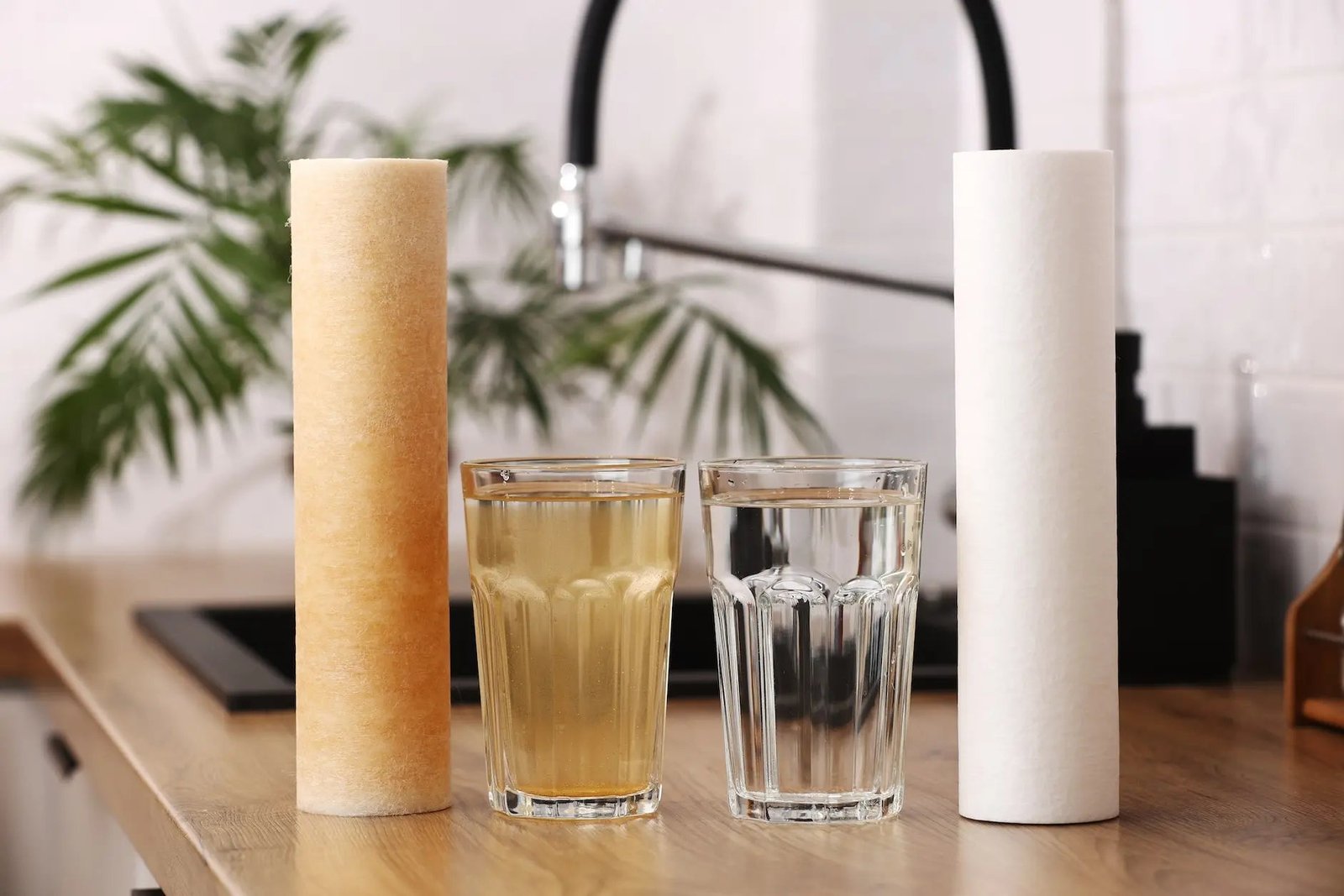
Credit: crystalquest.com
Frequently Asked Questions
Can iron in well water damage appliances?
Yes. Iron deposits can build up in water heaters, dishwashers, washing machines, humidifiers, ice makers, and fixture screens. The deposits may reduce efficiency, restrict flow, stain laundry, and increase cleaning or repair needs. Whole-house treatment is usually more protective than treating only one drinking-water tap.
Why does my water look clear at first but turn orange later?
This pattern often suggests dissolved ferrous iron. The iron is initially clear in groundwater, then reacts with oxygen in the air and becomes visible as orange or brown ferric particles. A water test is still needed to confirm the condition and select an appropriate oxidation-and-filtration method.
Will a whole-house iron filter lower my water pressure?
Any treatment system creates some pressure loss as water moves through media, filters, and valves. A properly sized and maintained system should keep that loss manageable. Major pressure loss may point to clogged cartridges, fouled media, undersized equipment, restricted plumbing, or an existing well-pump or pressure-system issue.
How long does an iron filter last?
Service life varies widely by media type, iron concentration, water chemistry, household water use, backwash performance, and maintenance. Rather than relying on a generic replacement timeline, monitor treated-water quality, pressure loss, and the manufacturer’s service guidance for the specific system.
Is orange staining always caused by iron?
No. Iron is a common cause, but staining can also involve manganese, sediment, corroding pipes, or minerals introduced from plumbing components. The location and timing of the stain matter: a problem at every cold-water fixture points in a different direction than discoloration limited to one faucet or hot water only. A laboratory test helps separate these possibilities.