
Heavy metal water testing is the only reliable way to find out whether metals such as arsenic, lead, manganese, iron, copper, or uranium are present in private well water. Water can look, smell, and taste normal while containing dissolved metals, so appearance and home screening tools cannot confirm safety.
For private well owners, a laboratory test provides the information needed to decide whether a water problem needs treatment, plumbing repairs, a follow-up sample, or advice from a local health department. The right test depends on the metal of concern, the well’s location and history, and whether the suspected source is groundwater, household plumbing, or a treatment system.
This guide explains what to test for, how to collect a useful sample, how to read a report, and what practical steps to take when results are elevated.
What Is Heavy Metal Water Testing?
Heavy metal water testing is laboratory analysis used to measure selected metallic elements in water. The phrase heavy metals is commonly used in consumer discussions, although laboratories usually report individual analytes rather than one combined “heavy metals” result.
A heavy metal water test may look for health-related contaminants such as arsenic, lead, cadmium, chromium, mercury, and uranium. It may also include metals that more often cause aesthetic or plumbing issues, such as iron, manganese, copper, and zinc.
The test result identifies the specific metal, its concentration, and the reporting unit. Most drinking-water reports use milligrams per liter (mg/L) or micrograms per liter (µg/L). For water, 1 mg/L is approximately equal to 1 part per million (ppm), while 1 µg/L is approximately equal to 1 part per billion (ppb).
Why Private Well Owners Should Test for Metals
Private wells are not routinely monitored in the same way as public water systems. The homeowner is responsible for testing the water and addressing problems found. Groundwater quality can vary substantially between neighborhoods and even between nearby wells because of local geology, land use, well construction, and plumbing materials.
Metals can enter household water through several pathways:
- Naturally occurring minerals: Groundwater moving through rock and soil can dissolve arsenic, iron, manganese, uranium, and other elements.
- Corrosive water and plumbing: Low-pH or otherwise corrosive water can release lead, copper, and other metals from pipes, fittings, fixtures, solder, or well-system components.
- Historic or nearby land use: Mining, industrial activity, waste disposal, certain agricultural practices, and older building materials may affect local groundwater in some areas.
- Well construction or deterioration: Damaged casing, poor drainage around the wellhead, or changes in the aquifer may contribute to changing water chemistry.
- Treatment equipment problems: Some systems need maintenance to continue reducing the contaminant they were selected to address.
A change in water quality is a reason to test, but it is not the only reason. A well may have a long-standing metal issue with no obvious warning signs. Testing is particularly important after flooding, well repairs, installation of a new pump or treatment system, a major change in taste or color, or when local health agencies identify an area-specific concern.
Metals Commonly Included in a Water Test
Not every laboratory panel includes the same analytes. Ask for the panel list before ordering, and choose one that fits your reason for testing.
| Metal or element | Why it may be tested | What a result may help determine |
|---|---|---|
| Arsenic | Can occur naturally in groundwater and has important long-term health implications. | Whether source-water treatment and follow-up testing should be considered. |
| Lead | Usually associated with plumbing, fixtures, solder, or service connections rather than the aquifer itself. | Whether the sample point, plumbing condition, and water corrosivity need further evaluation. |
| Cadmium | May be associated with certain industrial sources or plumbing components in limited situations. | Whether confirmation and source investigation are appropriate. |
| Chromium | May occur naturally or be associated with local industrial sources. | Whether the laboratory can distinguish the form of chromium needed for a meaningful assessment. |
| Mercury | May be relevant near certain industrial, mining, or waste-related sources. | Whether a specialized follow-up evaluation is needed. |
| Uranium | Occurs naturally in some aquifers and may be included in regional well-water recommendations. | Whether local health guidance and an appropriate treatment assessment are needed. |
| Iron and manganese | Often cause staining, dark particles, metallic taste, or fixture deposits. | Whether aesthetic treatment or a broader water-chemistry evaluation may help. |
| Copper and zinc | Can reflect plumbing corrosion or source-water chemistry. | Whether the concern appears related to household plumbing rather than the well itself. |
Iron and manganese are often included in a metals panel, but their presence does not prove the water contains a health-related heavy metal. Conversely, clear water without staining does not rule out arsenic, lead, or other contaminants. Each reported analyte must be considered separately.
Choosing the Right Heavy Metal Water Test
A certified drinking-water laboratory is generally the best option when the result will guide a health or treatment decision. Look for a laboratory certified by your state or recognized for drinking-water analysis. State environmental or health agencies often maintain lists of approved laboratories.
Credit: amazon.com
Start with the reason for testing
Tell the laboratory why you are testing. This helps it recommend the proper panel, sample bottle, preservative, and collection method.
- Routine private-well screening: Ask about a broad metals panel appropriate for your state or local geology, along with other commonly recommended well tests such as total coliform, E. coli, nitrate, pH, and hardness where relevant.
- Concern about arsenic or uranium: Request those analytes specifically. A basic household test kit may not include them or may not provide a result reliable enough for a treatment decision.
- Concern about lead from plumbing: Explain that you want to assess plumbing-related exposure. The laboratory may provide a first-draw protocol designed for that purpose.
- Staining, particles, or metallic taste: Iron, manganese, copper, pH, alkalinity, hardness, and turbidity may be useful alongside a metals panel.
- Testing a treatment system: Test both untreated and treated water when appropriate, using samples collected according to the laboratory’s instructions. This can show whether the system is affecting the specific contaminant it was intended to address.
Understand the difference between total and dissolved metals
Some laboratory reports distinguish between total and dissolved metals. A total metals sample is usually analyzed without filtering and may include metals attached to suspended particles. A dissolved metals sample is filtered under the laboratory’s specified procedure before analysis.
This distinction matters most when water contains sediment or discoloration. A high total result with a much lower dissolved result may point to particulate material, while an elevated dissolved result indicates metal is present in solution. Do not choose between these methods on your own; use the laboratory’s recommendation based on the question you are trying to answer.
Why a TDS meter is not a heavy metal test
A total dissolved solids (TDS) meter estimates the electrical conductivity of water. It cannot identify which dissolved substances are present and cannot tell you whether arsenic, lead, uranium, or another metal is in the water. A low TDS reading does not establish that water is free of harmful contaminants, and a high reading does not identify a specific health risk.
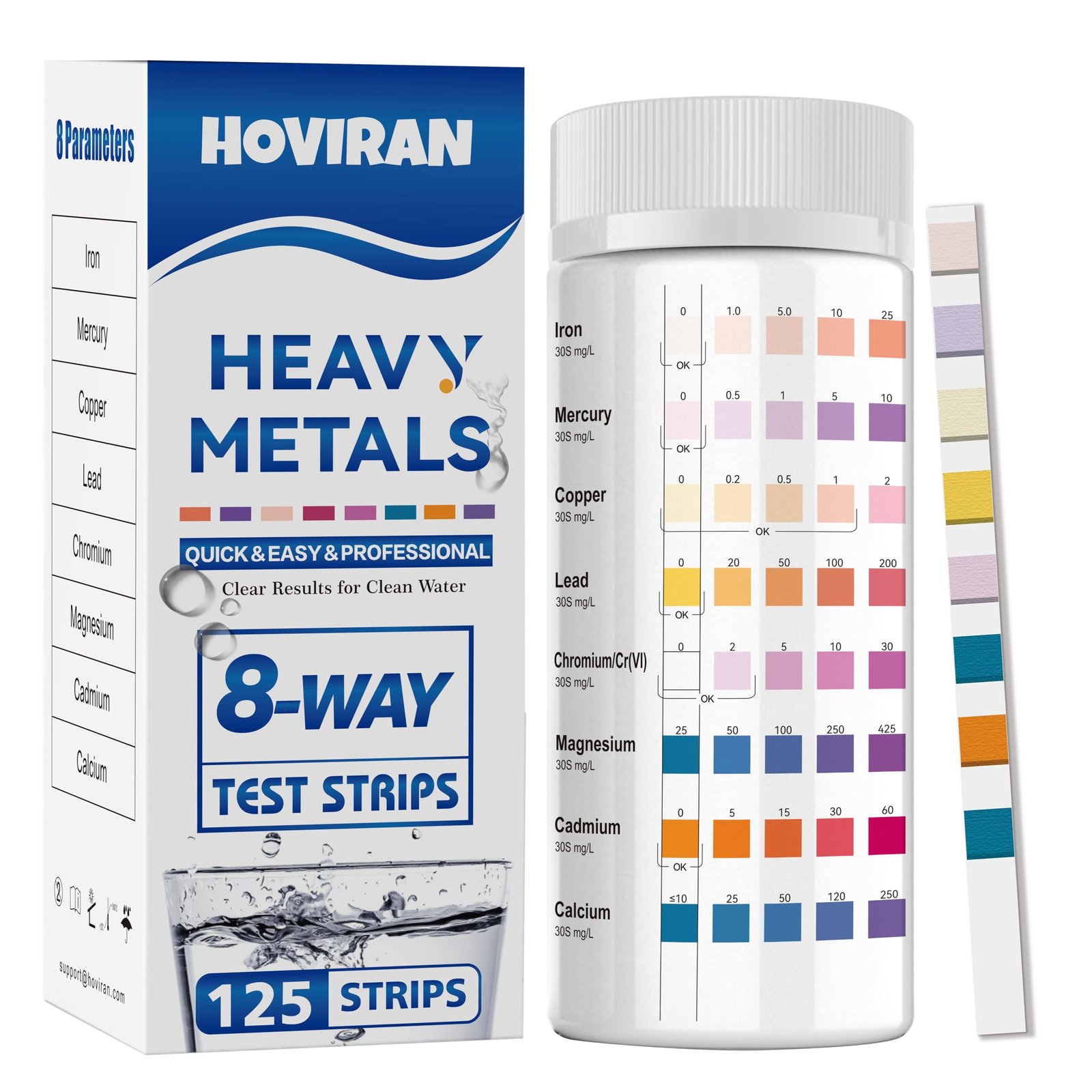
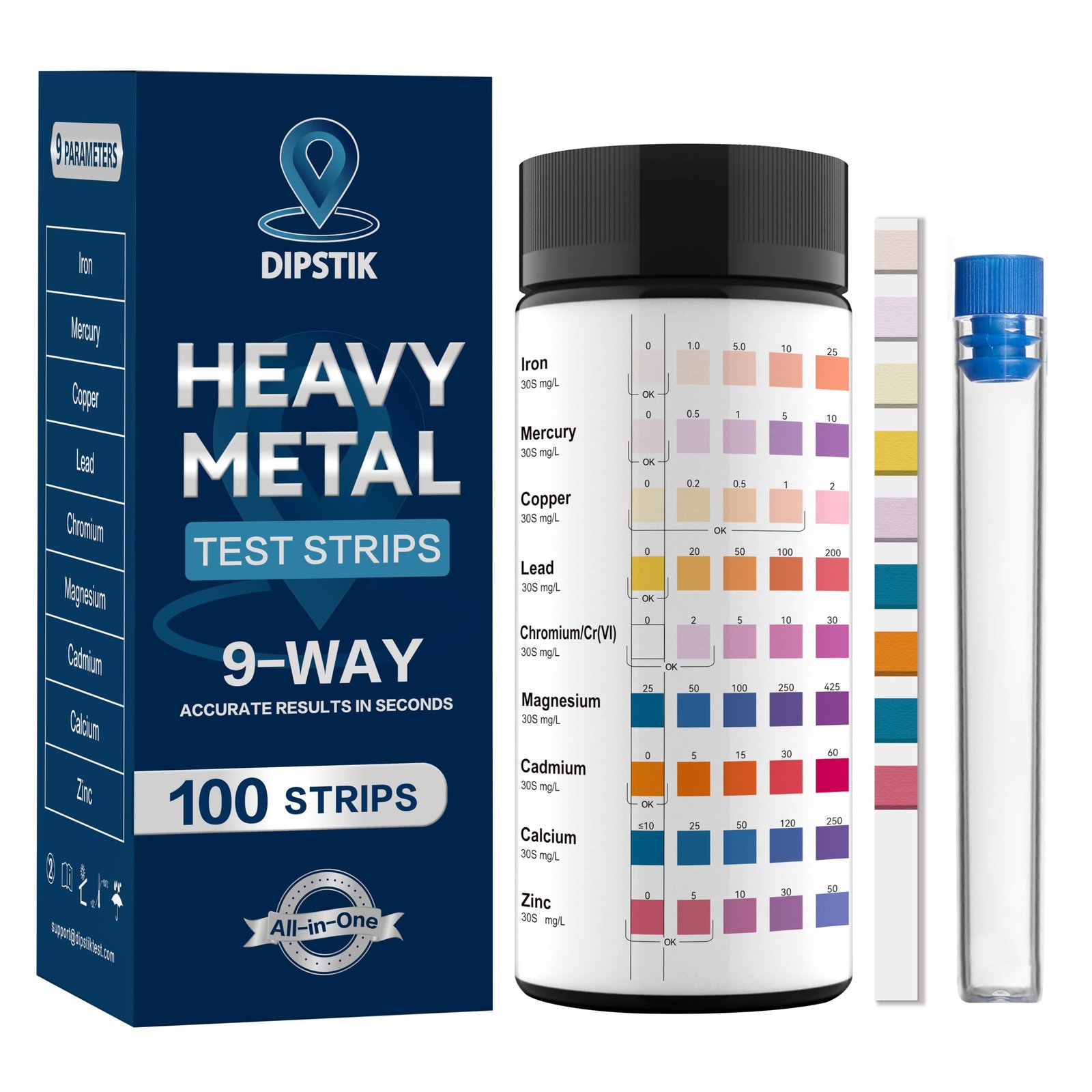
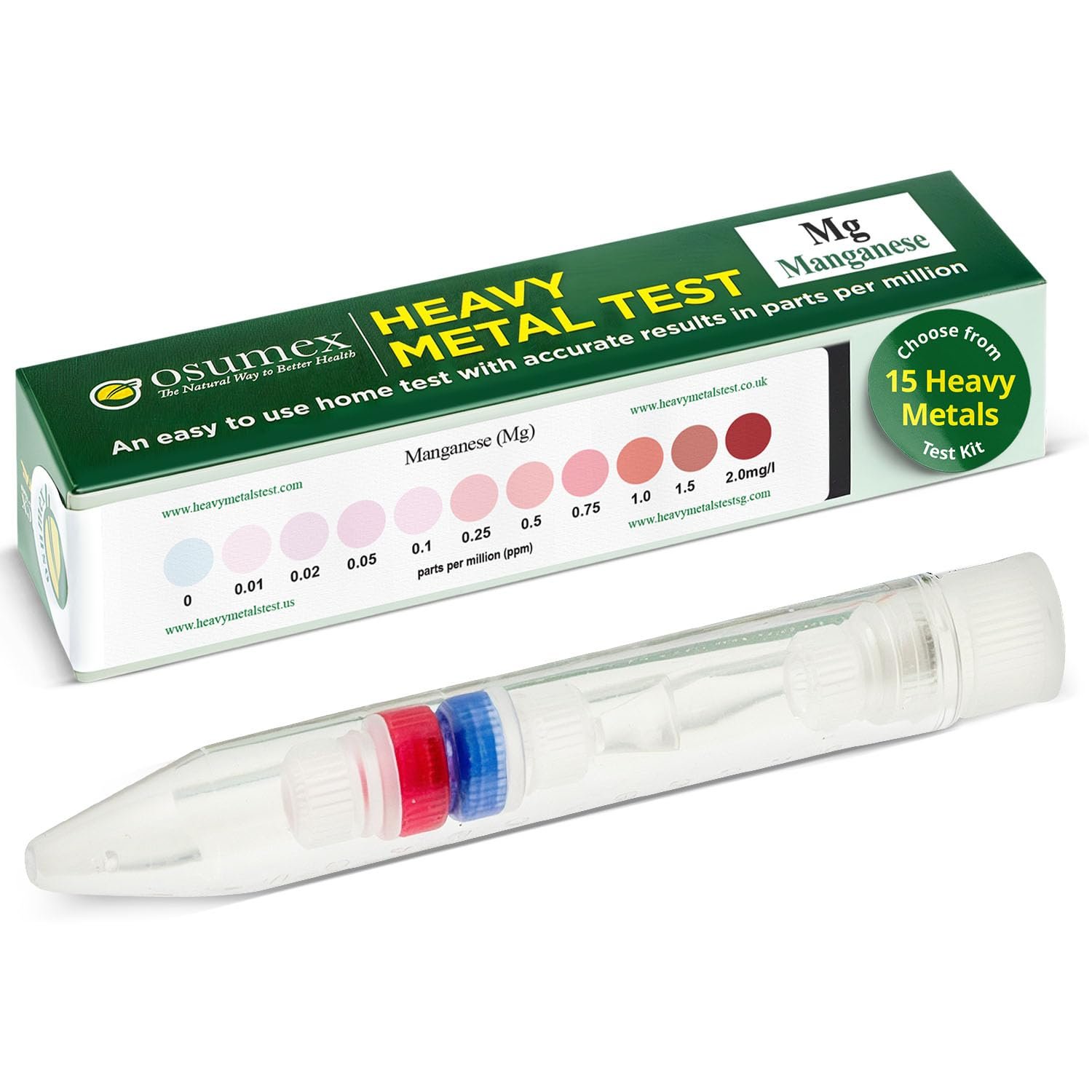
Similarly, color strips and consumer screening kits can sometimes be useful for preliminary observations, but they should not replace certified laboratory analysis when health-related metals are a concern.
How to Collect a Useful Water Sample
Sample collection can strongly affect a metal result. The correct method differs depending on whether you are evaluating raw well water, water after treatment, or possible metal pickup from household plumbing.
Use only the bottles supplied by the laboratory. Metals bottles may contain preservatives, and rinsing, overfilling, substituting another container, or touching the inside of the cap can compromise the sample. Follow the laboratory’s instructions for sample volume, collection point, timing, preservation, labeling, and delivery.
Match the sampling point to the question
- To evaluate the well water source: The lab may recommend a sample point before household treatment equipment, if a suitable dedicated tap is available.
- To evaluate drinking water at the tap: Collect from the kitchen cold-water tap or another drinking-water fixture specified by the laboratory.
- To investigate lead or copper from plumbing: A first-draw sample after a defined period of non-use may be needed. Do not flush the fixture first unless the lab’s lead protocol specifically says to do so.
- To evaluate treatment performance: Use paired samples before and after the relevant treatment device when the laboratory or treatment professional recommends it.
Do not use hot water for a drinking-water metals sample unless the laboratory specifically requests it. Hot-water plumbing and water heaters can change the result and do not normally represent the water used for drinking or cooking.
Avoid common sampling mistakes
- Collecting from a faucet with an attached filter, aerator, or treatment device when the goal is to test untreated water.
- Sampling immediately after plumbing work, well repairs, or filter replacement without noting that recent work on the lab form.
- Using a hose bib, outdoor spigot, or rarely used tap without confirming that it is an appropriate sampling point.
- Missing the laboratory’s holding-time deadline or leaving a sample in a hot vehicle.
- Failing to note whether water came from before or after a softener, sediment filter, reverse osmosis unit, or other treatment equipment.
If a result is unexpected, do not assume the laboratory made an error. Ask whether a confirmation sample, a different sample location, or a different collection protocol would help identify the source.
How to Read Heavy Metal Water Test Results
Begin with the analyte name, result, units, reporting limit, and the laboratory’s reference value or comparison benchmark. A result reported as “less than” a number means the concentration was below that laboratory’s reporting limit; it does not prove the metal is absent at every possible level.
For example, an arsenic result may be shown in µg/L, while another lab may use mg/L. Comparing values without converting the units can lead to serious mistakes. One mg/L equals 1,000 µg/L.
Credit: amazon.com
Health-based limits versus aesthetic guidance
Some reference values are health-based, while others address taste, staining, color, or other aesthetic concerns. Iron and manganese may create noticeable staining at concentrations that do not necessarily indicate the same type of health concern as arsenic or lead. The fact that water looks better after treatment does not prove it is safe to drink.
Federal drinking-water standards primarily apply to public water systems, not private domestic wells. Still, they can be useful reference points. The U.S. Environmental Protection Agency’s maximum contaminant level for arsenic in public drinking water is 10 µg/L. Private-well owners should also check state and local health guidance because recommended analytes, interpretation, and follow-up can vary by location.
Lead requires especially careful interpretation because it often comes from plumbing and exposure can vary by fixture and water-use pattern. A single low result is encouraging but does not automatically characterize every tap in a home. If lead is detected, discuss the sampling method and household plumbing with your local health department, a qualified water professional, or both.
What to do after an elevated result
Do not choose treatment based solely on a broad label such as “metals removal.” The equipment must be selected for the exact contaminant, concentration, water chemistry, flow demand, and point of use.
- Confirm what was found. Review the analyte, units, sampling location, and collection method. A confirmation sample may be appropriate, especially for an unexpected or health-related result.
- Identify the likely source. Compare a source-water sample with a tap-water sample when needed to help distinguish groundwater contamination from plumbing corrosion.
- Use a safe water source if advised. For a suspected health-related chemical contaminant, follow local health guidance. Boiling does not remove metals and may concentrate some dissolved contaminants as water evaporates.
- Get treatment advice based on full water chemistry. pH, hardness, iron, manganese, alkalinity, and other constituents can affect treatment performance.
- Verify the outcome. Test treated water after installation or service according to an appropriate schedule. A system is not confirmed effective merely because taste, odor, or staining improves.
Treatment Options Depend on the Metal and Water Chemistry
There is no single whole-house filter that reliably removes every metal under every water condition. Treatment technology should match the laboratory result and the way water is used in the home.
Point-of-use treatment
A point-of-use system treats water at one tap, commonly the kitchen drinking-water faucet. Reverse osmosis systems and certain adsorption media are often considered for specific dissolved contaminants, but performance depends on the exact unit, feed-water conditions, maintenance, and certified claim. Check the manufacturer’s documentation and applicable NSF/ANSI certification listing for the exact model and contaminant reduction claim.
Point-of-use treatment may be practical when the primary concern is water used for drinking and cooking. It does not automatically address exposure at other fixtures or solve corrosion that is releasing metals from household plumbing.
Whole-house treatment
Whole-house treatment is installed where water enters the home and is often considered for iron, manganese, corrosive water, or a source-water problem affecting all household uses. Depending on the result, options may include oxidation and filtration, pH adjustment, specialized media, or other professionally designed treatment.
Whole-house equipment must be sized for actual household flow, pressure, and water chemistry. A system that works at a low flow rate may not perform the same way during showering, laundry, and other simultaneous demand. It also requires appropriate maintenance, replacement media or filters, and sometimes backwashing or drainage.
Addressing lead from plumbing
When lead appears to come from plumbing rather than the well, source control is important. Replacing lead-containing components, correcting corrosive water conditions, and selecting an appropriately certified point-of-use filter can all be relevant, depending on the home. Treatment alone may not be the complete solution if plumbing materials continue to contribute lead.
Do not rely on a standard water softener to remove every metal. Conventional ion-exchange softeners are designed primarily to reduce hardness minerals and may have limited or unsuitable performance for other metals. They are not a substitute for treatment selected specifically for arsenic, lead, uranium, or another confirmed contaminant.
When to Repeat Testing
Private wells should be tested periodically, with the test list based on local recommendations and household circumstances. A metals panel may be repeated more often when a metal has previously been detected, local geology creates a known risk, a treatment system is in place, or water quality changes.
Additional testing is sensible after flooding, nearby construction or land-use changes, well repairs, pump work, a long period of non-use, or an unexplained change in color, taste, odor, or staining. A negative result applies only to the sampled water, the analytes tested, the laboratory method, and the date of collection.
Credit: amazon.com
Frequently Asked Questions
Can I test my well water for heavy metals at home?
Home kits may provide a rough screening result for a limited set of substances, but a certified laboratory is the better choice for health-related metals. Laboratory analysis provides analyte-specific results, lower reporting limits where needed, and documentation that can guide treatment or discussions with local health officials.
Does a water filter remove heavy metals?
Some filters can reduce certain metals, but only when the filter media, operating conditions, and certified claim match the contaminant. A sediment filter, for example, may capture particles but may not remove dissolved arsenic or lead. Verify the exact model’s documentation rather than relying on general “heavy metal filter” marketing.
Should I test hot and cold water separately?
For most drinking-water concerns, start with a cold-water sample because cold water is normally used for drinking and cooking. A separate hot-water sample may be useful when the concern is limited to hot-water discoloration, taste, or plumbing, but the laboratory should advise on the correct collection method.
Can a water softener make a metal test result inaccurate?
A softener can change the chemistry of water sampled after the unit, so always record whether the sample was collected before or after treatment. If you are evaluating the well source, sample before treatment when possible. If you are evaluating water people drink, testing at the tap may also be appropriate.
Who can help interpret an elevated metals result?
Your state or local health department, cooperative extension office, certified laboratory, or a qualified water-treatment professional can help interpret the result. Provide the complete report, the sampling location, details about any treatment equipment, and relevant water chemistry results rather than sharing only one number.