
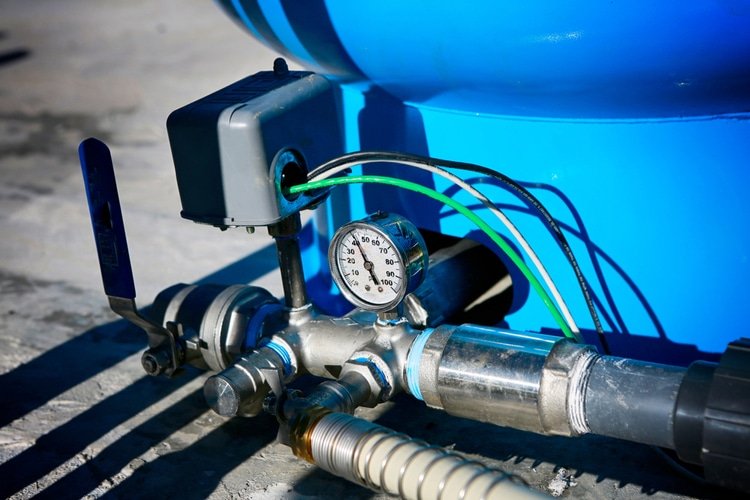
Well pump pressure switch adjustment changes the pressure range that tells a conventional well pump when to start and stop. Done correctly, it can help a pressure system match household needs. Done incorrectly, it can cause short cycling, poor water pressure, pump damage, or pressure-tank problems.
The most important point is that the pressure switch, pressure tank, pump, plumbing restrictions, and well’s available water supply work as one system. A switch setting is not a standalone upgrade. Raising the shutoff pressure does not automatically provide more water flow, and it may push equipment beyond its intended operating range.
This guide explains how to identify a conventional switch system, check whether adjustment is actually appropriate, understand the relationship between switch settings and tank precharge, and know when to call a qualified well professional. Do not remove a pressure-switch cover or make adjustments around energized wiring unless you are qualified to work safely on electrical pump controls.
What a Well Pump Pressure Switch Does
A conventional well pump pressure switch monitors water pressure in the plumbing system. When pressure falls to a preset cut-in pressure, the switch starts the pump. When pressure rises to the preset cut-out pressure, it stops the pump.
For example, a system may be set to start at a lower pressure and stop at a higher pressure. The pressure tank supplies stored water between those two points, so the pump does not need to start every time someone opens a faucet.
The switch does not create pressure by itself. It simply reacts to pressure measured at its connection to the plumbing. The pump must be capable of reaching the cut-out pressure, the well must yield water adequately, and the tank must have the correct air charge and usable drawdown.
Cut-in pressure and cut-out pressure
- Cut-in pressure: The lower pressure where the pump is commanded to start.
- Cut-out pressure: The upper pressure where the pump is commanded to stop.
- Pressure differential: The gap between cut-in and cut-out pressure.
Many conventional residential systems use a pressure range that is commonly described by its low and high settings. However, the correct range depends on the pressure tank, pump capability, plumbing, treatment equipment, fixtures, and manufacturer instructions. Never assume a setting that works in another house is right for yours.
First, Confirm That You Have an Adjustable Mechanical Switch
Not every well system uses a traditional mechanical pressure switch. A conventional switch is often a small box mounted near the pressure tank on a short plumbing nipple or connected to the system through a pressure-sensing line. It may have a removable cover and electrical wires entering the housing.
Some systems use a constant-pressure controller, variable-speed drive, pump control box, electronic sensor, or proprietary controller instead. Those systems may maintain pressure differently and may not use the familiar cut-in/cut-out arrangement. Applying conventional pressure-switch advice to an electronic control can cause faults or void equipment requirements.
Signs of a conventional pressure-switch system
- A pressure gauge near the tank shows pressure rising and falling in a repeating range.
- The pump starts at one gauge reading and stops at another.
- A labeled mechanical switch is mounted near the pressure tank.
- The system has a standard bladder, diaphragm, or older air-over-water pressure tank.
When this guide may not apply
Stop before attempting a well pump pressure switch adjustment if you have a variable-speed constant-pressure system, an unfamiliar control panel, a pump protection device, a shared well system, or a switch that does not match the system documentation. Record the equipment make and model and consult the manufacturer manual or a qualified well contractor.
Why Pressure Settings Should Not Be Changed Casually
A homeowner may want higher pressure because showers feel weak or appliances seem slow to fill. But low pressure can be caused by many issues that changing the switch will not solve. In some cases, increasing the pressure setting makes the symptom worse.
For example, a clogged sediment filter, fouled water-treatment media, partially closed valve, leaking pipe, worn pump, low well yield, or inaccurate gauge can all affect water delivery. A pump that cannot reach the existing cut-out pressure may run continuously until overload protection trips or another safety control intervenes. Raising the target pressure would add more strain without correcting the cause.
| Symptom | Possible cause | Why switch adjustment may not help |
|---|---|---|
| Low pressure at one faucet | Clogged aerator, fixture cartridge, or local shutoff issue | The rest of the house may have normal system pressure. |
| Low pressure throughout the home | Plugged filter, treatment restriction, leak, weak pump, or low supply | Increasing settings can increase pump run time without restoring flow. |
| Pump starts and stops rapidly | Waterlogged tank, incorrect precharge, leak, undersized drawdown, or control issue | A setting change rarely fixes the underlying cycling problem. |
| Pump will not shut off | Unable to reach cut-out pressure, leak, clogged sensing port, worn switch, or pump problem | Higher cut-out pressure can make the condition more severe. |
| Pressure gauge readings seem erratic | Failed or clogged gauge, pressure-sensing restriction, or unstable water supply | Adjustment based on a bad reading is unreliable. |
Safe Checks Before Considering an Adjustment
Begin with observations that do not involve live electrical components. If the pump is cycling abnormally, a breaker is tripping, there is a burning smell, wiring looks damaged, or water is leaking near electrical equipment, stop and contact a qualified professional. Do not repeatedly reset a tripped breaker.
Credit: plumbersinorlandpark.com
Check whether the issue affects the entire home
Open cold-water fixtures in different parts of the house one at a time. If only one fixture has weak flow, the problem is usually downstream of the well pressure system. Clean or service that fixture as appropriate.
If every fixture has reduced flow, look for common restrictions first. A whole-house sediment filter, carbon filter, iron treatment system, softener, or cartridge filter can create substantial pressure loss when it is clogged, undersized, bypassed incorrectly, or due for maintenance. Follow the equipment manufacturer’s service instructions rather than opening pressurized components without preparation.
Observe the pressure gauge during normal use
Watch the existing pressure gauge while water is being used. Note the approximate reading when the pump starts and when it stops. Also note whether the pump reaches shutoff promptly, takes an unusually long time, or runs without stopping.
A gauge is useful, but it is not automatically accurate. If the needle sticks, does not return consistently, is filled with condensation, or does not respond normally, have the gauge and pressure connection evaluated before relying on its readings for a well pump pressure switch adjustment.
Look for visible water loss
Check for dripping fittings, wet areas around the tank, leaking toilets, continuously running treatment equipment, or an outdoor hydrant left on. A significant leak can keep pressure from building normally and make the pump cycle more often.
If the pressure falls when no water is intentionally being used, a leak or check-valve issue is possible, but it is not confirmed by that observation alone. Underground leaks and well-side components require professional diagnosis.
Pressure Tank Precharge Must Match the Switch Setting
In a conventional bladder or diaphragm tank system, the tank’s air precharge is related to the pump cut-in pressure. The air cushion is what allows the tank to store usable water between pump cycles.
A common manufacturer guideline is to set the tank’s air precharge slightly below the pump’s cut-in pressure. The exact difference and procedure must follow the tank manufacturer’s instructions and the actual pressure-control design. This rule does not apply universally to all tank styles or constant-pressure systems.
If the precharge is too high, little or no water may enter the tank before the pump starts. If it is too low, the tank may provide less usable drawdown and contribute to frequent cycling. Neither condition is corrected reliably by adjusting the switch alone.
How precharge is checked safely
Checking precharge is not the same as reading water pressure at a faucet. The pump power must be isolated, and water-side pressure must be fully relieved before the air charge is measured at the tank’s air valve. Measuring it while the tank remains pressurized with water does not provide a valid precharge reading.
Because pressure tanks are pressurized vessels, do not pressurize a visibly corroded, damaged, leaking, or suspect tank. If water comes out of the air valve, the internal bladder or diaphragm may have failed, and the tank should be assessed for replacement rather than repeatedly adjusted.
How Professionals Approach Pressure Switch Adjustment
A qualified technician normally treats switch adjustment as a system-calibration task, not a quick fix. They identify the control type, verify the gauge, inspect the tank and plumbing, confirm the pump can meet the target pressure, and check for restrictions or leaks.
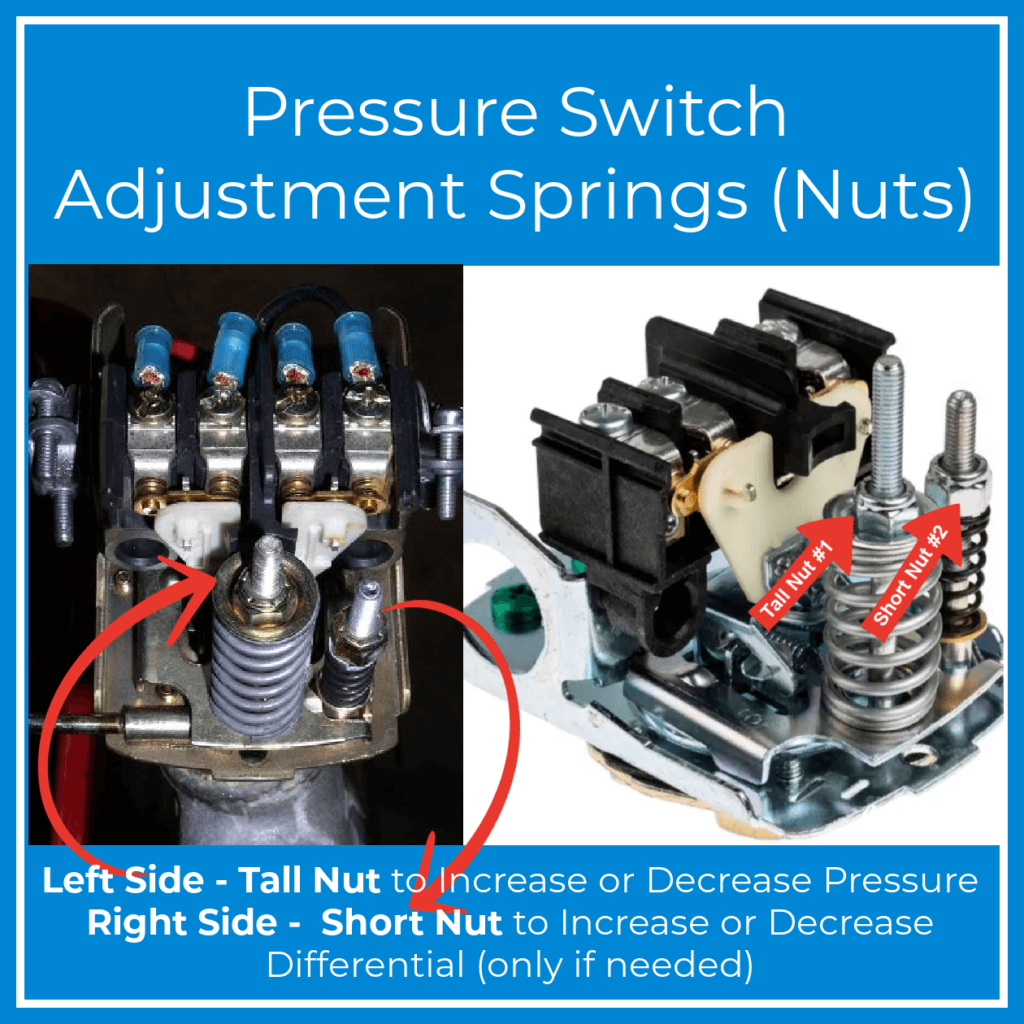
On many mechanical switches, internal adjustment hardware changes either the overall pressure range or the difference between pump start and stop pressures. The specific mechanism varies by switch model. Some switches are factory set, some have limited adjustment ranges, and some controls include protective features that should not be overridden.
Since access to those adjustments can expose live electrical terminals, the safer homeowner role is to document current operation and provide the information to a well professional. Do not attempt to adjust a switch while power is on, and do not bypass a low-pressure cutoff or other safety feature to keep the pump running.
Information to record before scheduling service
- The pressure gauge reading when the pump starts and stops.
- Whether low pressure affects one fixture or the whole house.
- Whether the pump runs continuously, short cycles, or trips a breaker.
- The pressure tank brand, model, and approximate age, if known.
- The pump type, if known: submersible or jet pump.
- Any recent changes, such as a filter replacement, plumbing repair, flooding, power outage, or new water-treatment equipment.
- Whether the well has recently produced sand, air spurts, cloudy water, or reduced flow.
Choose Pressure Based on System Limits, Not Preference Alone
Higher pressure can improve the feel of a shower, but it also increases the work required from the pump and the stress on plumbing components. The pump must overcome the vertical lift from the pumping water level, friction losses in the pipe, treatment equipment pressure loss, and the target pressure at the tank. This combined requirement is part of total dynamic head.
Well depth alone does not determine whether a pump can support a higher pressure setting. The important factors include the pumping water level, pipe size and length, pump curve, flow demand, treatment restrictions, and condition of the equipment. A pump may deliver adequate water at one pressure but insufficient flow at a higher one.

Credit: clearwaterpumpservices.com
Consider downstream equipment
Before changing pressure settings, check the rated operating limits for filters, softeners, reverse osmosis systems, water heaters, connectors, valves, and appliances. Some components have maximum working-pressure limits or may experience greater pressure drop at higher flow rates.
Water treatment equipment deserves special attention. A cartridge filter that is already restricted can make a system feel weak even if the pressure switch is operating normally. Replacing the correct filter cartridge or servicing the treatment system may restore usable flow without changing the pump-control range.
Understand pressure versus flow
Pressure is the force available in the plumbing, usually shown in pounds per square inch (psi). Flow is the amount of water delivered over time, commonly described in gallons per minute (GPM). They are related, but they are not interchangeable.
A home can have a normal pressure gauge reading and still have poor flow through a clogged filter or undersized pipe. Conversely, a pump may deliver good flow at low demand but struggle to maintain pressure when several fixtures operate at once. Proper diagnosis considers both measurements.
Common Problems Mistaken for a Switch Setting Issue
Short cycling
Short cycling means the pump starts and stops more often than normal, sometimes within a short period while water is being used. Common causes include a waterlogged tank, failed bladder or diaphragm, incorrect tank precharge, insufficient tank drawdown, a plumbing leak, or a pressure-control problem.
Frequent cycling increases wear on the pump motor, switch contacts, and other components. If you hear rapid clicking at the pressure switch or see the gauge swing quickly between start and stop points, arrange prompt diagnosis rather than trying to widen or raise the settings.
The pump does not reach shutoff pressure
A pump that runs but cannot reach cut-out pressure may be dealing with a large water leak, clogged filter or treatment equipment, worn pump components, inadequate well yield, a broken pipe, or an incorrect control reading. A jet pump may also have priming or suction-side problems, while a submersible pump has different possible causes below ground.
Do not keep the pump running indefinitely in an attempt to build pressure. A qualified technician can determine whether the issue is on the plumbing side, at the switch sensing port, in the pump system, or in the well itself.
The pump will not start when pressure drops
If water pressure falls but the pump does not start, check only safe external items first: whether the system has power, whether a breaker has tripped, and whether there is an obvious control alert. Do not touch exposed terminals or attempt to force the switch contacts closed.
The cause may be a switch issue, a failed capacitor or control box, a pump motor problem, a low-pressure safety feature, wiring damage, or loss of water supply. Electrical and well-pump diagnosis should be handled by a qualified professional.
When Replacement Is Better Than Adjustment
A mechanical pressure switch is a wear item. Contact points can pit or burn, diaphragms and sensing passages can clog, and corrosion can affect performance. Adjustment is not a repair for a switch that is unreliable, damaged, or incompatible with the system.
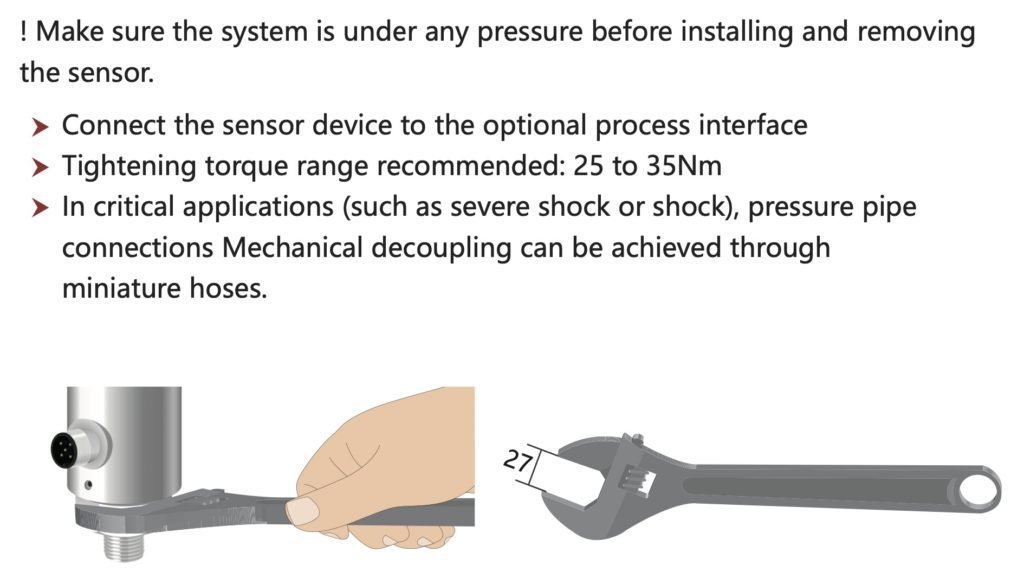
Replacement may be the better option when the switch has visible heat damage, corroded terminals, inconsistent operation, a clogged pressure connection, or a failed protective function. The replacement must match the pump-control voltage, motor requirements, pressure range, enclosure needs, and system design. A professional can also determine whether the pressure gauge, tank, or pressure-sensing plumbing should be serviced at the same time.
Credit: cdsentec.com
Protect the Well System After Any Change
After a pressure control is serviced or adjusted, monitor several normal pump cycles. The system should start and stop consistently, reach shutoff without prolonged running, and provide stable pressure during ordinary water use. Check for leaks around the tank, switch connection, filter housings, and recently serviced plumbing.
Keep a simple record of the observed cut-in and cut-out readings, tank model, filter maintenance dates, and any service performed. This gives a technician useful history if pressure problems return.
If pressure performance changes after a flood, well repair, extended power outage, new treatment installation, or sudden change in water appearance or odor, treat that as a diagnostic clue. A pressure adjustment may be only one small part of the needed evaluation.
Frequently Asked Questions
Can I increase well water pressure by turning up the pressure switch?
Possibly, but only if the pump, tank, plumbing, and treatment equipment are designed to operate at the higher range. If the pump cannot reach the new shutoff point or a filter is restricting flow, increasing the setting can create longer run times and equipment stress instead of better performance.
Why does my pressure gauge show normal pressure but my shower is weak?
The restriction may be after the gauge, such as a clogged showerhead, cartridge, treatment filter, softener, partially closed valve, or undersized plumbing. Test other fixtures to determine whether the problem is local or affects the whole house.
Does a bigger pressure tank increase water pressure?
Not by itself. A larger properly sized tank usually provides more usable drawdown, which can reduce pump starts and stops. The pressure range is still determined by the control system, while actual flow depends on the pump, well yield, plumbing, and restrictions.
What does clicking at the pressure switch mean?
One click when the pump starts and another when it stops can be normal. Repeated rapid clicking often indicates short cycling or unstable pressure and should be investigated promptly to avoid unnecessary pump and control wear.
Should I replace a pressure switch when replacing a pressure tank?
Not always, but it is a good time to inspect the switch, gauge, pressure-sensing connection, and wiring condition. The new tank’s precharge and the existing control settings must be compatible, so a qualified installer can verify the whole pressure system during the tank replacement.