
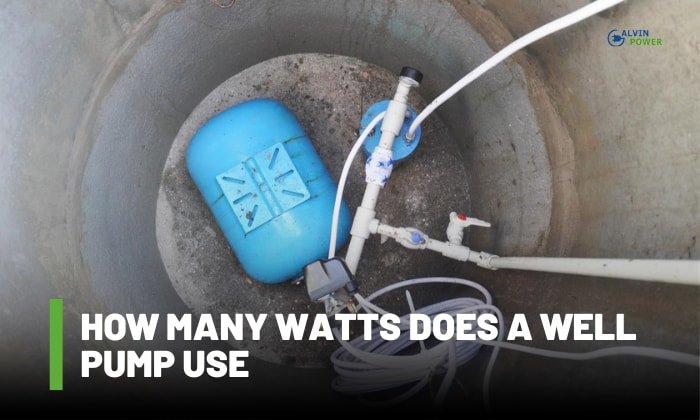
How many watts a well pump uses depends on its motor size, pump type, depth to water, pressure requirements, and how hard the pump is working. A typical residential well pump may draw several hundred watts while running, while larger systems can use well over 1,000 watts.
The motor’s horsepower rating is a useful starting point, but it does not tell the whole story. A pump does not convert electrical power to water movement with perfect efficiency, and the actual wattage can change as water level, pressure, restrictions, and household demand change.
For the most accurate answer, check the pump motor nameplate, pump-control documentation, or electrical measurements taken safely by a qualified professional. The guide below explains how to estimate well pump electricity use and turn that estimate into monthly operating cost.
Typical Well Pump Wattage by Motor Size
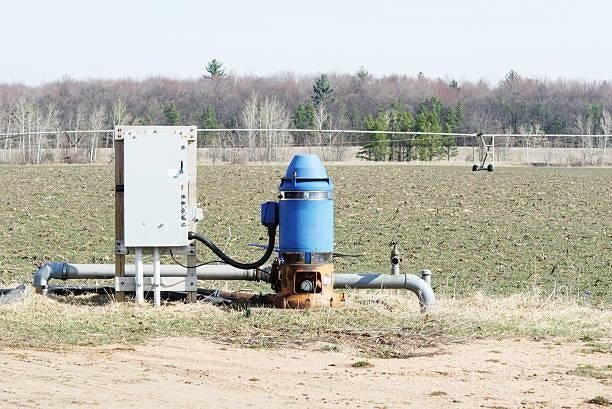
Many private well systems use either a submersible pump installed inside the well or a jet pump installed above ground. Both types are commonly powered by electric motors, often on a 240-volt circuit for larger residential systems.
The figures below are broad planning ranges for running power, not guaranteed ratings. Actual electrical input varies by motor efficiency, voltage, pump load, age, and the specific pump model.
| Nominal Motor Size | Approximate Running Wattage | Common Residential Use |
|---|---|---|
| 1/3 horsepower | Roughly 400 to 800 watts | Smaller homes, shallow or low-demand systems |
| 1/2 horsepower | Roughly 700 to 1,200 watts | Common residential well pump size |
| 3/4 horsepower | Roughly 1,000 to 1,600 watts | Higher lift, greater pressure demand, or larger homes |
| 1 horsepower | Roughly 1,400 to 2,200 watts | Higher-demand homes or deeper pumping conditions |
| 1.5 horsepower and larger | Often 2,000 watts or more | Large homes, irrigation demand, or demanding well conditions |
These ranges refer to power while the motor is operating normally. A pump may need substantially more electrical power for a brief moment when it starts. That starting demand matters when choosing a generator, inverter, pressure-system controller, or electrical circuit, even though it has less effect on the monthly utility bill.
Running Watts Are Not the Same as Starting Watts
A well pump motor uses its highest current when starting from a standstill. This is often called starting current, inrush current, or locked-rotor current. The motor needs this temporary surge to begin turning the pump.
Once the motor reaches normal speed, its power draw drops to its running level. The startup period is brief, but it can be important in these situations:
- Choosing a backup generator for a power outage
- Using an inverter, battery system, or solar power system
- Diagnosing breaker trips or dimming lights when the pump starts
- Checking whether a control box, pressure controller, or circuit is properly sized
Do not size a generator based only on estimated running watts. Use the pump motor nameplate and the generator manufacturer’s surge-rating guidance. Some modern variable-speed pump systems may have different startup behavior than conventional single-speed motors, so their manuals are especially important.
Why Horsepower Does Not Equal Wattage
It is tempting to convert horsepower directly into watts. One mechanical horsepower is commonly expressed as about 746 watts, but that describes mechanical output, not necessarily the electricity the pump draws from your home.
For example, a 1-horsepower motor may require more than 746 watts of electrical input because energy is lost as heat and through motor and pump inefficiency. The motor may also draw different power at different points on its pump curve.
A pump’s actual load is affected by more than horsepower, including:
- Pumping water level: The distance from the pump to the water surface while pumping. This can be much more useful than total well depth when evaluating pump workload.
- Total dynamic head: The combined vertical lift, required pressure, friction loss in piping, and other resistance the pump must overcome.
- Flow rate: Moving more gallons per minute generally requires more work from the system.
- Pressure settings: A system designed to maintain higher pressure may require more energy than one operating at lower pressure.
- Pipe restrictions: Clogged filters, undersized plumbing, mineral buildup, and partly closed valves can affect system performance.
- Motor condition: Aging components, voltage problems, and mechanical issues can alter electrical draw.
This is why two pumps with the same horsepower can have different wattage readings and different water-delivery performance.
How to Find Your Well Pump’s Actual Power Use
The best source of information is the equipment documentation. Start with safe, visible information rather than opening electrical panels or working around energized components.

Credit: waterpumptools.com
Check the pump motor nameplate
The nameplate may be on an above-ground jet pump motor, on a control box, or in the pump documentation. A submersible pump’s motor nameplate is usually not accessible without pulling the pump from the well, which is not a routine homeowner task.
Look for details such as:
- Voltage, such as 115/120 volts or 230/240 volts
- Amperage, often listed as full-load amps or running amps
- Horsepower
- Phase, usually single-phase in a home well system
- Model number
- Service factor or rated input, if listed
A full-load amp rating is not always the exact number of amps the motor draws at every moment. Still, it is more useful than horsepower alone for estimating electrical demand.
Estimate watts from volts and amps
For a simple estimate, multiply voltage by amperage:
Watts ≈ volts × amps
For instance, a motor operating at 240 volts and drawing 6 amps has an apparent power value of about 1,440 volt-amperes. The true wattage can be lower because AC motors have a power factor. Motor nameplate information, manufacturer documentation, or a proper power meter gives a more reliable value.
For household cost planning, using the voltage-and-amp estimate can be reasonable when no better data is available. For electrical design, generator sizing, or troubleshooting, use the manufacturer’s specifications or consult a qualified electrician or well professional.
Use an energy monitor only when it is compatible
A whole-home energy monitor may show pump activity if the pump is on a dedicated circuit and the monitor can identify that circuit. A qualified professional can also measure current with appropriate test equipment.
Do not remove electrical covers, probe live terminals, or attempt to measure a well pump circuit unless you are trained and equipped to do so safely. Well pumps often use 240-volt circuits, and control boxes can contain hazardous live components.
How Much Electricity Does a Well Pump Use Per Day?
A well pump does not run continuously. It turns on when pressure falls to the system’s cut-in point and turns off when the tank reaches the cut-out point, unless the home uses a variable-speed or constant-pressure system that operates differently.
That means daily electricity use depends heavily on how long the pump runs. Water use is usually the biggest driver. Long showers, laundry, irrigation, toilet leaks, water treatment backwash cycles, and outdoor faucets can all increase pump run time.
Use this formula to estimate energy use:
Energy use in kilowatt-hours (kWh) = pump watts ÷ 1,000 × hours run
Suppose a pump uses an estimated 1,000 watts while running and runs for 45 minutes total in one day:
1,000 ÷ 1,000 × 0.75 hours = 0.75 kWh per day
Over 30 days, that would be about 22.5 kWh. This is only an example. A household with higher water use or a pump that runs longer to refill the pressure tank may use more energy.
Estimate monthly well pump cost
Once you know or estimate monthly kWh use, multiply it by the electricity rate shown on your utility bill.
Monthly pump cost = monthly kWh × electricity price per kWh
For example, if a pump uses 30 kWh in a month and your electricity rate is $0.18 per kWh, the estimated energy cost would be $5.40 for that month. Utility bills may include delivery charges, tiered rates, taxes, or time-of-use pricing, so the final cost can differ.
In many homes, the well pump’s annual electricity use is modest compared with electric heating, air conditioning, water heating, or large appliances. However, a leaking system, poor well yield, irrigation demand, or a pump that runs unnecessarily can make its energy use much more noticeable.
What Makes a Well Pump Use More Watts or Run Longer?
Some conditions increase the pump’s electrical demand, while others mainly increase the number of minutes it runs. Both can raise energy use.
Lower pumping water levels
Well depth is not the same as pumping water level. A well may be hundreds of feet deep but have water standing much closer to the surface. During pumping, the water level can drop temporarily, a condition known as drawdown.
If the pump must lift water farther because the pumping water level is lower, it must work against more head. Seasonal changes, drought, high household demand, or an aging well can affect pumping conditions.
Higher pressure requirements
Pressure systems commonly operate within a set range, but the exact settings are system-specific. Raising household pressure can increase the work needed to move water through the plumbing. Long pipe runs, elevation changes, irrigation zones, and treatment equipment can add resistance as well.
Do not change pressure-switch settings simply to reduce power use. Incorrect settings can cause poor water delivery, pump damage, pressure-tank problems, or unsafe operating conditions. Any pressure adjustment should follow the equipment manufacturer’s instructions and account for the entire system.
Water treatment equipment
Whole-house filters, softeners, iron-treatment systems, UV equipment, and other treatment devices do not all affect pumping energy in the same way. A filter or treatment tank can create pressure loss as it becomes loaded or if it is undersized for the home’s flow rate.
Some equipment also uses water during regeneration or backwashing, which causes additional pump cycles. That does not mean treatment is unnecessary; it means the system should be correctly sized, maintained, and matched to tested water conditions.
Leaks and unnoticed water use
A running toilet, leaking pipe, malfunctioning irrigation valve, or water-treatment control issue can cause frequent pump operation. A small leak may not create an obvious puddle, particularly if it is underground or discharges into a drain.
If no water is being intentionally used but the pump cycles repeatedly, investigate promptly. Short cycling can also be caused by pressure-tank or pressure-control problems, so a leak is only one possible explanation.
Pressure Tanks Affect Run Time, Not Pump Wattage Alone
A pressure tank stores a limited amount of pressurized water, called drawdown, between pump cycles. It helps prevent the pump from starting every time someone briefly opens a faucet.
A properly functioning tank does not make the pump motor inherently more efficient. Instead, it can reduce excessive starts and provide more stable operation. The tank’s total physical volume is not the same as its usable drawdown volume.
If a pressure tank is waterlogged, has a failed bladder or diaphragm, has incorrect air precharge, or is too small for the system, the pump may short cycle. Frequent starts can increase wear on the pump motor, control components, and pressure switch.
Do not attempt pressure-vessel repairs or adjust a tank’s precharge while the system is pressurized. Where a manufacturer permits a precharge check, power must be isolated and water-side pressure fully relieved according to that manufacturer’s instructions. A well professional can determine whether the problem is the tank, a leak, a pressure switch, a controller, or another system issue.

Credit: hopetownlodge.com
Does a Deep Well Pump Use More Electricity?
A deeper installation can use more electricity, but depth alone does not provide the answer. The relevant question is how much total dynamic head the pump must overcome while delivering the required flow and pressure.
A deep well with a high water level may impose less lifting demand than a shallower well with a much lower pumping water level. The pump must also overcome pressure needed at the house, friction in drop pipe and plumbing, elevation changes, and restrictions from filters or treatment equipment.
Proper pump selection is based on the pump curve, expected flow rate, pumping water level, total dynamic head, well yield, household demand, and electrical compatibility. Choosing a pump based only on well depth or horsepower can lead to poor performance or unnecessary energy use.
When High Power Use May Signal a Problem
An increase in electricity use is not enough to diagnose a failing well pump. Still, a noticeable change in pump run time, pressure behavior, or water delivery deserves attention.
Possible warning signs include:
- The pump starts and stops rapidly during normal water use
- Water pressure falls much more than usual
- The pump runs for a long time after water use stops
- A breaker trips, lights dim sharply, or a control box behaves abnormally when the pump starts
- Water flow has decreased throughout the home
- The system cannot reach normal shutoff pressure
- Your electric bill rises alongside changes in water use or pressure performance
Start with safe observations. Note whether the issue affects every fixture or only one area, whether it began after a filter change or plumbing repair, and what the existing pressure gauge shows during a pump cycle. Check for visible leaks and verify that treatment equipment is not in an unexpected regeneration or backwash cycle.
For persistent problems, provide a well contractor or qualified electrician with the pump model, control-box details, pressure readings, symptoms, and any recent changes. This information can help avoid replacing a pump when the actual cause is a tank, restriction, leak, wiring issue, or control problem.
Choosing a Generator for a Well Pump
A backup generator must handle both the pump’s running demand and its brief startup surge. It must also provide the correct voltage and support the pump’s electrical configuration. A generator that runs household lights successfully may still fail to start a well pump.
Before buying or connecting a generator, confirm:
- The pump motor voltage and amperage
- Whether the pump uses a control box, variable-speed drive, or constant-pressure controller
- The generator’s continuous and surge output ratings
- Whether other major appliances will run at the same time
- The required transfer switch, interlock, and grounding arrangement for the home
Never connect a portable generator directly to household wiring or backfeed power through an outlet. That can electrocute utility workers, damage equipment, and create a fire hazard. Have a qualified electrician evaluate the connection method and generator capacity.
Credit: waterpumptools.com
FAQ
Is a 1/2-horsepower well pump expensive to run?
Usually, a 1/2-horsepower pump is not a major electricity expense when it runs only as needed for normal household water use. Its actual cost depends more on daily run time and local electricity rates than on horsepower alone. Frequent cycling, irrigation, leaks, or treatment backwash can increase operating cost.
Can I use a smart plug to measure well pump electricity use?
Most plug-in smart plugs are not appropriate for hardwired well pumps, especially 240-volt systems. Use equipment designed for the pump circuit and electrical load, or have a qualified professional install or use suitable monitoring equipment.
Will a larger pressure tank lower my electric bill?
A larger or properly sized pressure tank may reduce excessive pump starts, but it does not automatically reduce the energy needed to deliver the same amount of water. Its main benefit is often reduced cycling and less wear on the pump and controls. The right tank size depends on the pump, pressure settings, and household demand.
Why does my pump seem to run longer after replacing a filter?
A new filter should not normally cause a major pressure drop if it is correctly selected and installed. Check that the filter housing, cartridge type, valves, bypass position, and flow direction are correct. If pressure remains low throughout the home, a restriction, incorrect cartridge, air issue, or unrelated pressure-system problem may be involved.
Does turning off the well pump when leaving home save meaningful electricity?
It may save a small amount of electricity only if water would otherwise be used or a leak is causing the pump to run. However, shutting off a pump can leave the home without water and may affect appliances or treatment equipment. If you are concerned about leaks during an extended absence, discuss the best shutoff strategy for your plumbing and well system with a qualified professional.