
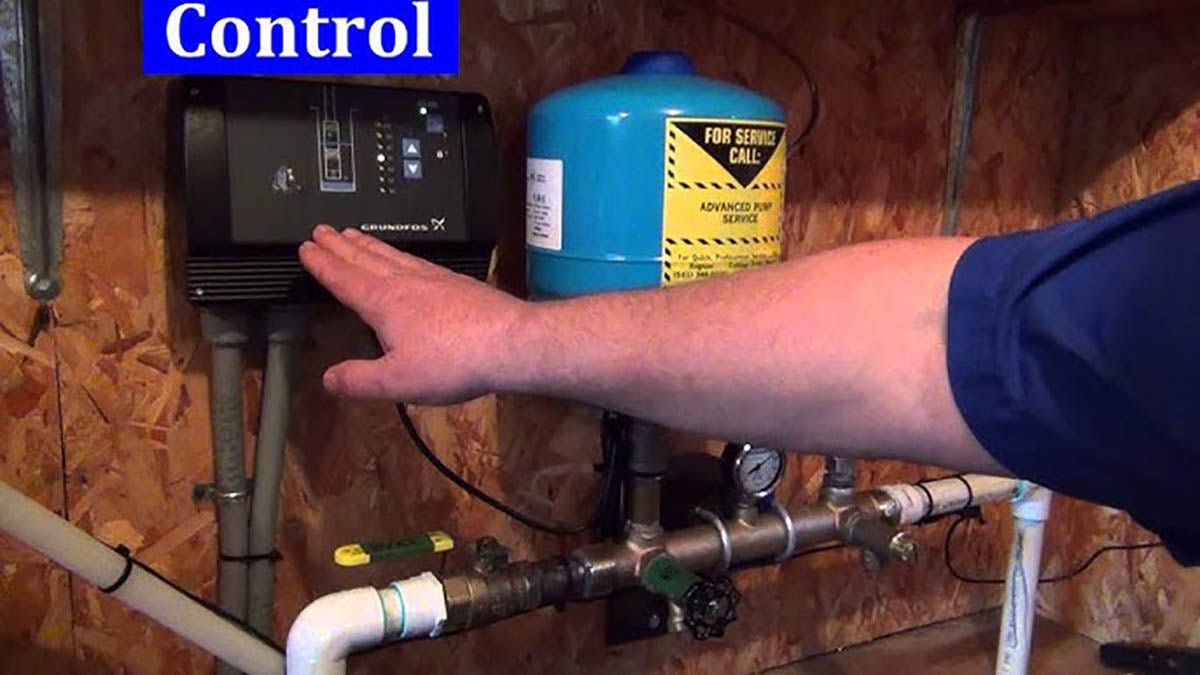
A constant pressure well pump system is designed to keep water pressure more stable as demand changes around the home. Instead of allowing pressure to fall substantially before the pump starts and rise until it stops, the system adjusts pump output or controls flow to reduce those swings.
For homeowners, the main benefit is usually more consistent shower pressure, less noticeable pressure drop when multiple fixtures run, and a system that better matches water delivery to household demand. However, a constant pressure well pump is not automatically the answer to every low-pressure or short-cycling problem.
The right setup depends on the existing pump, well yield, plumbing restrictions, pressure tank, electrical supply, and the type of constant-pressure equipment being considered. A proper diagnosis and system match matter more than simply choosing a pump with more horsepower.
How a Constant Pressure System Works
A conventional private well system typically uses a pressure switch and pressure tank. The pump starts at a lower setting, called cut-in pressure, and stops at a higher setting, called cut-out pressure. A common example is a system that operates between 40 psi and 60 psi, although settings vary by installation.
As someone opens a faucet, the pressure tank supplies water first and system pressure gradually drops. When it reaches cut-in pressure, the pump turns on. The pump continues running until demand stops and the system reaches cut-out pressure.
A constant pressure system aims to hold pressure closer to one selected operating point while water is being used. It may do this by changing pump speed, regulating output, or using a specialized controller and valve arrangement. The result is a narrower pressure range during normal demand.
Variable-speed constant pressure systems
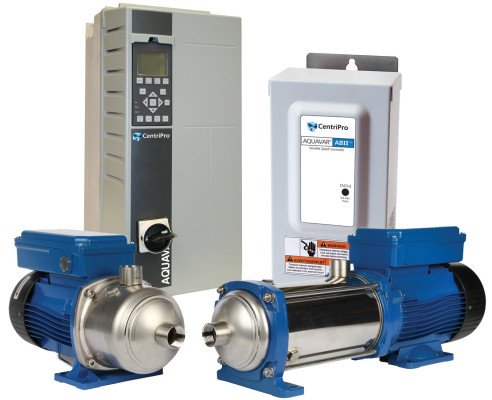
Many modern constant-pressure systems use a variable frequency drive, often called a VFD or variable-speed controller. The controller changes the electrical frequency supplied to a compatible pump motor. This allows the pump to speed up when demand increases and slow down when demand decreases.
For example, if one bathroom fixture is running, the pump may operate at a lower speed than it would when several showers, appliances, and outdoor faucets are in use. The controller uses pressure feedback to make these adjustments.
Variable-speed systems generally include:
- A compatible well pump and motor, usually a submersible pump in a drilled well
- A pressure sensor or transducer
- A controller or drive
- A small pressure tank or approved pressure vessel
- Electrical protection and control components
- Plumbing components appropriate for the system’s design
Not every existing submersible pump motor can be connected to every drive. Motor type, voltage, wire configuration, pump curve, controller compatibility, and manufacturer instructions all matter.
Constant-pressure valve systems
Some systems maintain steadier pressure without continuously varying motor speed. They may use a pressure-regulating valve or pump control device that restricts flow enough to help the pump run longer and maintain a chosen pressure while there is demand.
This approach can sometimes work with a conventional fixed-speed pump, but it is not identical to a variable-speed system. The pump may still run at full speed when operating, and the valve manages flow and pressure differently than a VFD.
These systems can reduce frequent pump starts in some applications, but they must be sized and installed correctly. Restricting flow does not create additional well yield, and it cannot correct a pump that is too small, a clogged filter, a failing pressure tank, or a depleted well.
Why Homeowners Choose Constant Pressure
The most noticeable advantage of a constant pressure well pump is a more consistent experience at fixtures. In a standard pressure-switch system, pressure naturally rises and falls through each pump cycle. A constant-pressure system can reduce those changes while water is flowing.
| Potential benefit | What it may mean in daily use |
|---|---|
| More stable fixture pressure | Less noticeable pressure change when another faucet or appliance starts. |
| Better response to changing demand | The system can increase output as more fixtures use water, within the pump and well’s limits. |
| Fewer starts in some systems | A variable-speed pump may run longer at a lower output instead of repeatedly starting and stopping. |
| Smaller pressure tank requirement | Many variable-speed designs use a smaller tank than a conventional system, but the tank still has an important role. |
| Possible energy benefits at lower demand | A variable-speed pump may use less power when it can operate below full speed, though results depend on the system and household water use. |
Stable pressure can be especially useful in larger homes, homes with multiple bathrooms, properties with irrigation demands, and households where several fixtures commonly run at once. It may also improve comfort in a home where the existing pressure range feels too wide.
What Constant Pressure Cannot Fix
A constant-pressure system is a control strategy, not a universal cure for well-water problems. Before upgrading, determine whether the symptom comes from water supply, plumbing, treatment equipment, or pump controls.
For example, a constant-pressure system cannot reliably solve:
- A low-yield well. If the well cannot provide water at the required rate, increasing demand may still cause pressure loss, pump protection shutdowns, or a no-water condition.
- A plugged sediment filter or treatment system. A restriction after the pressure tank can reduce flow at fixtures even when the pump system is working normally.
- A leak. Underground leaks, toilet flappers, irrigation leaks, or plumbing leaks can make a pump run unexpectedly and waste water.
- A failed bladder pressure tank. A waterlogged tank, damaged bladder, or incorrect precharge can contribute to short cycling in conventional systems.
- An undersized well pump. A pump that cannot meet the home’s flow and pressure needs at the actual pumping water level may need a different pump, not just a new controller.
- Water quality issues. Iron, sediment, scale, corrosion, or microbial contamination require testing and treatment matched to the cause.
Low pressure at only one fixture often points to a local issue, such as a clogged aerator, showerhead, shutoff valve, or branch-line restriction. Low pressure throughout the house is more likely to involve the well system, a whole-house filter, a pressure control problem, or a major plumbing restriction.
Key Parts of a Constant Pressure Well Pump System

Credit: teamaustin.com
The well pump
Most constant-pressure installations use a submersible pump located in the well below the pumping water level. A submersible pump pushes water up the drop pipe and into the home’s pressure system. Deep-well jet pumps can also be used in some properties, but compatibility with constant-pressure controls must be confirmed for the exact equipment.
Pump selection is based on more than well depth. A contractor should consider the pumping water level, required flow in gallons per minute (GPM), desired pressure, pipe losses, elevation change, and the pump’s performance curve. The pumping water level is the level water falls to while the pump is operating; it can be very different from the well’s total drilled depth or static water level.
The controller and pressure sensor
In a variable-speed system, the controller receives information from a pressure sensor and changes motor speed to maintain the target pressure. The controller may also include protective functions, but their capabilities and fault indications are model-specific. Do not assume an error light or shutdown code has the same meaning across brands.
Because electronic controls are sensitive to wiring conditions, grounding, voltage quality, heat, moisture, and lightning exposure, installation details matter. Electrical diagnosis and controller replacement should be handled by qualified well and electrical professionals.
The pressure tank
A constant-pressure system may use a smaller pressure tank than a conventional system, but “small” does not mean unnecessary. The tank helps stabilize pressure, accommodates minor demand changes, and supports proper operation of the control system.
Tank volume is not the same as usable water drawdown. In a conventional system, drawdown is the amount of water delivered as pressure falls between pump cut-out and cut-in. In a variable-speed system, the tank’s role may be different because the controller responds quickly to demand.
Do not change tank air precharge based on a generic rule unless the exact system manufacturer permits it. If a permitted check is needed, isolate electrical power and fully relieve water-side pressure first, following the equipment instructions. Damaged or corroded pressure tanks should not be pressurized or serviced casually.
Check valves, piping, and protection devices
Check valves prevent water from flowing backward toward the well. The correct number and placement depend on the pump and installation design. Adding check valves without understanding the system can create pressure problems or mask an underlying issue.
Other components may include pressure relief protection, dry-well or low-water safeguards, cycle protection, disconnects, control valves, and filtration equipment. Each needs to be compatible with the pump’s flow rate and pressure range.
Choosing the Right System Size
Constant pressure does not eliminate the need for careful pump sizing. A system must supply adequate flow and pressure at the home while staying within the well’s sustainable production and the pump’s operating range.
A well professional will typically evaluate the following:
- Household demand: Number of bathrooms, occupants, fixtures, appliances, outdoor water use, and whether irrigation operates from the well.
- Required flow: The likely simultaneous flow demand in GPM, rather than the flow of one fixture alone.
- Desired delivery pressure: Higher target pressure can improve fixture performance but also requires the pump to overcome more head.
- Pumping water level: The vertical lift from the water level while pumping, not merely the well’s drilled depth.
- Total dynamic head: The combined effect of lift, pressure requirement, pipe friction, fittings, and elevation changes.
- Well yield: The rate at which the well can sustainably provide water or recover during pumping.
- Electrical compatibility: Available voltage, motor type, wire size, starting requirements, and controller specifications.
A larger pump is not always better. An oversized pump may exceed well yield, cause rapid drawdown, operate outside the preferred pump curve, or create treatment and plumbing challenges. A system also needs enough usable capacity to meet peak demand without excessive cycling or pressure loss.
Constant Pressure vs. Conventional Pressure Tank Systems
A conventional system remains a practical and reliable choice for many homes. It uses familiar mechanical controls, a larger pressure tank, and a fixed-speed pump. When properly sized and maintained, it can provide dependable water service for years.
| Feature | Conventional pressure-switch system | Constant-pressure system |
|---|---|---|
| Pressure behavior | Pressure cycles between cut-in and cut-out settings. | Pressure is held closer to a set point during demand. |
| Pump operation | Typically fixed-speed, on or off. | May vary speed or use specialized flow regulation. |
| Pressure tank role | Usually provides meaningful drawdown between pump cycles. | Often smaller, with a stabilization and control-support role. |
| Controls | Usually simpler mechanical controls. | May include electronic controls, sensors, and programming. |
| Best fit | Homes satisfied with normal pressure cycling and simpler service needs. | Homes seeking steadier pressure and better handling of changing demand. |
The trade-off is complexity. A variable-speed system can offer better pressure control, but it adds electronics that need proper setup and may require specialized troubleshooting. A conventional system can be easier to understand and service, but pressure changes are more noticeable by design.
Credit: kulksplumbing.com
Installation and Upgrade Considerations
Installing a constant-pressure system can range from adding compatible controls to replacing the pump, tank, plumbing components, and electrical equipment. The scope depends on the condition and capacity of the current system.
Before approving an upgrade, ask the installer to explain whether the existing pump is compatible and whether it can meet the desired pressure at the actual pumping water level. Also ask whether filters, softeners, iron treatment equipment, or undersized plumbing could create pressure loss after the new system is installed.
Useful questions include:
- What flow rate and pressure is the system designed to deliver?
- What pumping water level and well yield information was used for sizing?
- Is the existing pump motor compatible with the proposed controller?
- Will the system include low-water or dry-run protection where appropriate?
- How will the controller be protected from moisture, voltage problems, and power surges?
- What maintenance and diagnostic support does the manufacturer require?
- Will the new pressure setting be suitable for the home’s plumbing, treatment equipment, and fixtures?
Work involving a well pump, pressure vessel, buried wiring, or live electrical controls has meaningful safety risks. Homeowners can observe gauges, note changes in pump behavior, inspect for visible leaks, and replace approved filter cartridges. Pulling a deep-well pump, changing controller wiring, bypassing protection devices, or repeatedly resetting a tripped breaker should be left to qualified professionals.
Common Problems and What They May Mean
Pressure still drops when several fixtures run
Some pressure variation can occur, especially if demand briefly exceeds what the pump can supply. Persistent drops may indicate that the pump cannot meet the required flow at the selected pressure, the well is drawing down, a filter is restricted, a valve is partly closed, or the controller is not responding correctly.
First determine whether the pressure drop occurs before or after water treatment equipment. A gauge near the pressure tank and another after major filters can help a professional identify a restriction.
The system runs continuously with little water use
Continuous operation can result from a leak, a toilet that is silently refilling, irrigation demand, a failing check valve, a pressure sensor issue, or a pump that cannot reach the controller’s target pressure. It can also occur when water is being used somewhere that is easy to overlook.
Check for obvious fixture leaks and verify whether irrigation, water treatment backwash cycles, or outdoor faucets are operating. If there is no clear demand, arrange service rather than allowing the system to run indefinitely.
Pressure surges or fluctuates rapidly
Rapid fluctuations can be related to a pressure sensor, controller settings, tank condition, air issues, plumbing restrictions, or incorrect component sizing. It does not confirm one failed part. Note when the fluctuation occurs: during all water use, only at high flow, after filter changes, or only at one fixture.
The controller displays a fault or shuts down
A fault can be caused by electrical supply problems, overheating, low-water protection, motor issues, sensor communication, or another condition identified by the specific manufacturer. Record the exact message, any recent power outage or lightning event, and what the system was doing when it stopped. Then use the model’s official documentation or contact a qualified service provider.
Water quality changes after pressure work
Changes in pressure can disturb sediment or reveal existing treatment limitations, but they do not identify a contaminant. Cloudiness, discoloration, odor, or taste changes should be evaluated based on where they occur and whether they affect untreated water, treated water, hot water, cold water, or one fixture only.
If water may be contaminated, use a known safe source for drinking and food preparation until appropriate testing and guidance are available. Boiling does not remove harmful chemical contaminants.
Maintenance Practices That Protect the System
Maintenance needs depend on the equipment design, water chemistry, and household demand. Follow the exact manufacturer instructions for the pump controller, tank, treatment equipment, and any protective devices.
- Watch the pressure display or gauge for changes in normal operation.
- Replace sediment and carbon filters on schedule or sooner if pressure loss indicates loading.
- Keep the controller area dry, ventilated, and protected from physical damage.
- Report repeated fault messages, unusual cycling, humming, or abrupt pressure changes promptly.
- Inspect visible plumbing for leaks and corrosion.
- Test private well water on an appropriate schedule and after flooding, well repairs, or a noticeable water-quality change.
Water treatment deserves separate attention. A fouled sediment filter can imitate a weak pump, while scale or iron buildup can reduce fixture flow. Testing and maintenance records help distinguish a pressure-system issue from a treatment or plumbing issue.

Credit: jesseswellrepair.com
FAQ
Can I add constant pressure controls to my existing well pump?
Possibly, but compatibility must be confirmed for the exact pump, motor, wiring, electrical supply, and controller. Some systems can be retrofitted, while others require a compatible replacement pump or additional components.
Does a constant pressure system need a pressure tank?
Most systems do. The required tank size and function depend on the controller design. A variable-speed system may use a smaller tank than a conventional pressure-switch system, but removing or substituting it without manufacturer approval can cause operating problems.
Will constant pressure increase my well’s water yield?
No. It can manage pump output more effectively, but it cannot make a well produce more water than its aquifer and construction allow. A low-yield well may need water-conservation measures, storage, pump protection, or other site-specific solutions.
Is higher constant pressure always better?
No. Higher pressure can improve fixture performance, but it also increases the work required from the pump and may not suit every plumbing system, treatment device, or fixture. The target should be chosen based on equipment ratings and system design.
When should I call a well professional instead of adjusting the system myself?
Call for service if the pump will not run, pressure falls across the whole house, the controller repeatedly faults, the breaker trips, the tank appears damaged, or the well may be running low. Electrical controls, pressure vessels, and down-well pumps require safe, model-specific diagnosis.